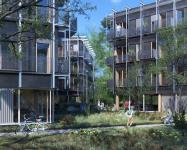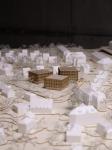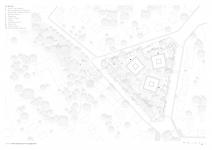
Situated in Gamla Enskede, a suburban garden-city south of Stockholm, Triangelparken creates a unique urban and historical context.
Originally being meant as plot for a public building, the site has never been developed and has
over the years evolved into a park consisting of diverse, sparsely arranged elements.
After analyzing the current qualities and use of the park and considering the overall need for
affordable but qualitativ housing, a development proposal is formulated. Apart from housing alone,
this proposal includes collaborative aspects and aims to connect the new construction not only with
the existing site but also with the broader neighborhood and core values of Gamla Enskede.
By splitting the park into two main areas, a distinct program can be applied: The upper, triangular
part, surrounded by 3-4 story apartment building will be home to around 40 new apartments.
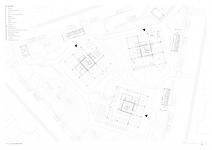
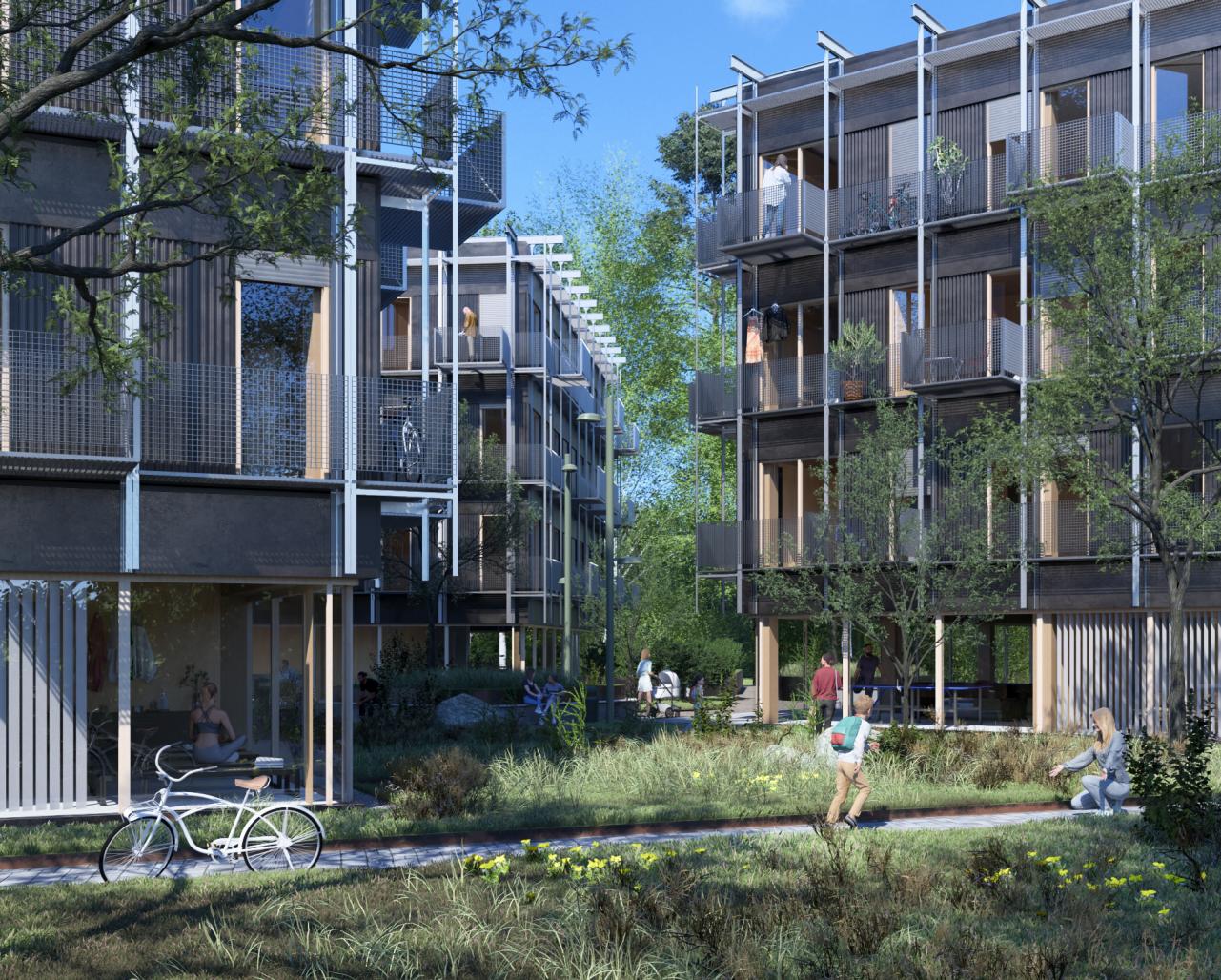
Inspired by the scattered arrangement of houses in Gamla Enskede, the construction consists of
three separate apartment buildings, which react to the distinct shape of the plot.
The lower, rectangular part of the plot will again be used as park and playground. Instead of refitting
all of the old program, the different elements of the park were analyzed, optimized, added to and
re-arranged. By activating the north-western grass-strip between Triangelvägen and Enskede
Byskola, all sports and activity related function could be moved and improved there, resulting in an
overall increase of park surface.
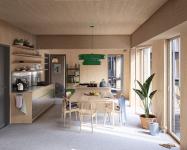
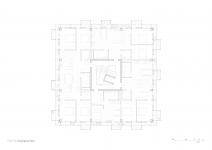
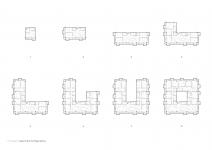
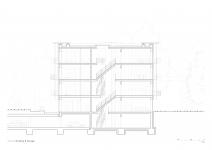
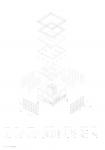
The buildings are defined by an 6x6m grid with 3x3 fields. The central grid houses the staircase and
an elevator. Surrounded by it are the shafts and the wet cells. As a result, all 8 surrounding squares
can be freely divided and compartmentalized until the final planning stage by the new owners.
Moreover all rooms are located at the outer facade and have access to natural light and a french
style balcony. This grid allows flexibility and adaptability. Theoretically, homebuyers can buy up to 8
squares (288m2) to suit their co-living model. Since changes in the floor plan result in changes in
the facade, the facade follows the main grid with a 2m outer facade grid.
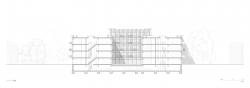
The ground floor in all buildings is activated with a wide range of communal functions like different
social and recreational rooms. The most southern building, closest to the park, houses a café and
open library, creating a bridge and meeting point between residents and neighbors.
The structure will be a wood-concrete hybrid. While the stiffening core is from concrete, all columns,
slabs and beams are from wood to create an easier montage and higher quality within the rooms.
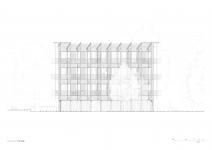
The facade is an element facade, with only three different elements configurations allowing for an
efficient, affordable but appealing result. Wooden frames pose a contrast to the dark burnished
metal facade.
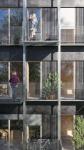
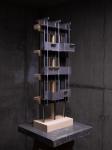
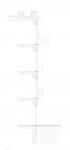
As crucial element to increase living quality within the apartments, an independent outer metal grid
forms the basis for the french style and regular balconies. For a more efficient montage it will be
hanging from IPE bars on the roof and only be punctually attached to the facade. The lightweight
structure is made from standard galvanized L-shape profiles and industrial high-load metal grids.
The use of industrial and natural materials results in a timeless and naturally beautiful facade without
using paint or decorative elements. The contrast between dark burnished and light galvanized
metal creates depth, while the interplay between soft wood and hard metal shapes the atmosphere.
2025
Site: 6.500m2
GFA total: 5.320m2
University: KTH KTH Royal Institute of Technology, Stockholm
Studio: ISLAND SS2025
Student Design Team: Marlo Hagen & Ladislav Vala
Supervisors: Konrad Krupinski & Martin Nässèn
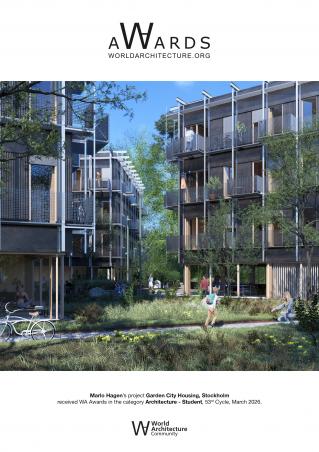
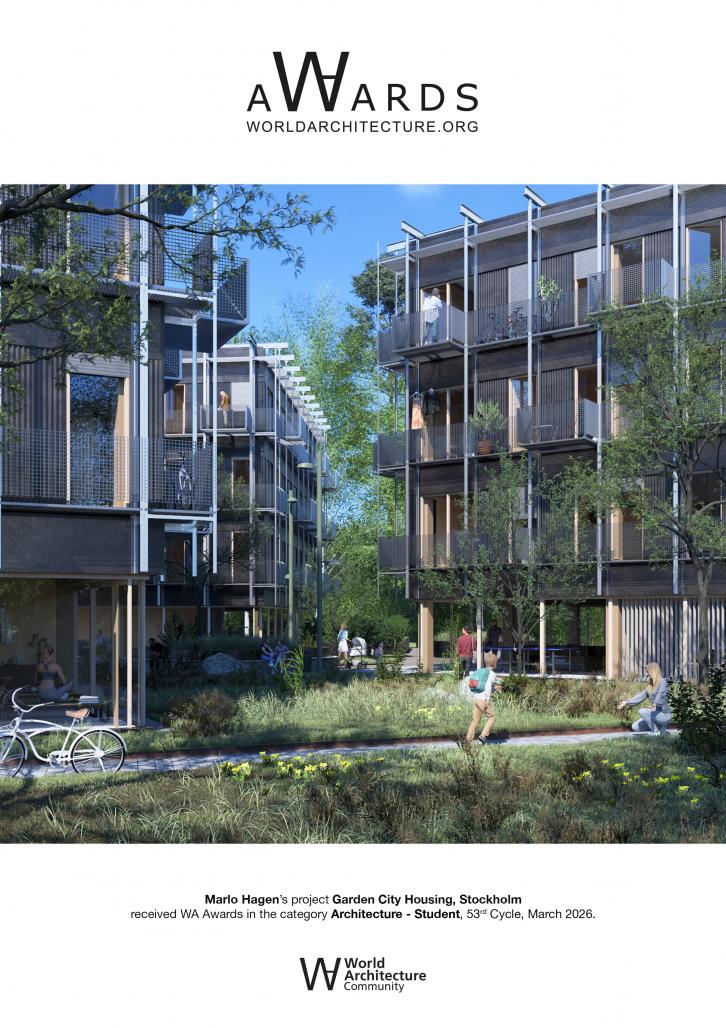
Garden City Housing, Stockholm by Marlo Hagen in Sweden won the WA Award Cycle 53. Please find below the WA Award poster for this project.
Downloaded 0 times.
Ladislav Vala