Asteroid H-312: A Living Modular Ecosystem for Post-Disaster Resilience
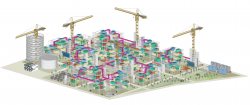
The project envisions a self-sustaining modular habitat system designed for post-disaster recovery and long-term adaptability. Inspired by The Little Prince and his asteroid, each unit is conceived as a micro-planet — an independent yet interconnected space of life, resilience, and renewal. Set in Hatay–İskenderun, a region profoundly impacted by the 2023 earthquake, the project seeks to redefine the concept of home through lightness, flexibility, and self-sufficiency, transforming fear and loss into architecture that heals.
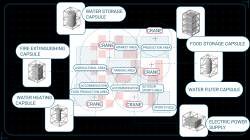
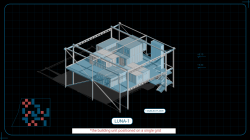
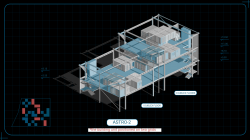
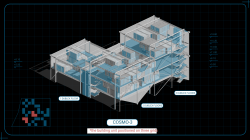
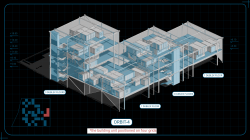
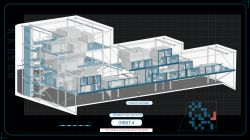
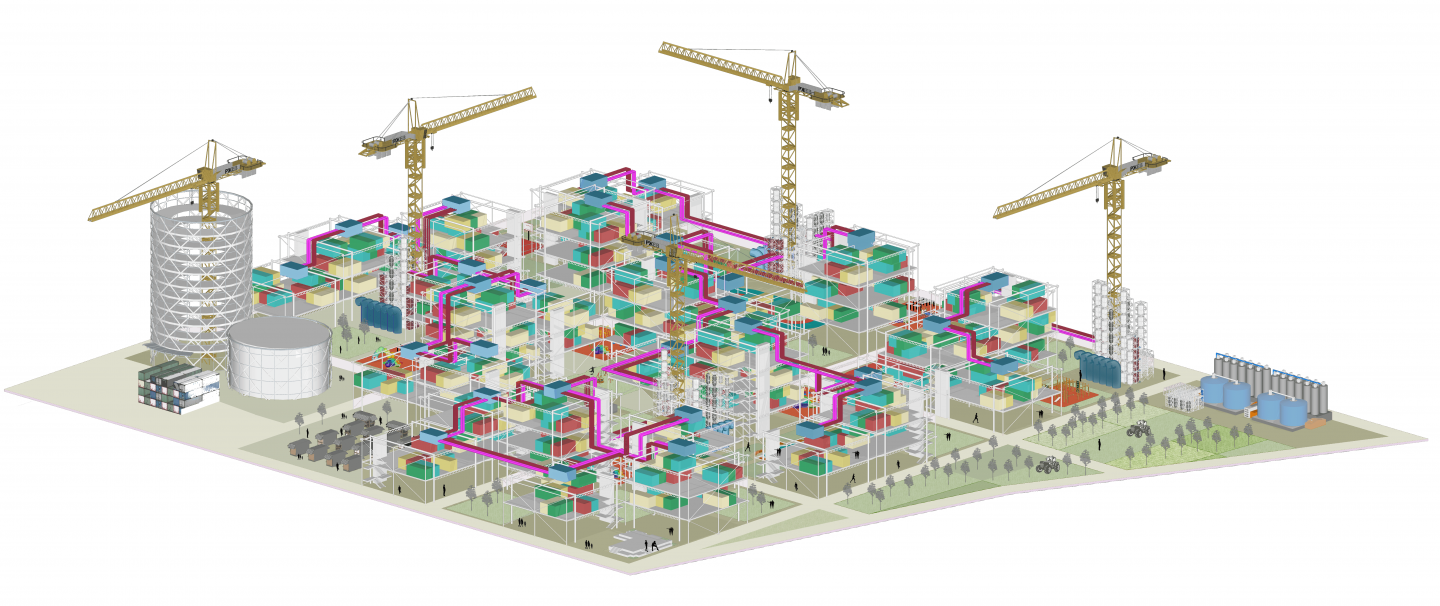
The design operates through a network of distributed steel “living cores” that process and redistribute energy, water, and waste, acting as infrastructural anchors across the site. These cores are interlinked with modular container-based living units, repurposed from decommissioned shipping containers of the nearby port. Using a crane distribution system, these modules can be assembled, relocated, or expanded over time, forming a living, evolving spatial network. This flexibility allows the system to grow organically, responding to community needs and environmental changes.
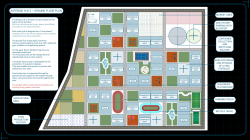
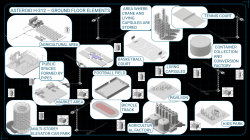
The ground level is defined as a public landscape, housing marketplaces, cafés, sports and cultural facilities that foster interaction and collective life. Upper levels accommodate flexible residential and working units, enabling a balance between private and communal living. A local farming zone on the western edge of the site supports food production and self-reliance, reinforcing the project’s sustainable ecosystem.
By integrating Game of Life algorithms within the generative design process, the spatial organization evolves dynamically through changing patterns of density and void, mirroring natural growth and adaptation. Ultimately, the project proposes a new architectural ecosystem — one that redefines how architecture can adapt, regenerate, and coexist with both human and environmental systems, turning the act of rebuilding into a poetic and resilient rebirth.
2025
Location: Hatay–İskenderun, Türkiye
Project Type: Post-Disaster Modular Housing and Public Infrastructure
Site Area: 80,000 m²
Built Area: Approx. 25,000 m²
Design Approach: Generative Modular System / Game of Life Algorithm
Structure System: Steel lattice frame with modular container integration
Core System: Network of distributed “Living Cores” for energy, water, and waste circulation
Construction Units: Recycled 20 ft and 40 ft shipping containers
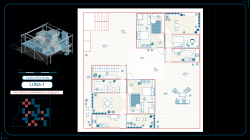
Average Unit Size: 14.8–29.6 m² per module
Vertical Distribution: 3–5 levels, with duplex modules between slabs
Ground Floor Functions: Public and commercial spaces – markets, cafés, workshops, sport and recreation areas
Upper Floors: Flexible living units and co-working spaces
Energy Systems: Waste-to-energy conversion, solar panels, rainwater harvesting, greywater recycling
Material Strategy: Recycled steel, modular prefabricated components, passive ventilation panels
Crane System: Mobile crane and rail-guided transport system for modular unit relocation
Agricultural Zone: Integrated urban farming field on western edge for self-sufficient food production
Designer: Meryem Türkoğlu
Instructor: Tayyibe Nur Çağlar
Meryem Türkoğlu