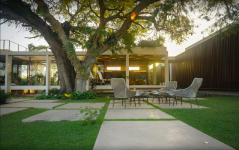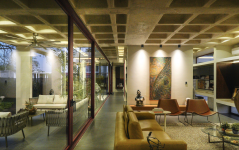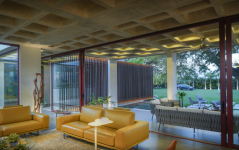
The Refuge is located in a sparsely populated area, embodying the essence of a country house where open spaces and a relaxed, unstructured atmosphere prevail. This project unfolded in two stages: the first, conceived as a secondary residence, was designed not only for functionality but also as a haven for relaxation. Over time, it transformed into a vibrant home and the central hub for a family eager to enjoy simplicity and nature.
The design approach for both stages is based on rational principles that respond directly to the project's context. The initial construction, a 250 m² house, functioned as an apartment with a spacious garden. Elevated one meter above the ground, it gives the impression of a single floating structure. Both stages of the house are raised off the ground, a hallmark of the contemplative architecture we practice, creating a blurred boundary that, while fluid within the space, marks a transient presence.
The composition revolves around a central axis that organizes the various spaces and serves as a starting point, projecting the interior outwards. This central axis allows for a seamless transition between the interior and exterior areas, making the exterior an integral part of the house's design.
The first phase of the house is surrounded by a transitional space protected by a second skin, which maximizes natural ventilation and lighting efficiency. This design provides complete privacy within the house while maintaining a full openness from the interior to the exterior. The extension also follows passive bioclimatic principles to control solar and rain exposure. Spacious galleries protect the house's large glazed surfaces from direct weather impacts, enhancing distant views and actively integrating the exterior with the interior.
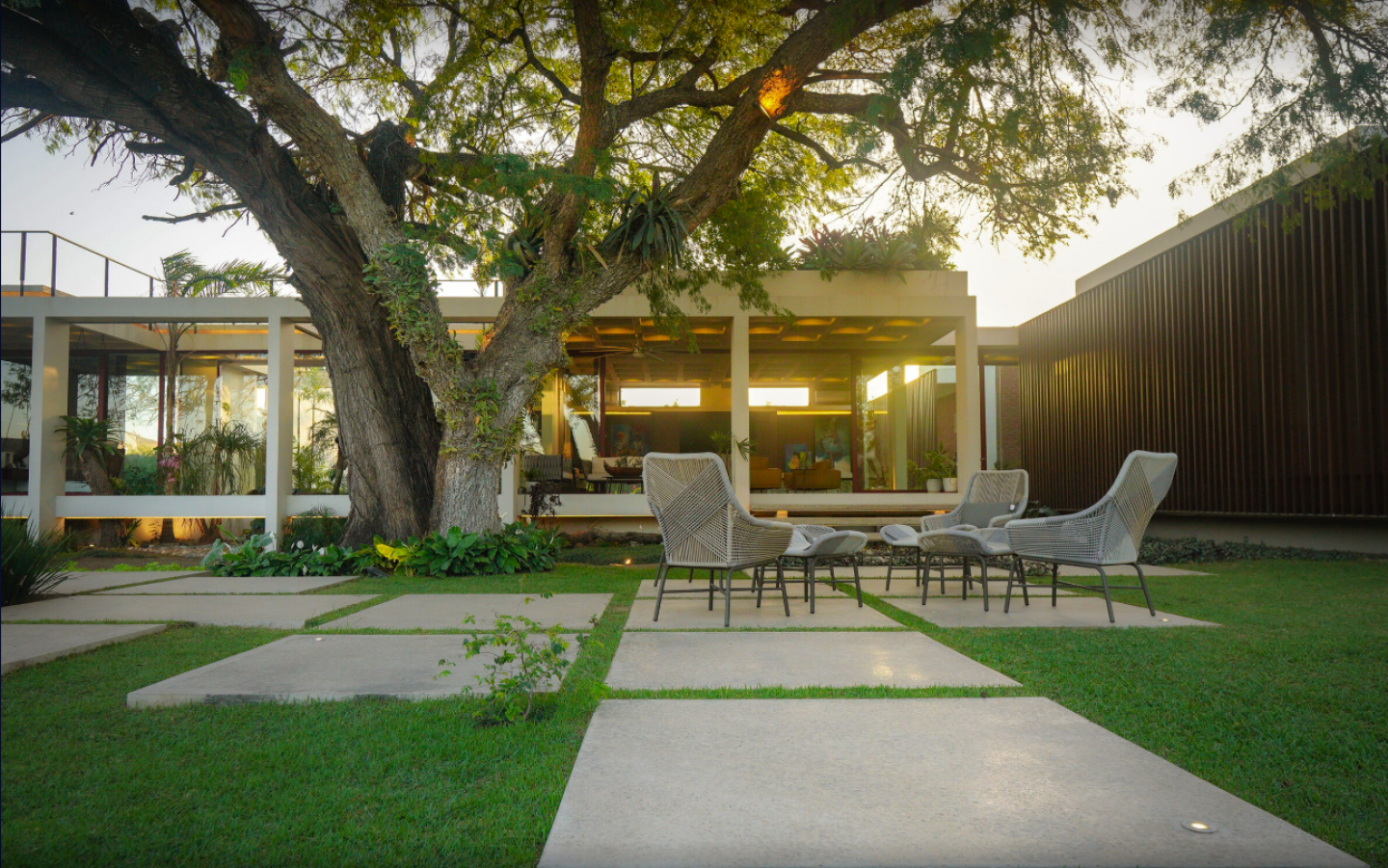
In the second phase, the design adapts to a new, flexible lifestyle. A key premise during the extension was to reinforce the connection with nature, one of the space's greatest attractions: a direct dialogue between the interior and exterior. The extension respects and incorporates the advantages of a centuries-old cupesí tree, ensuring the preservation of most of the exterior space, adorned with beautiful gardens. Based on these principles, the house expands in a T-shape, with a simple, rational, and rhythmic structure that complements the existing project without competing with it.
The extension features a flat roof, creating a living area that captures the breathtaking views of the surrounding landscape. Protected from the sun by the 40-meter-diameter canopy of the cupesí tree, this space becomes a haven for contemplation and enjoyment. These passive climate control measures keep the house cool without artificial cooling and guarantee abundant, glare-free natural light.
The house exudes clarity and concreteness, embracing the principle that less is more. Its simplicity and warmth are achieved through the use of concrete, wood, and the harmonious interplay of light, ventilation, and transitional spaces, capturing the essence of the project.
2020
2021
Program: Residential
Size: 260 m²
Location: Santa Cruz, Bolivia
Status: Completed
Time: 2021
Principal architect: Arq. Karen Gutierrez y Arq. Carlos Roca
Karen Gutierrez