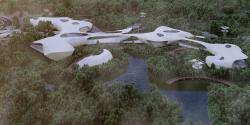
A Journey Beneath the Surface: An Oceanarium Complex, Sonadia Island
Project Location: Sonadia Island, Moheshkhali, Cox’s Bazar, Bangladesh
Client: Bangladesh Economic Zone Authority (BEZA)
Funded By: PPP (Public Private Partnership)
Height: 38’ (from the sea level)
Land Area: 23.3 acres
Build Area: 5.6 acres
Basement: N/A
Design Philosophy: Sustainable coastal architecture integrated with marine ecology — merging human curiosity with ocean conservation.
Project Brief:
Beneath the surface of the ocean is a world full of life — mysterious, beautiful, and deeply alive about which we are quite unaware and careless. Plastic, oil, and overfishing speak quietly of our carelessness.
The main objective of the project was providing people an experience of underwater journey, raising awareness about marine ecosystems, extending the scope of marine life research and conservation that might help in preserving the endangered ocean biodiversity. The aim of the design was to keep the footprint minimum to avoid interruption of local biodiversity, while giving people a chance to explore the beauty of Sonadia Island.
About the Site:
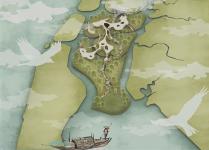
Sonadia Island is a small (spans approximately 9 sqkms) picturesque island located off the coast of Cox's Bazar in Bangladesh. Sonadia serves as a critical habitat for several endangered species, including migratory birds, marine turtles, making it a significant ecological site in the region. Despite its ecological significance, the island remains largely underdeveloped. Bangladesh Economic Zones Authority (BEZA) has identified Sonadia as a strategic location for promoting eco-tourism and marine conservation.
Problem Statement:
This diverse ecosystem is getting endangered due to the illegal acts like overfishing and illegal hunt of red crab, turtles, migratory birds by local people. Absence of controlled tourism and lack of public awareness and research facility, the problem remains as it is. This puts Sonadia under the list of ECA (Environmentally Challenged Area).
Concept Analysis:
"Guardians of the Blue: Preserving Ocean Biodiversity"
A conservation-focused concept that underscores the aquarium's commitment to safeguarding marine species and habitats.
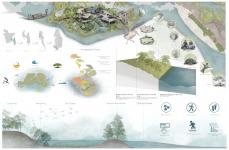
The concept centers on the conservation of marine life through a cyclical and sustainable process. Selected marine species are collected from the ocean and nurtured within breeding pools and research laboratories, allowing their populations to grow under controlled conditions. A portion of these species is showcased in the oceanarium for public exhibition and awareness, while others are carefully released back into their natural habitat to restore and strengthen marine ecosystems.
In addition, diseased or injured marine species are rescued from the ocean and rehabilitated in specialized quarantine tanks before being reintroduced to the sea. Specimens that cannot be revived are preserved as skeletons and displayed within the exhibition areas, serving as educational resources for visitors. This closed-loop system ensures that the facility not only contributes to marine biodiversity conservation but also promotes research, education, and public engagement in a sustainable manner.
Project Functions:
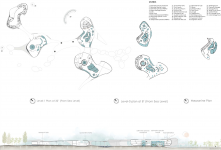
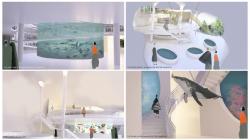
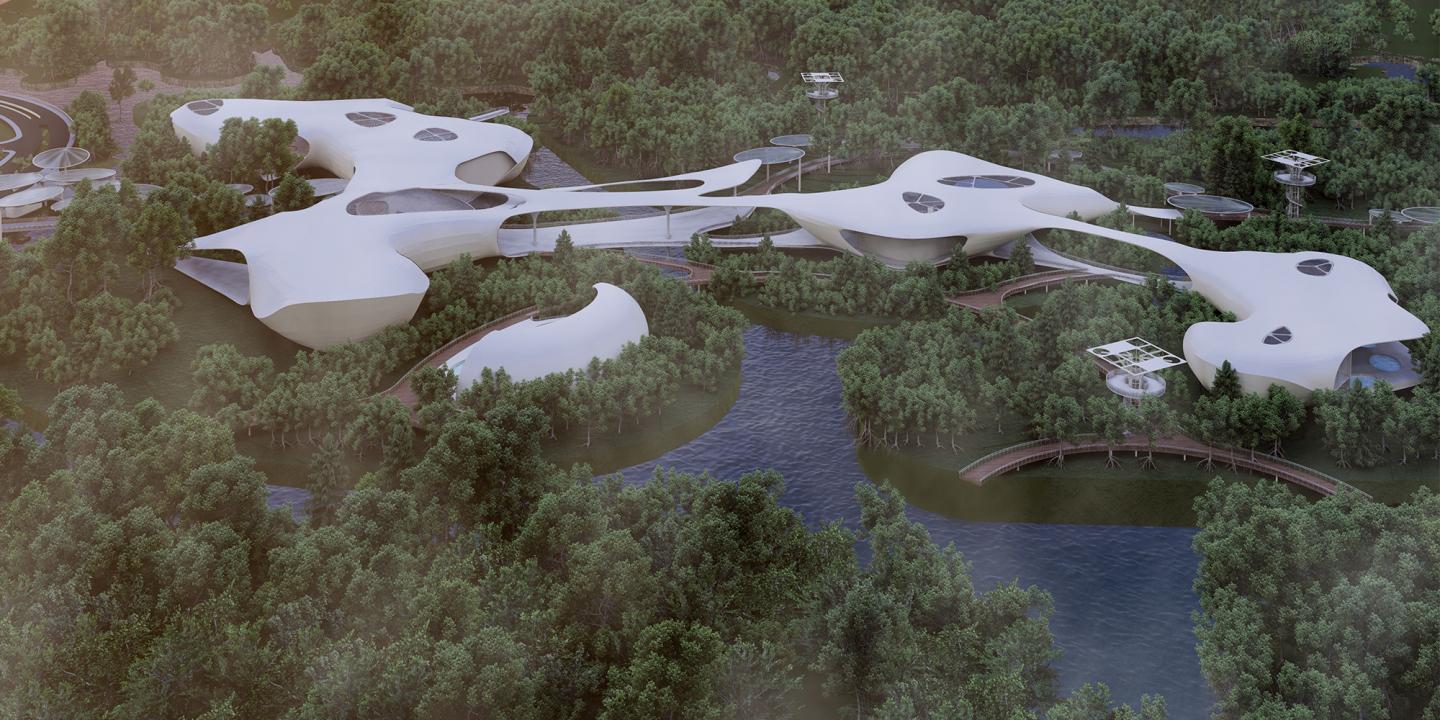
An Oceanarium Complex (Saltwater Species Exhibition, Freshwater Species Exhibition, Marine Life Conservation Zone, Research Facility, Dolphinarium, Elevated Walking Trail, Watchtower, Deck).
Design Consideration:
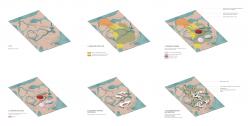
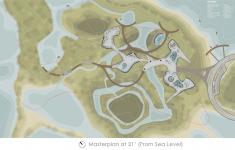
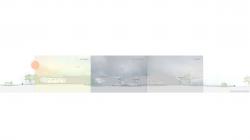
The site faces regular inundation events. According to the inundation event, the site and its surroundings can be classified into three distinct zones based on the inundation event: the wet zone (faces regular inundation event), the semi-dry zone (faces seasonal inundation), and the dry zone (almost never faces the inundation event). The dry zone, or the peak of the site (19’-23’ from sea level) was chosen as site for construction as the site is cyclone and inundation prone. Cut-and-fill process has been introduced, keeping in mind that the site is of loose soil and cyclone prone. GFRC cladding has been used as saline resistant material.
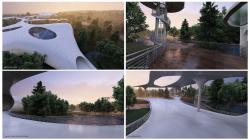
The building massing was guided by the natural contour lines and the slopes of the terrain. The wooden trail was introduced for limiting visitors’ movement. Bird observatory was introduced for observing the local and migratory birds. Local trees were planted as storm buffers and for inviting birds.
Constructive Outcome:
This project doesn’t only promote tourism; rather it’s a medium for raising awareness of the threatened biodiversity both above and below the water. It conveys the message of being humble while in nature-the world is not for humans only; it’s for each and every organism of the mother nature.
The oceanarium is imagined as a gateway to marine awareness. By taking visitors “beneath the surface,” it reveals the hidden beauty of marine life while creating empathy for its preservation. The design includes spaces that function as research and education hubs, alongside strategies that restore habitats, create protective coastal buffers, and adapt to sea-level rise. It is a space where conservation meets community—where research, tourism, and education come together to safeguard the island’s ecological balance.
2024
Functional Zoning:
1.Public Zone
-Entry plaza & orientation center
-Main Oceanarium (aquatic life exhibits, deep-sea tunnel, touch pools)
-Viewing decks & underwater observation gallery
2.Educational museum & interactive learning zone
-Cafeteria, souvenir shop, washrooms
-Research & Conservation Zone
3.Marine biology & aquaculture research labs
-Quarantine tanks & breeding facilities
-Data center & ocean monitoring unit
4.Service Zone
-Water filtration & treatment plant (marine-safe discharge)
-Waste management & composting facility
Structural & Material Data
Structural System:
-RCC foundation and framing in high-load areas (main tanks)
-Steel trusses for long-span exhibit roofs
-Retaining walls with marine-grade concrte
-Glass-fiber reinforced concrete (GFRC) and laminated acrylic panels for aquarium glazing
Roofing:
-Double-layer shading roof with ventilated skylights
Waterproofing:
-Marine-grade epoxy sealants and pressure-treated joints
Sustainability & Energy Systems
-Passive cooling through earth berming and natural ventilation tunnel
-Greywater recycling for landscape irrigation
-Use of mangrove belts and local tree species as windbreaks and biodiversity buffers
Technical Facilities
Tank Specifications: Acrylic panels up to 400–600 mm thick; filtration flow ~20,000–30,000 L/min
HVAC: Zoned temperature and humidity control for exhibit halls
Fire Safety: Marine-safe sprinklers, emergency exits, and desalinated water backup
Lighting: Daylight-controlled exhibits; low-heat LED underwater lighting
Student: Fawzia Afia
Supervisor: Nadia Monzur
Fawzia Afia