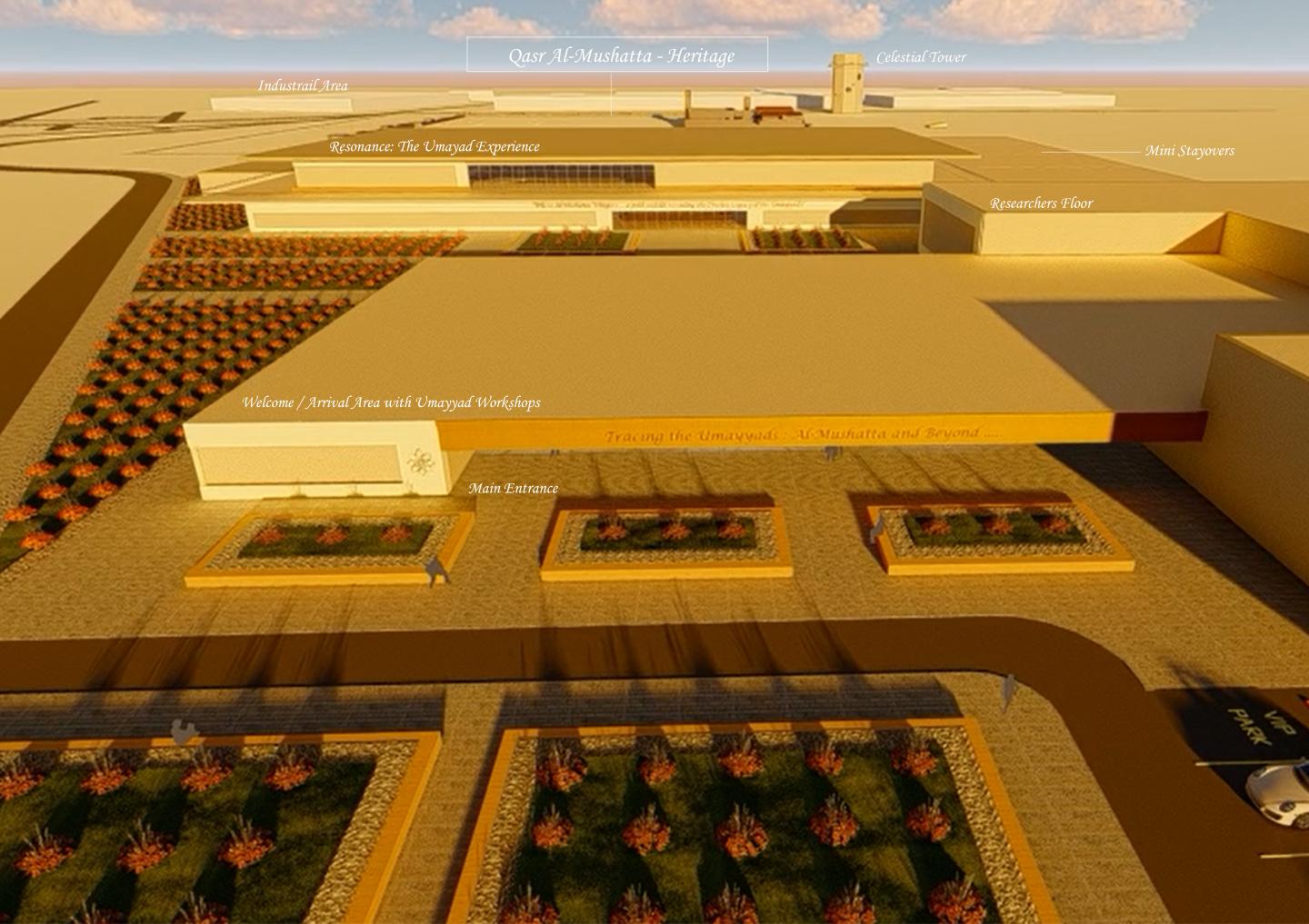
Located near Amman’s Queen Alia International Airport, Qasr al-Mushatta stands as one of the most significant yet least visited Umayyad palaces. Despite its remarkable artistry and historical importance, the site remains isolated in a barren industrial context, disconnected from the rhythms of tourism and urban life. Jordan’s heritage sector faces a recurring challenge—sites of immense cultural value often remain underrecognized, under interpreted, and physically detached from visitor infrastructure. The result is a gap between preservation and experience, where restored monuments fail to generate awareness, engagement, or sustainable visitation.
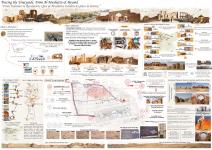
This project responds to that gap through the creation of a Heritage Discovery and Research Center, conceived as a contemporary extension to the story of Qasr al-Mushatta. The proposal envisions an architectural and experiential journey that reconnects visitors, scholars, and transit travelers to Umayyad heritage through education, interpretation, and discovery. Acting as a cultural gateway, the project aims to transform the isolated site into a dynamic tourism and research destination while preserving the primacy of the Qasr as the emotional and visual centerpiece.
The center is organized as a spatial narrative—beginning with engagement and orientation, progressing through interpretive and research zones, and culminating in a powerful visual encounter with the Qasr itself. Its program includes a visitor welcome hub, interpretive exhibition, interactive research and digital learning zones, workshops, celestial observation tower, and tourist services such as stayover pods, café, and gift shop. Together, these functions serve both as a tourism catalyst and a scholarly platform for the study and reinterpretation of early Islamic architecture.
Architecturally, the project emerges from the desert ground in a restrained, horizontal language that echoes the modest dignity of Umayyad architecture while integrating modern materials and spatial fluidity. Controlled glimpses of the Qasr are framed along the visitor path—creating moments of anticipation, concealment, and revelation—until the journey resolves with the grand view of Qasr al-Mushatta as the symbolic and physical climax. The design balances cultural continuity and contemporary expression, using proportion, geometry, and light as interpretive tools rather than imitation.
Beyond architectural form, the project establishes a strategic link between archaeological heritage and contemporary tourism, reinforcing the potential of cultural sites to serve as engines of learning, exchange, and sustainable visitation. Positioned near an international gateway, it enhances accessibility while preserving authenticity—transforming a neglected heritage landscape into a place of renewed identity and encounter. Through its integration of research, education, and visitor engagement, the project redefines how heritage can be experienced and valued within Jordan’s evolving tourism network.
2025
Project Title: Tracing the Umayyads: From al-Mushatta and Beyond
Category: Culture – Tourism Buildings
Sub-category: Tourist Attractions
Location: Amman, Jordan
Built-up Area: 7,500 m² (approx.)
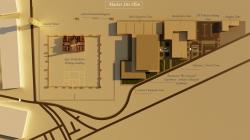
Site Context: Desert fringe near Queen Alia International Airport, adjacent to the Umayyad site of Qasr al-Mushatta
Project coordination's on google maps: (31°44'15.8"N 36°00'45.4"E)
Project Overview:
Situated beside the Umayyad desert palace of Qasr al-Mushatta, the project serves as a gateway to Jordan’s early Islamic heritage, redefining the relationship between tourism, research, and cultural preservation. Designed as both a visitor hub and an interpretive space, the project acts as an interface between the modern traveler and the historic landscape, transforming the under-visited site into an engaging cultural destination accessible to both transit and intentional tourists.
Architectural Strategy:
The design draws inspiration from the geometry, rhythm, and spatial symbolism of Umayyad architecture, interpreted through a contemporary language of light, shadow, and material honesty. The architectural composition emphasizes controlled views, guiding visitors through a sequential journey that culminates in the dramatic reveal of Qasr al-Mushatta. Form and layout emerge from the desert context—low, horizontal masses partially embedded in the terrain—to preserve visual dominance of the heritage structure while maintaining human scale and climatic comfort.
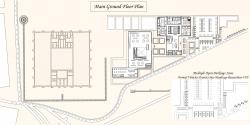
Functional Organization: The program integrates public, educational, and service components that reinforce the project’s dual purpose of tourism and research:
Welcome/ Arrival zone introducing the narrative of the Umayyads.
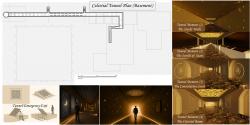
Exhibition areas dedicated to the heritage of Ummayds in Jordan and to Qasr al-Mushatta and its artistic legacy specificaly.Research and workshop facilities supporting archaeological study and restoration activities. Cultural and leisure amenities including a café, retail, and rest spaces for local and international visitors.Celestial Tunnel has 4 parts/moments 1) The Starlit Wall 2) Scrolls of Stars 3) The Constellation Court 4) The Celestial Ramp. Celestial observation tower offering elevated perspectives of the desert landscape and the historic site. Spatial zoning ensures fluid movement between contemplative interior spaces and open courtyards, maintaining visual links with the Qasr at key moments along the visitor path.
Cultural Integration:
The project embodies a dialogue between past and present—reinterpreting Umayyad motifs, particularly the rosette of Qasr al-Mushatta, through abstracted patterns in mashrabiya screens and façade treatments. Rather than competing with the heritage structure, the new architecture acts as its contemporary echo, framing it as the focal point of the overall experience.
Lighting, texture, and sound are orchestrated to heighten moments of discovery, ensuring visitors feel the transition between history, interpretation, and reflection.
Conclusion:
“Tracing the Umayyads: From al-Mushatta and Beyond” is a cultural infrastructure project rooted in place and history, offering a renewed experience of Jordan’s early Islamic heritage. It bridges tourism and academia, tradition and innovation, ensuring that Qasr al-Mushatta remains both protected and alive—interpreted for contemporary audiences through architecture that celebrates discovery, dialogue, and continuity.
Student: Layan Aqel Qaddomi
Supervisor: Dr. Duaa Al Maani
Layan Aqel



Favorited 2 times