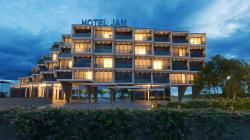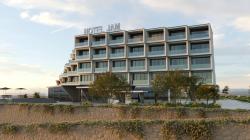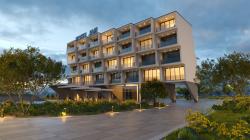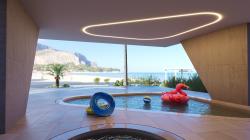
Siraf Hotel, designed as a corporate accommodation for the staff of Jam Sanatkaran Company, is located along the turquoise shoreline of the Persian Gulf, adjacent to the ancient port of Siraf. This historic port, whose origins trace back to the Parthian and Sassanid eras, serves as the conceptual foundation of the project’s architectural narrative. Drawing inspiration from the Lir Valley of Siraf and its enigmatic stone formations—ambiguous between interpretations as a rock-cut necropolis and an ancient hydraulic infrastructure—the design reimagines these geological and historical elements through a contemporary architectural lens. The resulting form becomes a metaphorical abstraction of carved cliffs and stone structures, establishing an inseparable link between land, history, and the luminous horizon of the Persian Gulf.
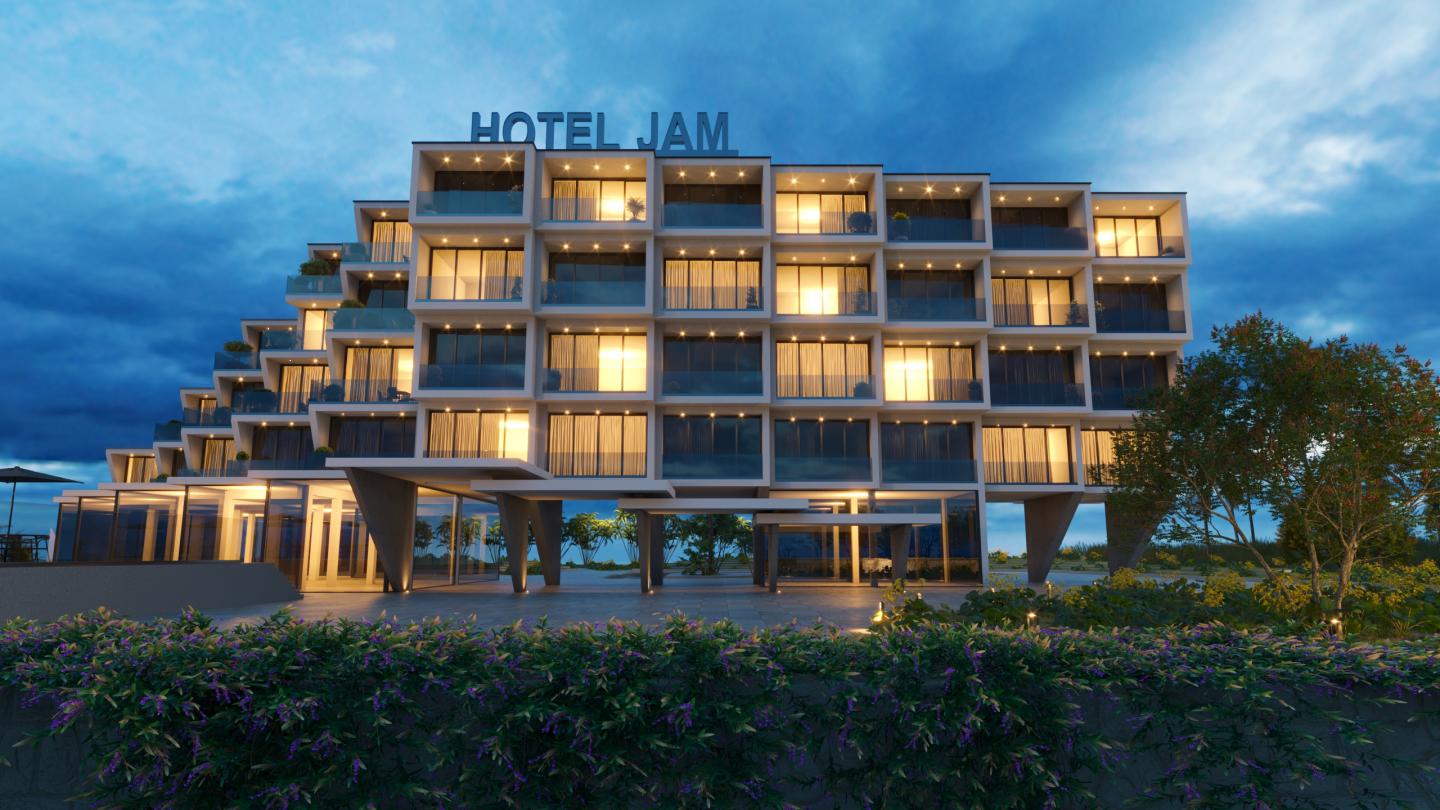
Rooted deeply in the climatic and cultural context of southern Iran, the design of Siraf Hotel responds sensitively to the region’s hot and humid conditions. The entire complex is set upon a horizontal concrete platform that evokes the “soffeh” and “terraces” of ancient Iranian architecture. This elevated plinth adapts to the site’s natural slope, creating an open pilotis that allows free airflow, reduces humidity, and mitigates ground temperature beneath the structure.
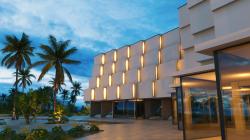
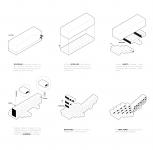
Exposed white concrete is used as the primary façade material. Its reflective quality effectively minimizes solar heat absorption, while its luminous tone transforms the building into an iconic “white jewel” along the coast. Beyond its visual impact, this material choice contributes significantly to the project’s thermal efficiency and environmental performance. The composition of modular, sliding volumes is organized through a deliberate and responsive arrangement that maximizes mutual shading, enhances natural ventilation, and reduces solar gain. The climatic logic of the design allows the building masses themselves to function as self-shading devices, dynamically interacting with the sun and wind throughout the day.
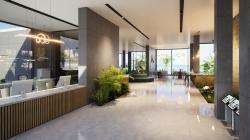
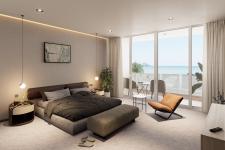
Spatial organization in Siraf Hotel is guided by the creation of a gradual experiential sequence, focused on the controlled revelation of sea views. The user’s journey—from the shaded northern entrance through the lobby, and ultimately toward the unfolding of the sea horizon—forms a narrative procession of light, shadow, and perspective. This spatial rhythm not only enhances the architectural experience but also reinforces the connection between the built environment and the surrounding landscape.
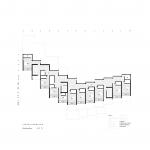
A modular spatial–structural system defines the project’s constructional logic, ensuring precision, efficiency, and the potential for future expansion. This system generates a dialogue between structural order and the dynamic interplay of shifting volumes, harmonizing rationality with movement and fluidity.
Beyond its functional role as a hospitality complex, Siraf Hotel embodies an architectural dialogue between structure and context, material and memory. It stands as a contemporary interpretation of southern Iran’s geological and cultural strata—an architectural statement that binds history, topography, and the sea into a single cohesive form, creating an enduring landmark along the Persian Gulf coast.
2023
2023
Siraf Hotel (titled)
Siraf Hotel, designed as a corporate accommodation for Jam Sanatkaran Company staff, is situated along the turquoise coastal strip of the Persian Gulf, adjacent to the ancient port of Siraf. This historic port — whose origins trace back to the Parthian and Sassanid eras — serves as the conceptual foundation of the project’s architectural narrative.
Drawing inspiration from the Lir Valley of Siraf and its enigmatic stone formations—oscillating between interpretations as a rock-cut necropolis and an ancient hydraulic system—the design reinterprets these geological and historical layers through a contemporary architectural lens. The resulting mass becomes a metaphorical abstraction of carved cliffs and stone structures, forging an inseparable bond between land, history, and the luminous horizon of the Persian Gulf.
Climatic and Formal Strategies
The architectural approach of Siraf Hotel is deeply rooted in the hot and humid climate of southern Iran. The master plan is set upon a horizontal concrete platform, evoking the “soffeh” and “terraces” of ancient Iranian architecture. This plinth, while adapting to the natural topography, generates an open pilotis beneath the structure—facilitating natural air circulation and reducing humidity and ground temperature.
Material and Texture
Exposed white concrete is employed as the primary façade material. Its high reflectivity effectively mitigates solar heat gain, while simultaneously shaping an iconic “white jewel” on the coastline. Beyond its visual purity, this material choice contributes significantly to the building’s thermal performance and sustainability.
Density and Orientation
The hotel’s modular sliding volumes are composed through a deliberate and responsive arrangement. This spatial choreography maximizes mutual shading between blocks, enhances natural ventilation, and minimizes direct solar exposure. The climatic diagram illustrates how the building masses themselves act as self-shading devices within the site’s orientation.
Spatial Organization and User Experience
The spatial configuration is conceived to craft a gradual experiential sequence, centered on the unfolding of sea views. The user’s journey—from the shaded northern entrance, through the lobby, and finally toward the gradual revelation of the sea horizon—establishes a rhythmic and narrative spatial flow.
Modularity and Structure
A modular spatial-structural system underpins the design, ensuring efficiency in construction and adaptability for future expansion. This framework creates a precise harmony between structural order and the dynamic interplay of shifting volumes.
Conclusion
Beyond its functional role as a hospitality complex, Siraf Hotel represents an architectural dialogue between structure and context, material and memory. It stands as an iconic coastal landmark, reinterpreting the geological and cultural strata of southern Iran within a contemporary architectural language.
Mehdi Rezamand
Ronak Studio
Nikan Hajari
Ronak Studio