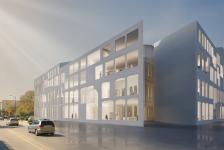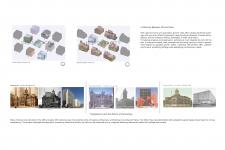

Another Transparency explores strategies for designing a contextualized civic building within a historic urban environment, using San Antonio City Hall as a case study. The project responds to a recurring dilemma in modern urbanism: the demolition of monumental 19th- and early 20th-century civic buildings (often built in classical styles) and their replacement with glass-box structures. While these modernist interventions are intended to represent democratic transparency, they often strip away historical identity and produce generic, placeless forms that fail to resonate with local culture.
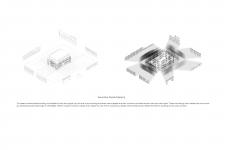
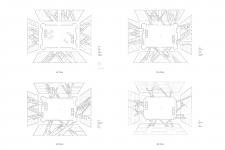
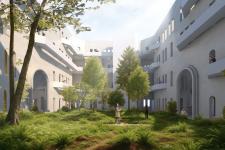
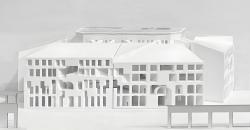
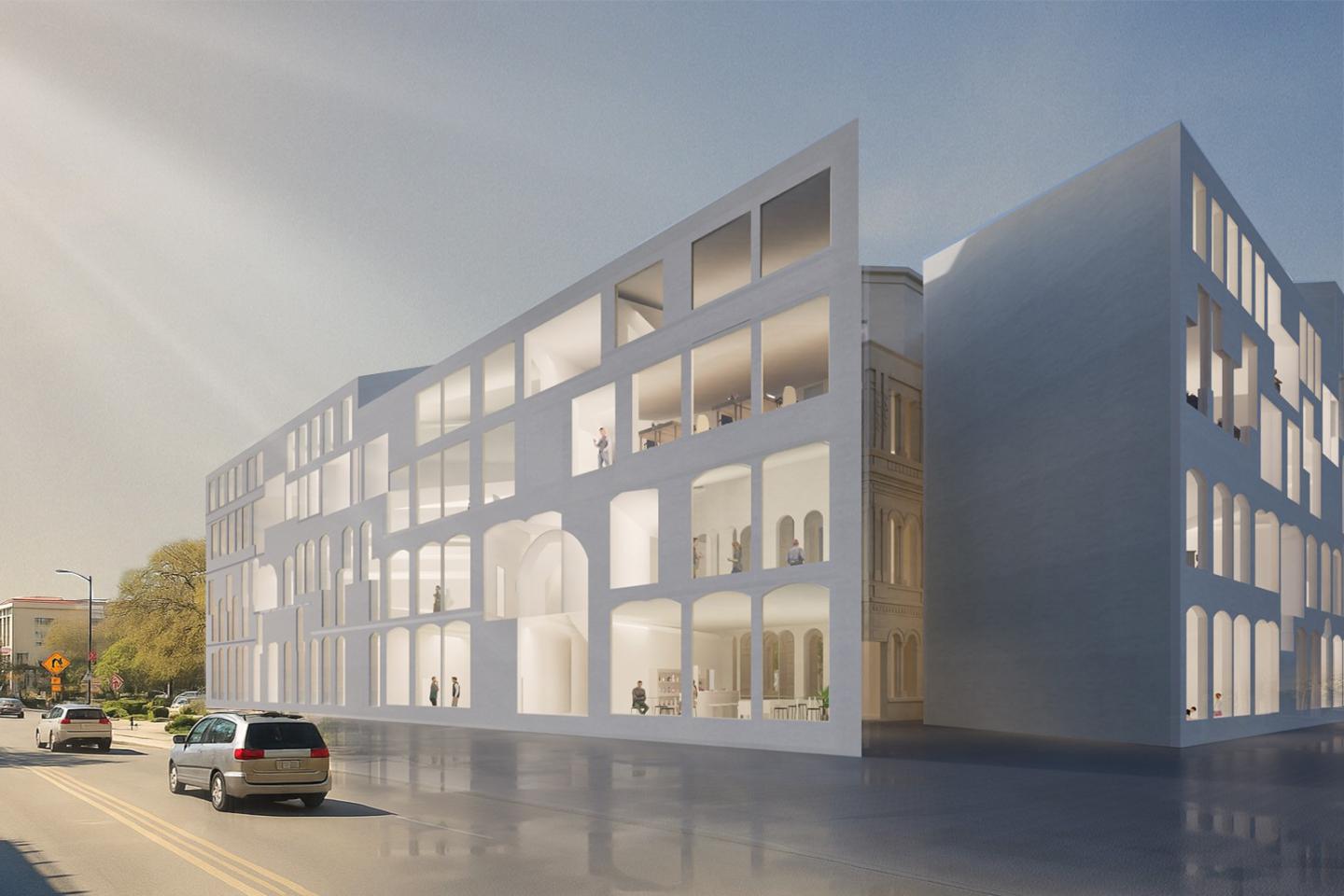
Recognizing the symbolic and civic importance of city halls, this project proposes an alternative design approach—one that retains the historic building while reimagining its spatial, civic, and architectural roles. San Antonio City Hall, long criticized for being fortress-like and inaccessible to citizens, becomes the focus of transformation. The existing structure is preserved but hollowed out, creating a large central atrium that serves as a new civic gathering space. Around this atrium, four new wings extend outward, with open corners that welcome entry from all directions. This reorganization redistributes governmental functions and rebalances the relationship between authority and the public, shifting the building from a model of exclusion to one of openness and participation.
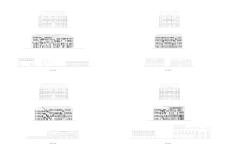
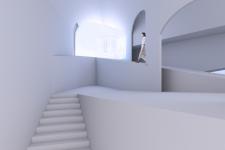
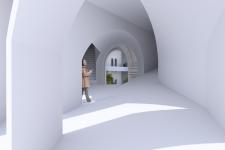
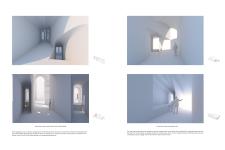
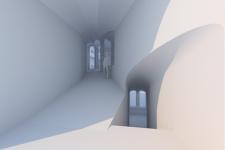
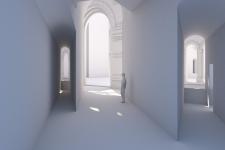
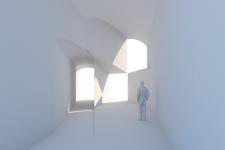
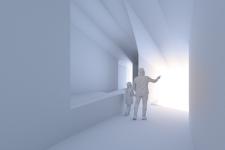
A key design innovation lies in the generative façade strategy. By mapping the façades of both the historic city hall and the surrounding urban fabric, window openings are linked across layers. The connecting lines intersect with the new building boundary to produce hybridized window forms, which establish a dialogue between the old and the new. These connections materialize as tubular elements that serve multiple roles: framing windows on the façade, shaping circulation routes, forming communal zones, and providing vertical structural support. In doing so, the façade becomes both a symbolic surface and an inhabitable space.
This strategy ensures that the new building does not impose itself as an isolated object, but instead emerges from the logic of its urban context. Subtle alignments, such as roofline shifts, proportional echoes, and the repetition of arch and rectangular openings, strengthen continuity with neighboring architecture. At the same time, the intersecting tubes generate new spatial experiences: double-height gathering spaces, visual corridors through the building, and platforms that allow visitors to walk alongside the old façade while engaging with the new.
The result is a layered architecture that embodies transparency not only as an aesthetic quality but as a lived experience. Citizens can see through overlapping façades, witness the continuity between old and new structures, and experience openness both physically and symbolically. In this way, the project addresses the broader challenge of situating contemporary civic buildings within historic environments.
Another Transparency ultimately offers a critical alternative to the binary of preservation versus replacement. It demonstrates how adaptive strategies rooted in contextual analysis can preserve history, foster transparency, and reimagine civic space as both a cultural symbol and an accessible public forum. Rather than erasing the past or retreating into nostalgia, the project creates an architecture that is simultaneously historic, contemporary, and democratic.
2022
Typology: Civic / Adaptive Reuse
Location: San Antonio, Texas, USA
Client: Academic Thesis Project
Status: Academic / Conceptual / Unbuilt
Category: Adaptive Reuse, Civic Architecture
Keywords: Adaptive Reuse, Civic Architecture, City Hall, Urban Context, Transparency, Public Atrium, Generative Façade, Tubular Structures, Historical Continuity, San Antonio
Designer: Meng An
Instructor: James Leng, Greg Castillo
Meng An