PROJECT BRIEF
1. Executive Summary
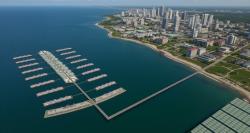
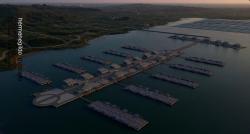
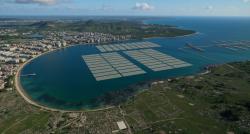
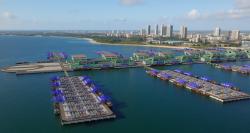
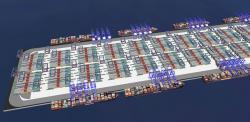
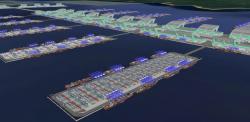
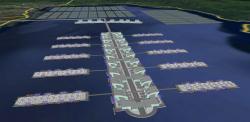
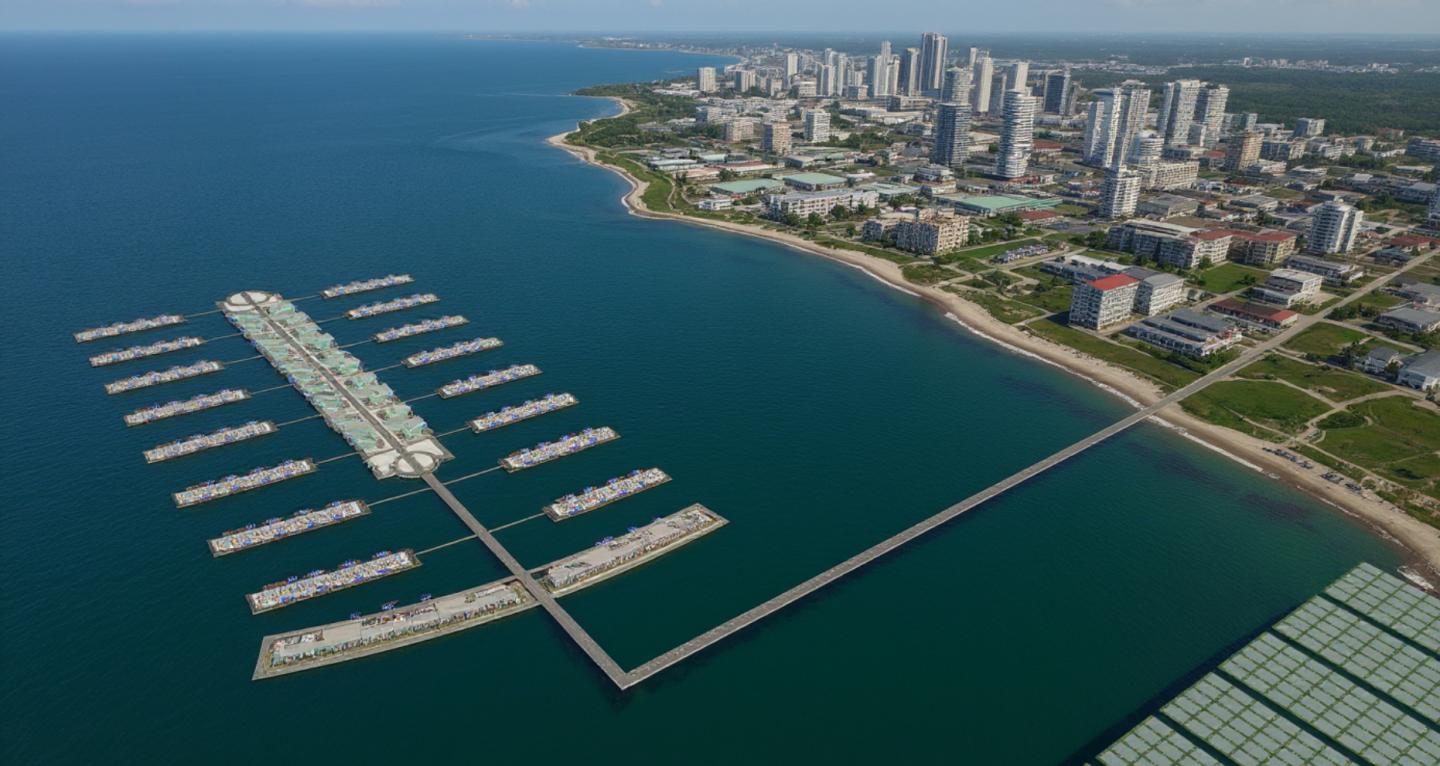
The Conceptual Design by Architect Hermenegildo C. Mercado for the Proposed Automated Deep Seaport is a state-of-the-art, AI-driven port designed to position the Philippines as a global maritime hub. The port will integrate cutting-edge automation, a high-speed rail (HSR) system, and a 360MW floating solar power plant. With a total development area of 1,000 hectares (600 hectares inland, 800 hectares offshore), it will feature advanced logistics, an inland National Strategic Petroleum and LNG Reserve for the for long-term fuel security, port bunkering support with a national fuel reserve capacity for 90 days ( this will be a separate investment), import/export hubs, mart cargo handling, and a direct connection to international trade routes, including BRICS networks. This will be a Project of National Significance ( PNS ).
2. Project Scope & Scaling Adjustments
Port Area & Land Reclamation
• Total Development Area: 1,400 hectares
• Offshore component: 1,000 hectares offshore platform supported by deep-sea piling, eliminating the need for reclamation for cargo terminals, logistics zones, and industrial complexes.
• Onshore component: 400 hectares designated for logistics hubs, administrative buildings, customs zones, and access roads, industrial park, and export processing area.
• High-Speed Rail Integration: Directly links Sarangani to General Santos, Davao, CDO, Zamboanga, and Surigao.
• Renewable Energy: Powered by a dedicated 360MW floating solar PV system.Capacity & Future Expansion
• Initial Cargo Handling Capacity: 75-100 million TEUs per year
• Scalability: Expandable to 150 million TEUs as trade volume increases.
• Dedicated Bulk Terminals: Dry bulk, liquid bulk, LNG, and specialized agricultural product storage. (National Strategic Petroleum and LNG Reserve with a storage Capacity of 5M barrels oil, 500k m³ LNG good for 90 days of nation use This will be a separate investment package project.)
• Dedicated Container Terminals: Optimized for transshipment and direct export-import cargo.
Automation & AI-Driven Logistics
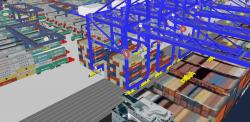
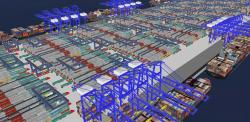
• 416 Super Post-Panamax Cranes for handling ultra-large container vessels.
• 1,200 Automated Rail-Mounted Gantry (ARMG) Cranes for yard operations.
• 2,000 Autonomous Guided Vehicles (AGVs) for internal cargo movement.
• AI-Powered Operations Control Center for predictive analytics and efficiency optimization.
Infrastructure & Connectivity
• Superhighway & Rail Network:
o 150 km high-speed railway connecting the port to Metro Manila and Mindanao logistics corridors.
o Dedicated truck corridors with automated weighbridges and traffic management.
o Customs clearance zones integrated with AI-driven digital processing.
• Onsite Logistic Hubs: Warehousing, cold storage, and industrial free zones for value-added processing.
Zero-Carbon Emission & Renewable Energy
• AI-Driven Electric Vehicles & Cargo Handling Equipment
• Green Buildings & Smart Grid Integration
• 360 MW Floating Solar PV Plant
• Hydrogen Fuel Cell Backup Power
3. Capital Expenditure (CAPEX)
Component Cost (US$ Billion) Details
Total CAPEX US$ 10.0B Ensures the full-scale completion of a technologically advanced, automated deep-sea port. The total $10 billion investment is categorized into six major components, each designed to optimize port operations, ensure long-term sustainability, and integrate seamlessly with global trade networks.
4. Operational Expenditure (OPEX)
Cost Component Estimated Cost (US$ Million) Details
Annual OPEX Estimate US$500M - US$750M The operational expenditure (OPEX) of the Automated Deep Seaport is designed to ensure cost efficiency while maintaining world-class operations. This provides an annual OPEX ensuring smooth port functionality, sustainability, and global competitiveness.
5. Conclusion
The Proposed Automated Deep Seaport represents a transformative investment in the Philippines' global trade positioning. With a fully automated AI-driven system, a high-speed rail network, and a sustainable power source, this project ensures long-term economic growth and competitiveness. The strategic integration with BRICS further strengthens its global significance.
The Proposed Automated Deep Seaport will be a transformative project for the Philippines' maritime industry, providing economic growth, strategic trade positioning, and cutting-edge AI-driven automation. With a fast-tracked construction approach, deep integration into global trade networks, and sustainable energy solutions, it is positioned to become a premier port in Asia-Pacific.
Key Recommendations:
• Optimize CAPEX & OPEX by leveraging AI for operational cost reductions.
• Secure government incentives to attract foreign direct investments.
• Implement phased commissioning to enable revenue generation before full completion.
• Strengthen trade partnerships with BRI, BRICS, and ASEAN for long-term sustainability.
• Enhance resilience against geopolitical risks through diversified trade routes and autonomous logistics systems.
2025
The Conceptual Design by Architect Hermenegildo C. Mercado for the Proposed Automated Deep Seaport is a state-of-the-art, AI-driven port designed to position the Philippines as a global maritime hub
Archt. HCMercado team
h h