Submitted by WA Contents
KRFT sets new standard for special education for de Zevensprong in Hoorn
Netherlands Architecture News - Apr 02, 2026 - 07:04 47542 views
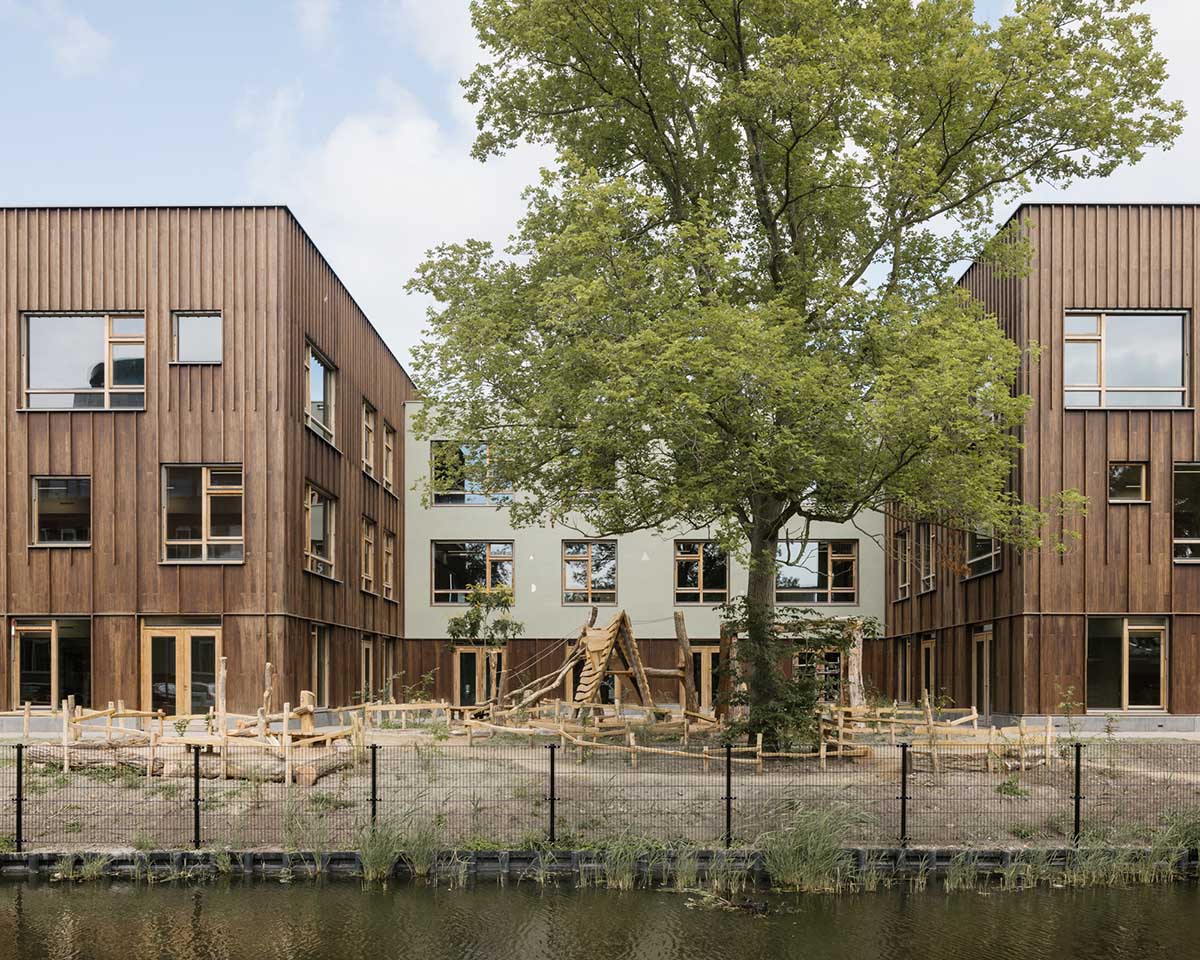
This school year marks the opening of "de Zevensprong", the new Integrated Child and Expertise Centre in Hoorn, the Netherlands.
Designed by Amsterdam architecture studio KRFT, the facility combines together five old facilities for special (primary) education into one sustainable setting for learning, care, childcare and sport.
Children can grow freely and feel at home at the center, where specialists collaborate with one common goal: the children come first.
Architecture at a child’s scale
The commission came after Stichting Mevrouw Meijer invited a number of architects to create a concept for this intricate brief as part of a design study. A single facility that could provide continuity, individualized attention, and a human scale was needed to serve students with a variety of learning problems across five scattered school locations.
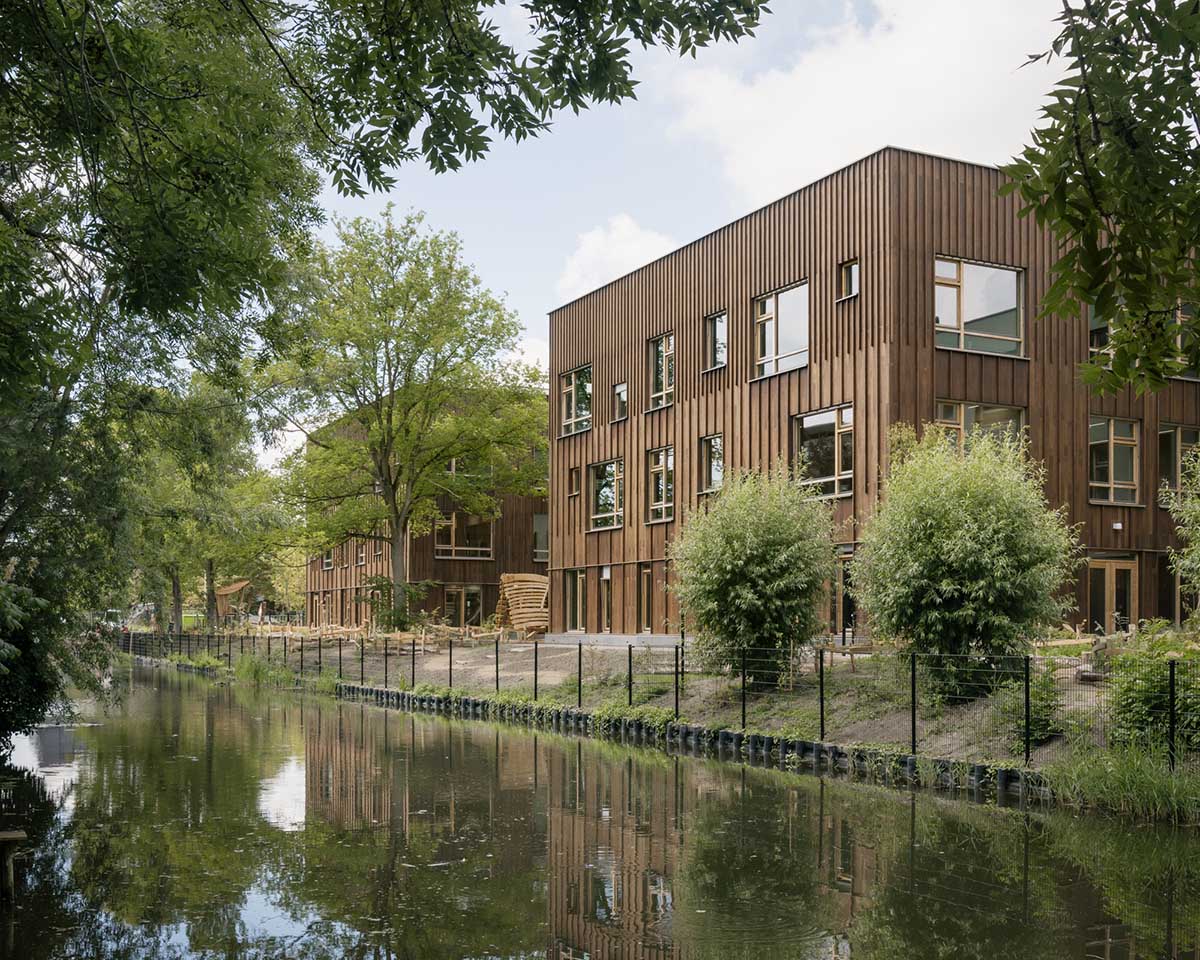
Instead of combining everything into a single, massive form, KRFT suggested a "pavilion" typology, which consists of five low-rise "houses" surrounded by greenery. This gave the school a sense of grounding, legibility, and closeness to the natural world.
"It is more than just a school building," said Eline Peen, Director of de Zevensprong. "It is a place where children feel safe, can grow at their own pace and where education, care and childcare quite literally come together under one roof."
A pavilion structure that brings clarity and calm
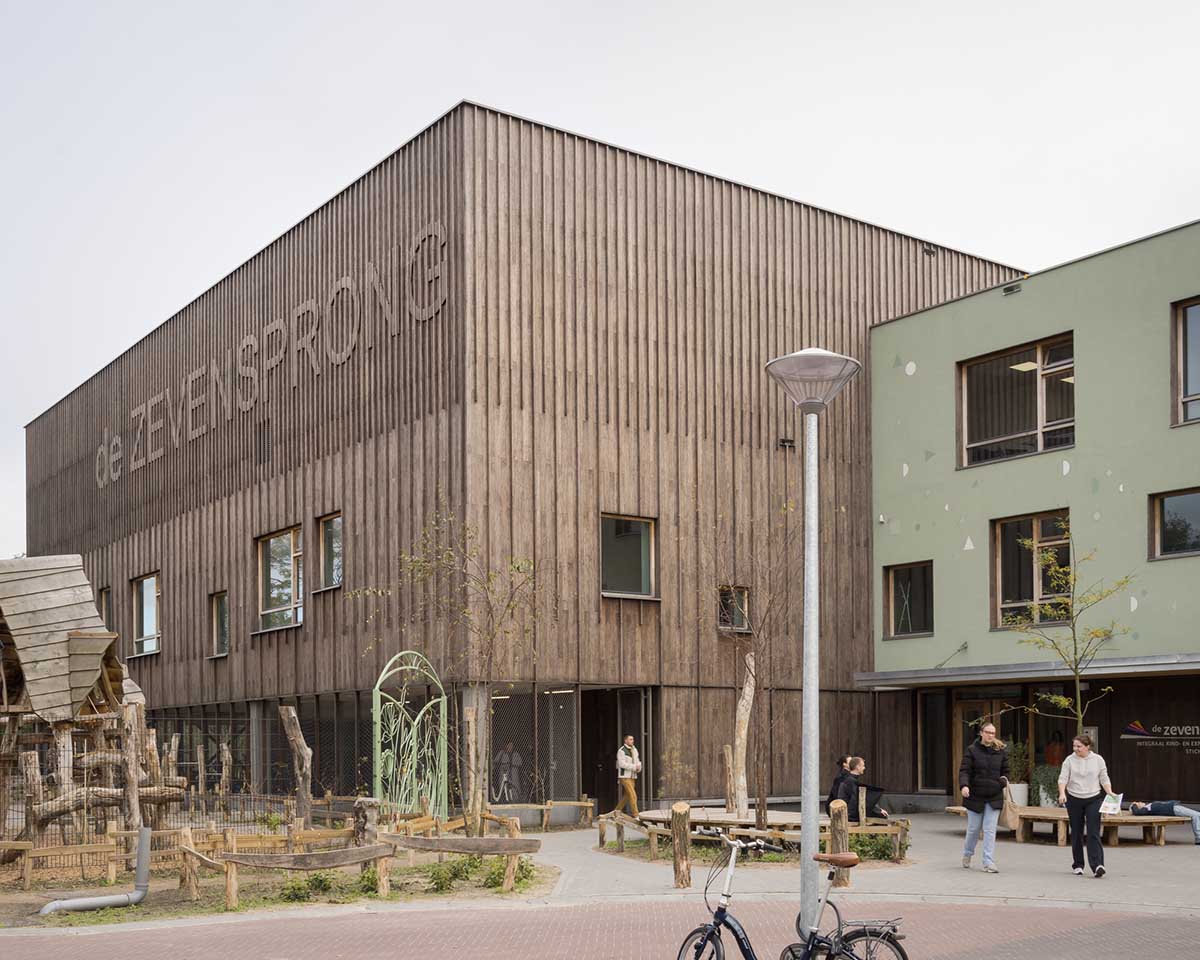
Despite having a big footprint, the building is divided into tiny "schools," each with a scale that appeals to the child and its own entrance.
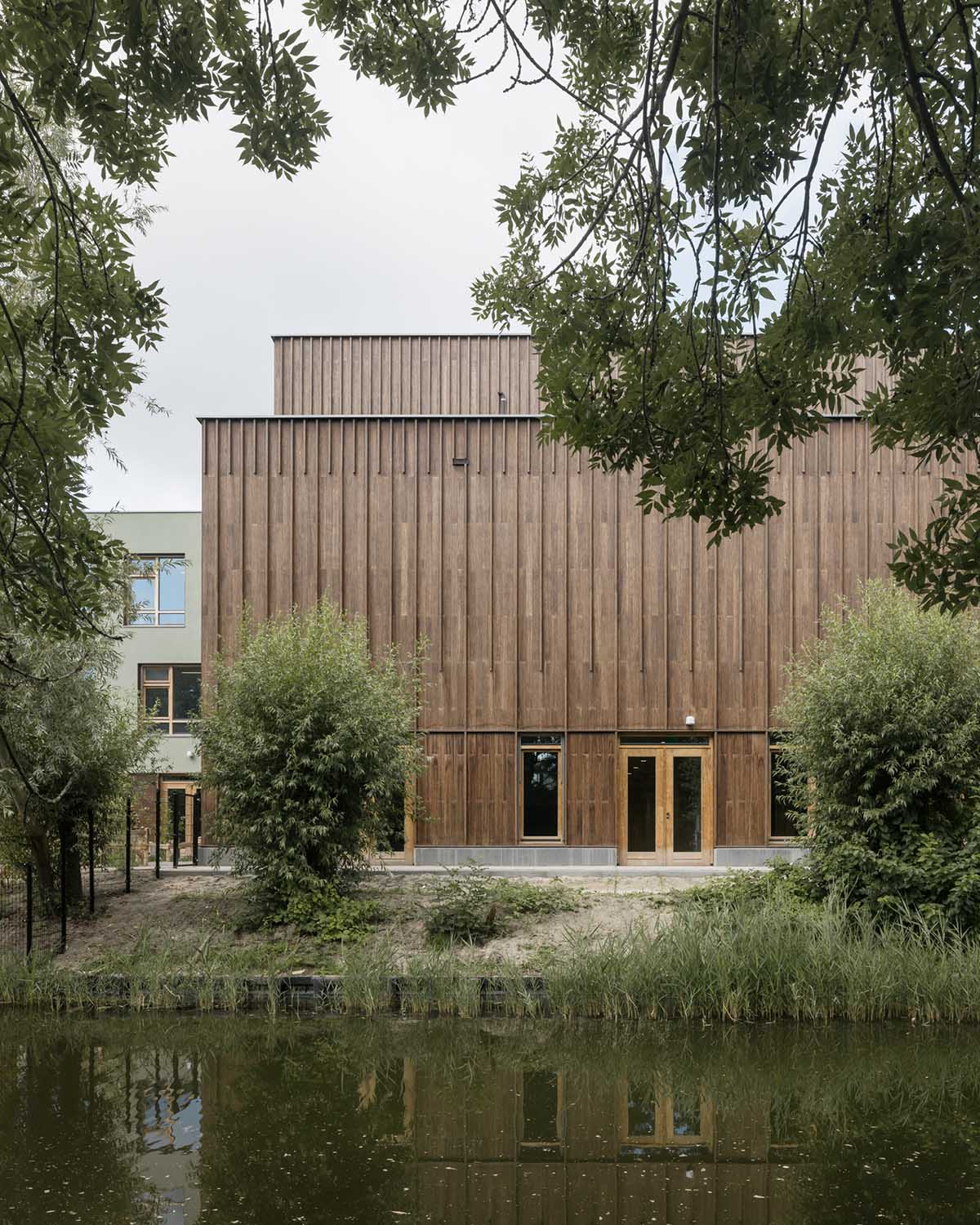
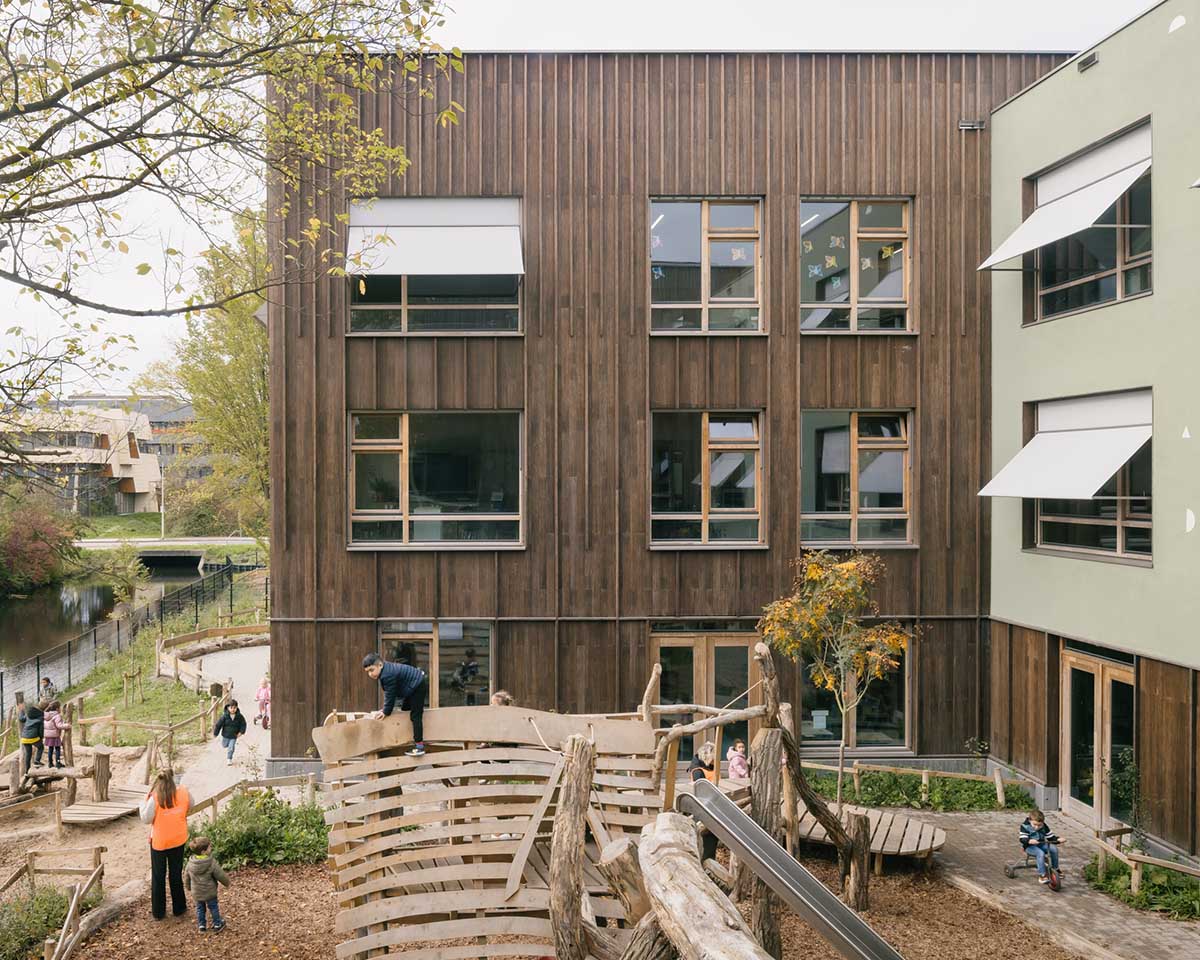
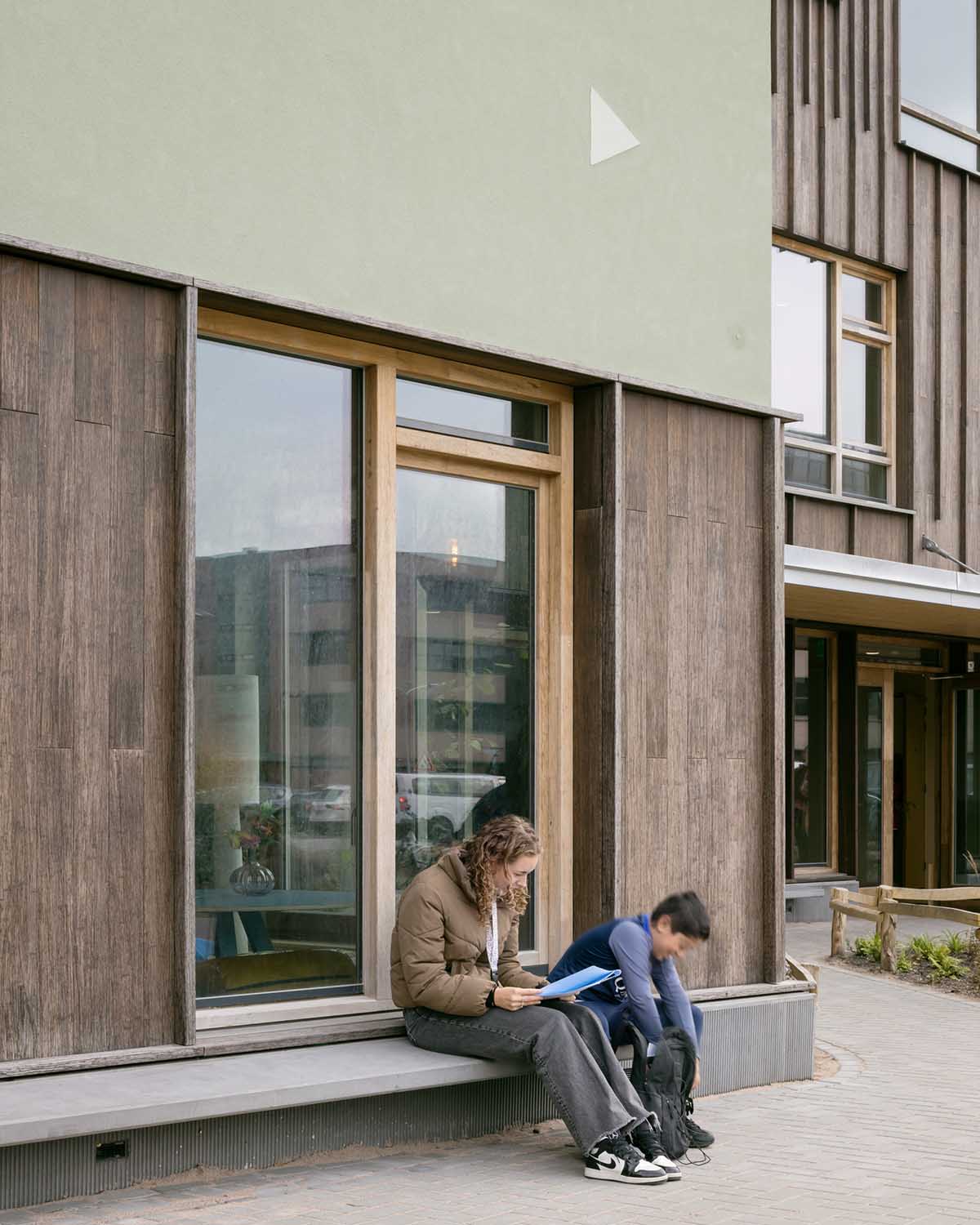
The dark-brown bamboo and light-green plaster alternate to create a welcoming, whimsical, and tactile façade. Inside, classrooms are arranged in pavilions surrounding open, green learning courts, which promotes clarity and tranquility.
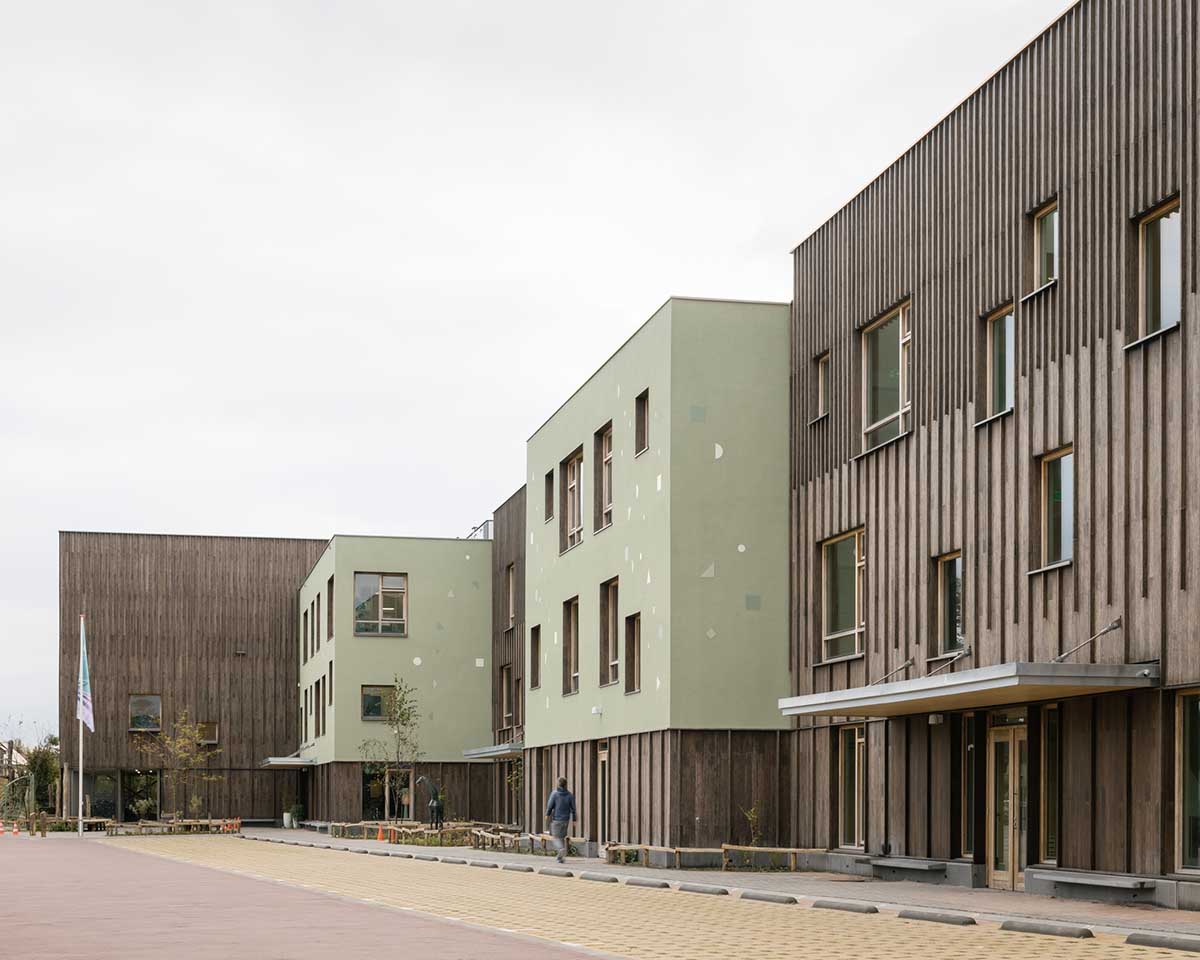
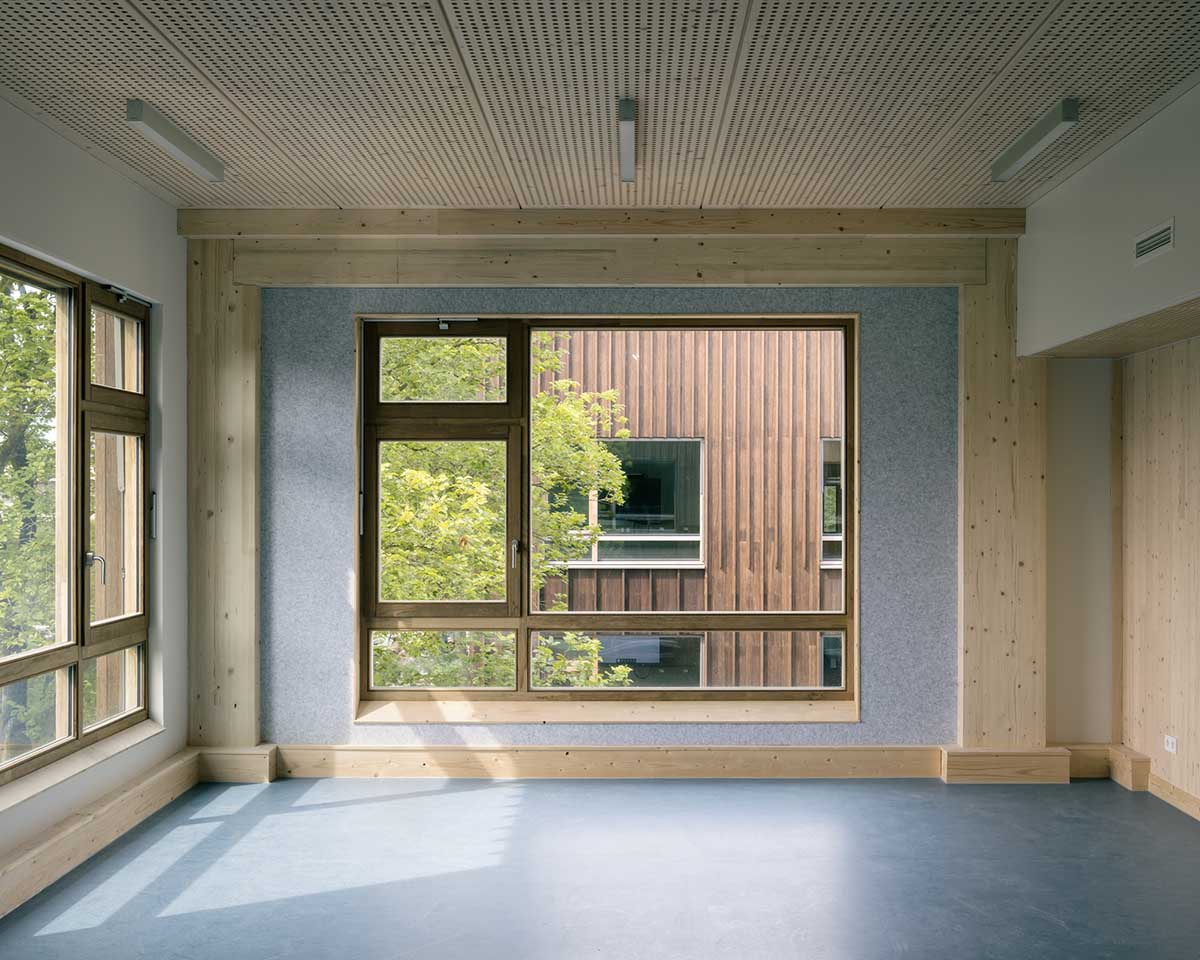
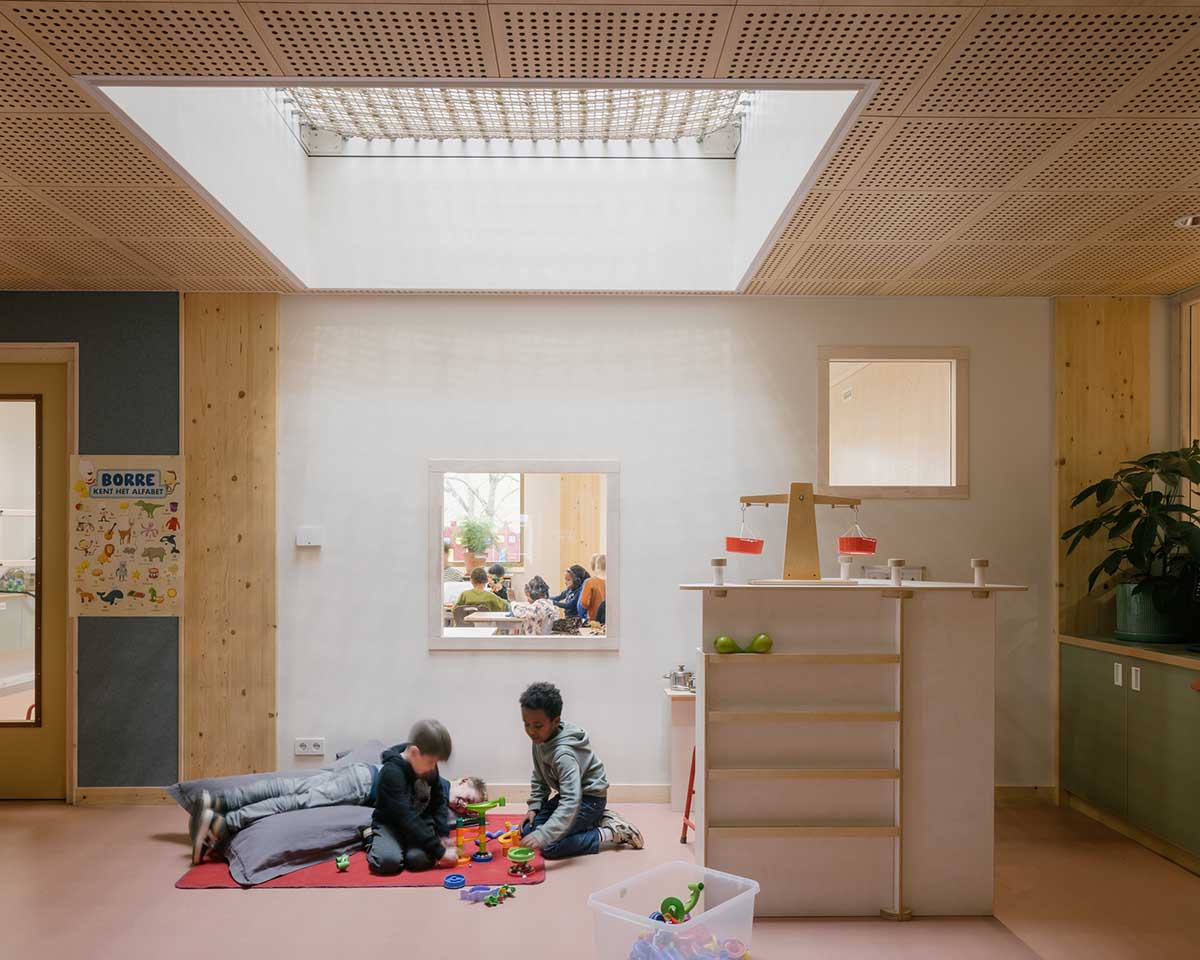
In addition to providing vistas of the surrounding green outdoor spaces from each classroom, the tiered pavilions allow daylight to enter the structure deeply.
The links between groups and the nearby (nature-based) play areas are reinforced by large windows and unobstructed sightlines. The "Praathuis," an unofficial gathering spot for parents, experts, and educators, is located at the center of the structure.
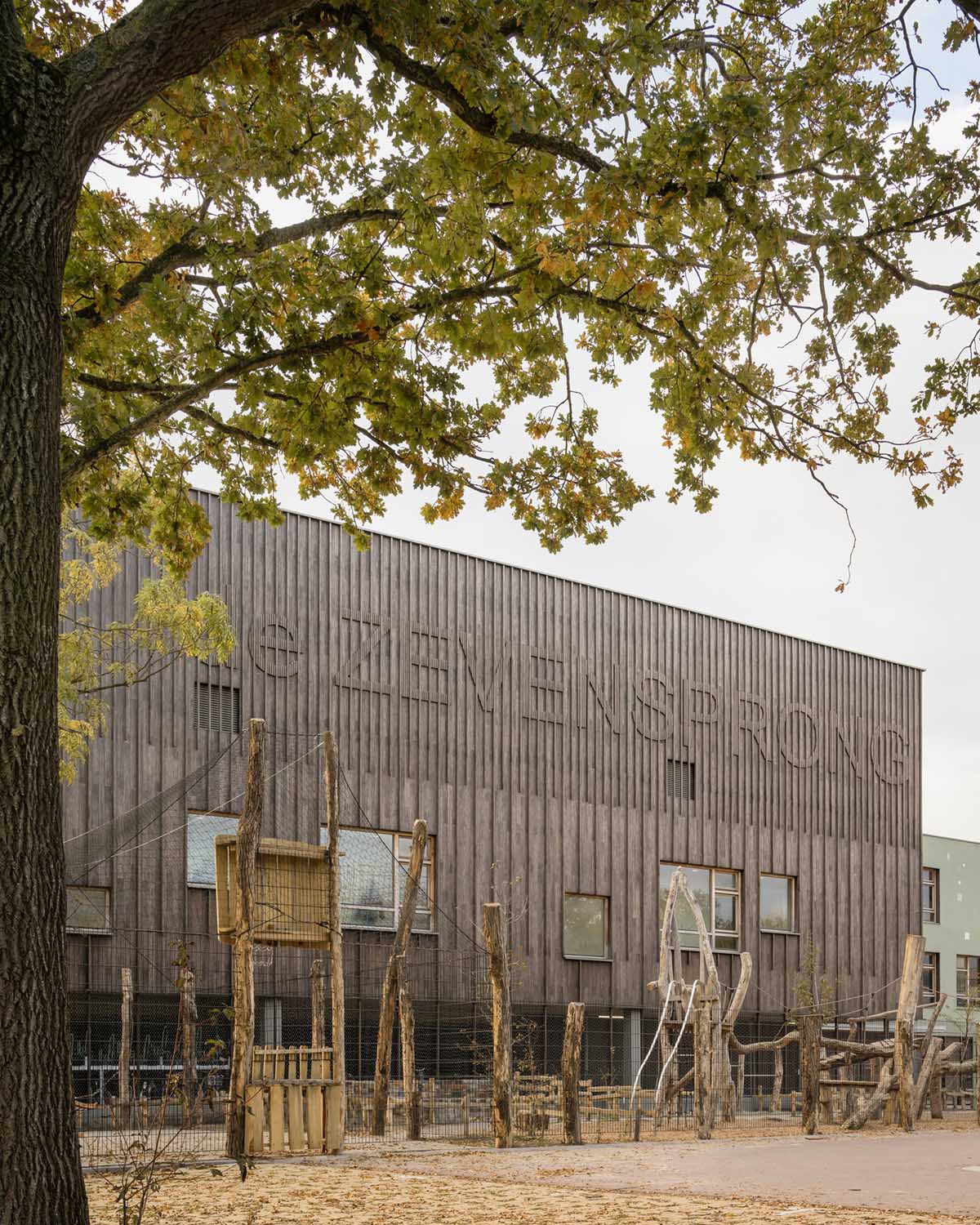
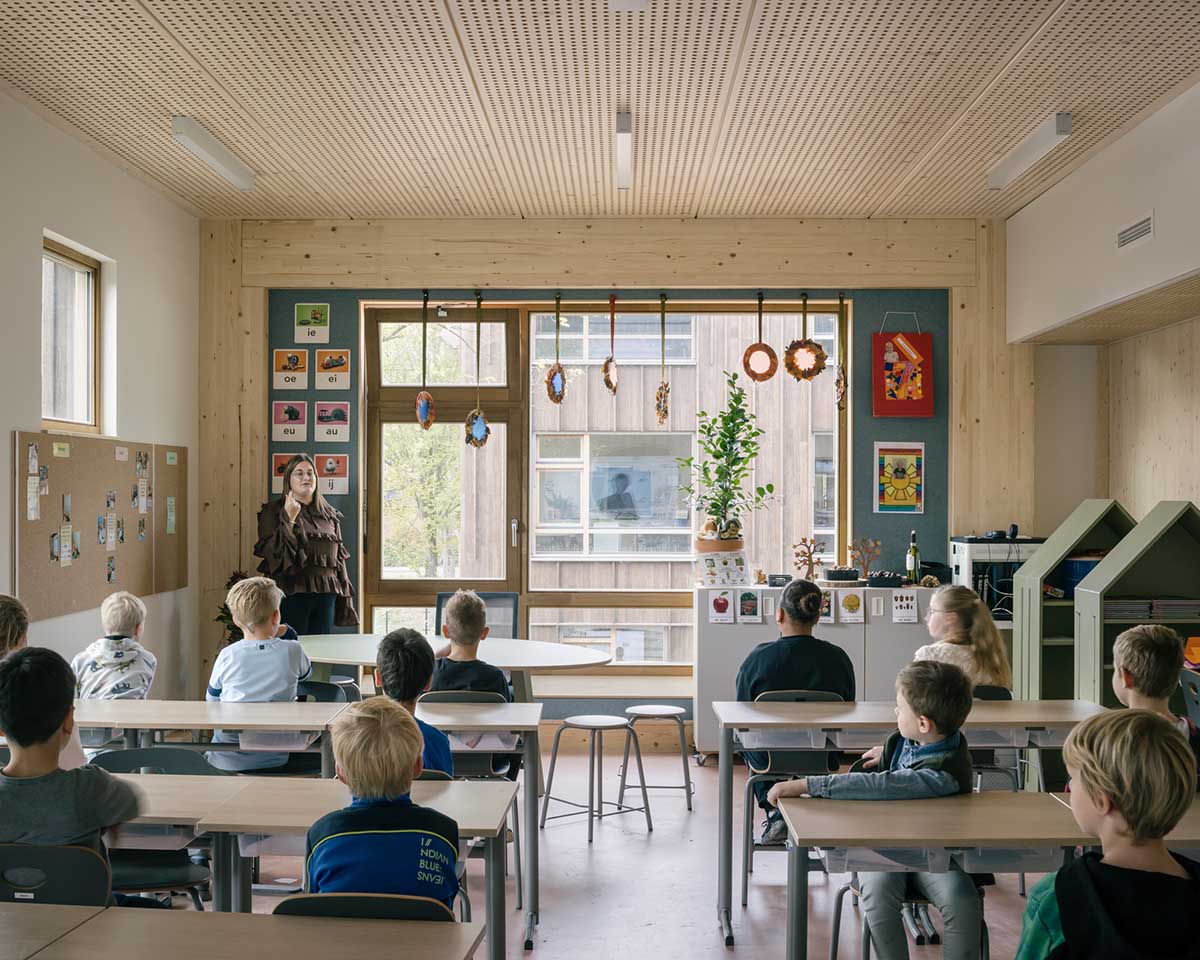
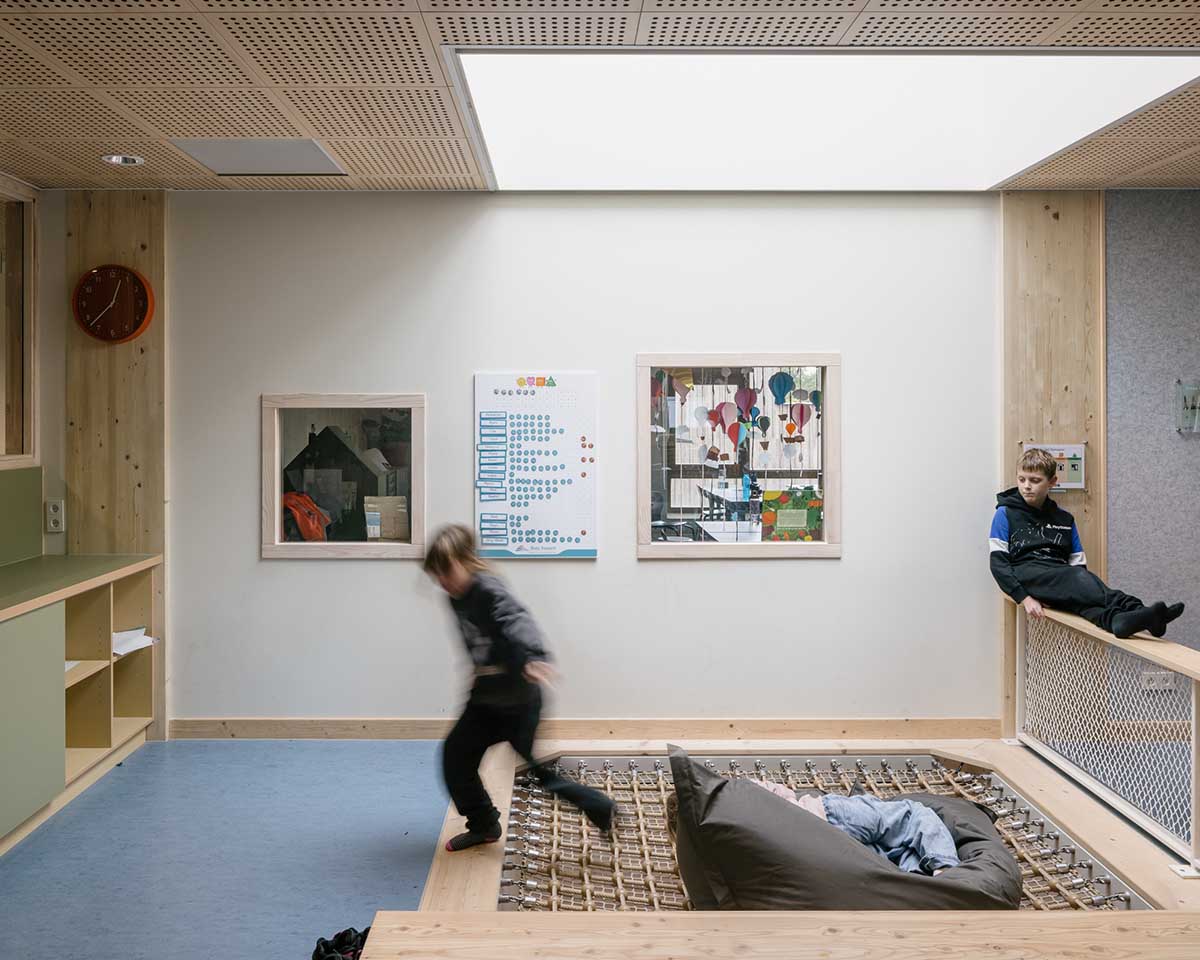
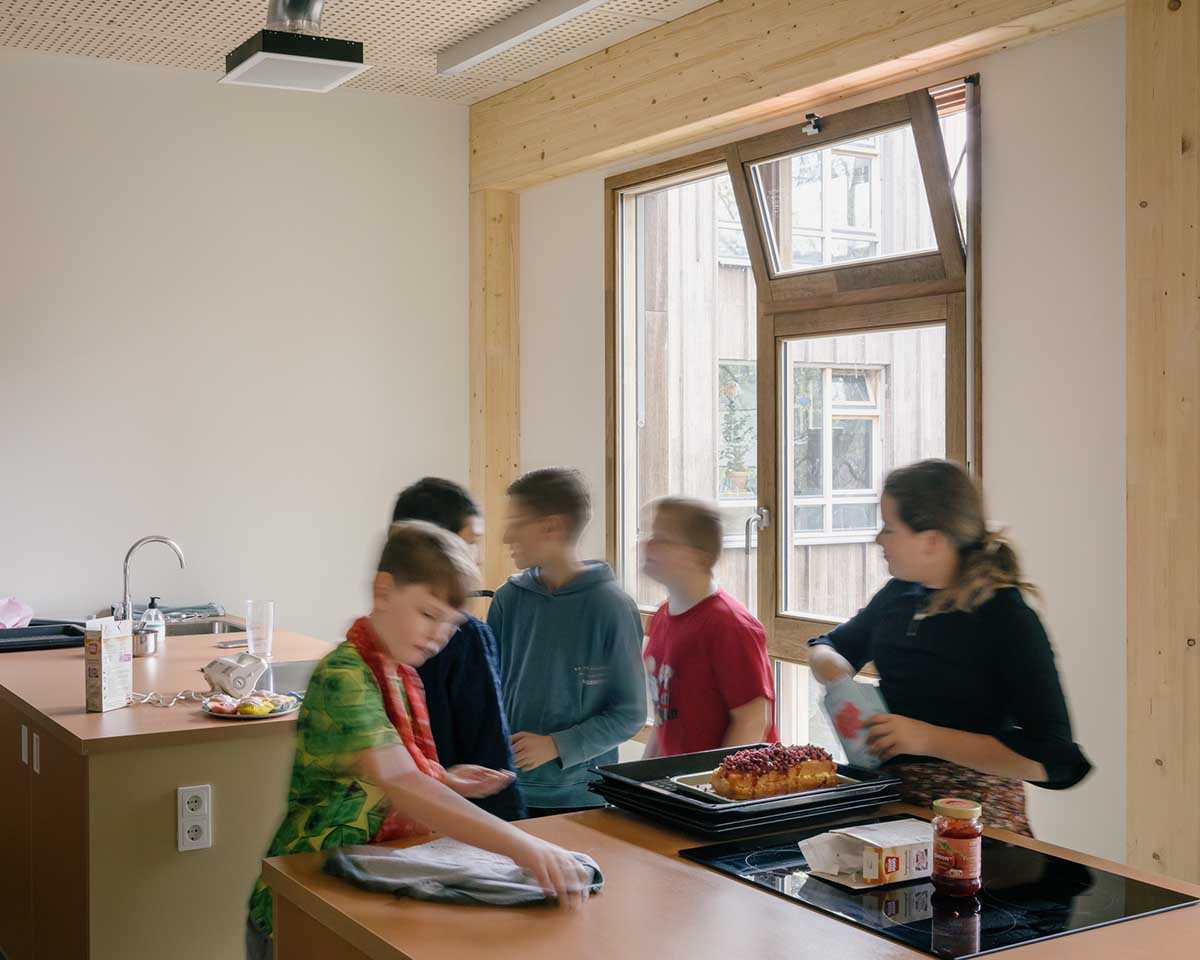
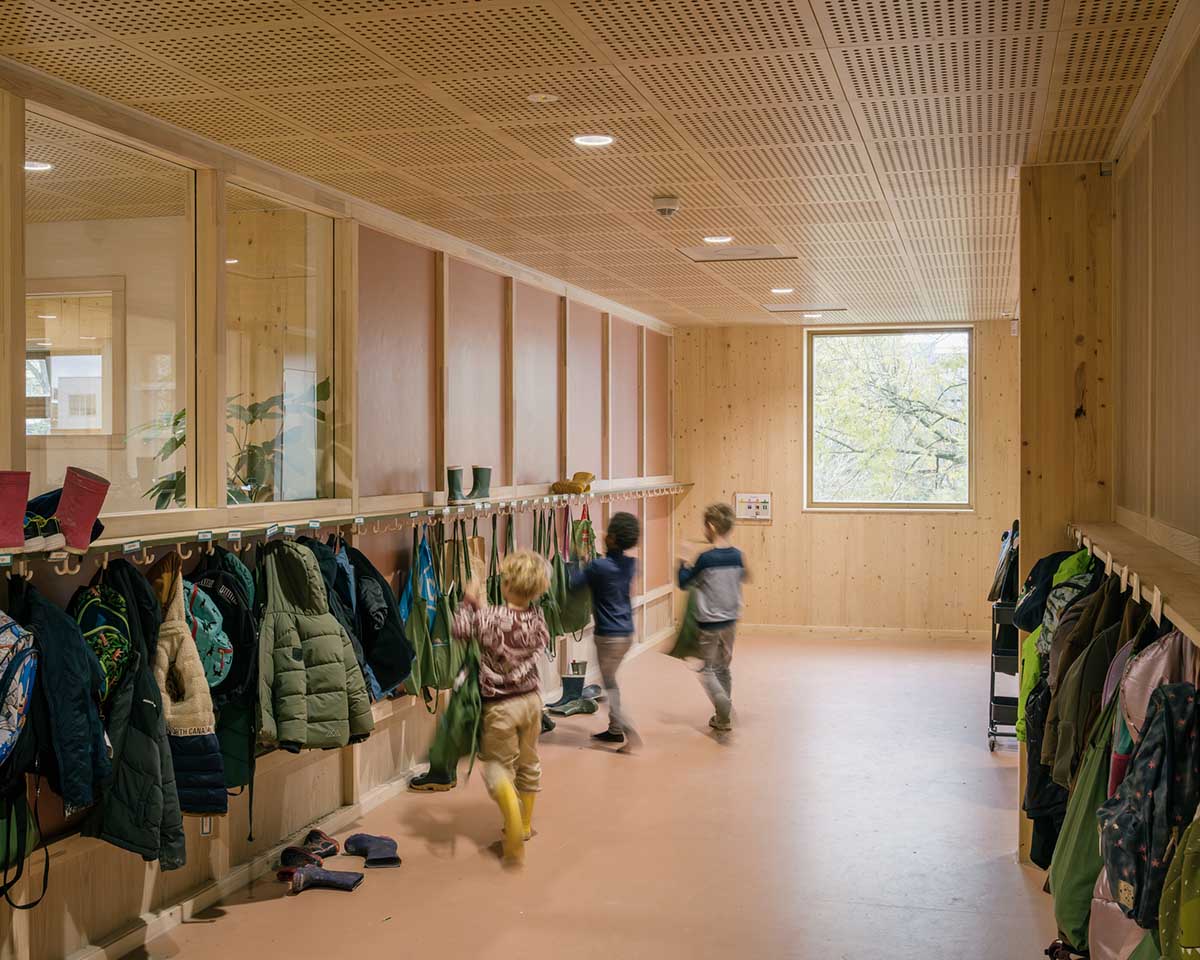
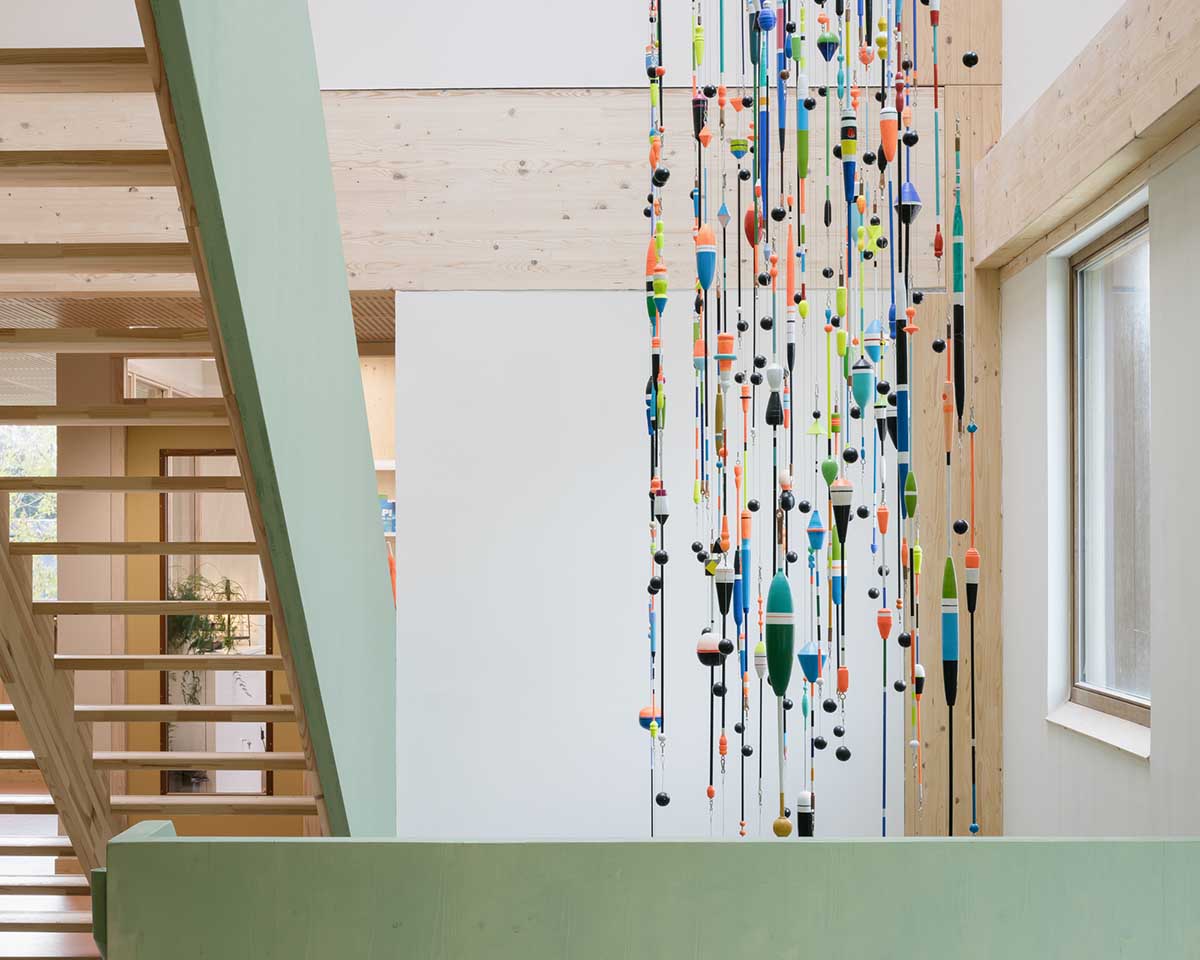
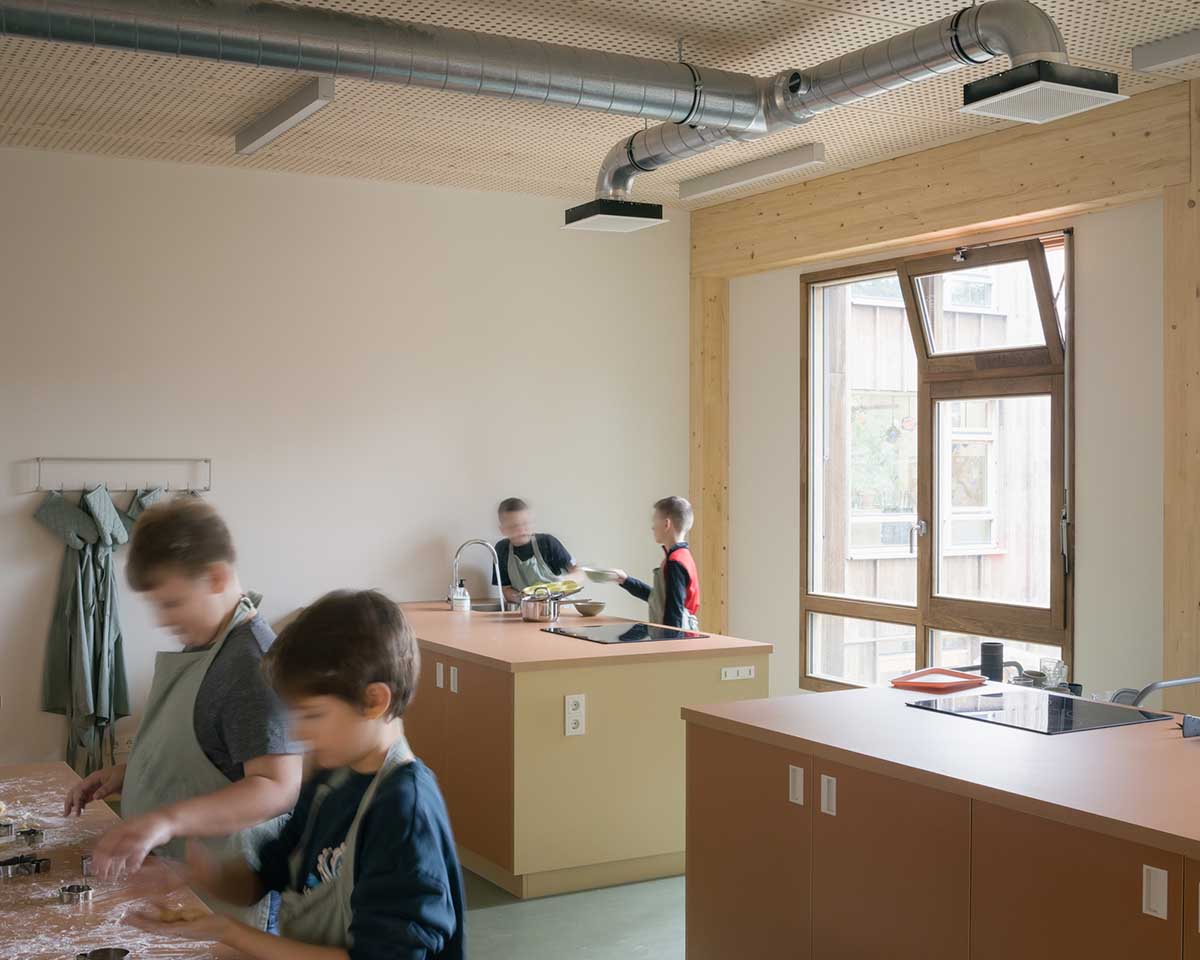
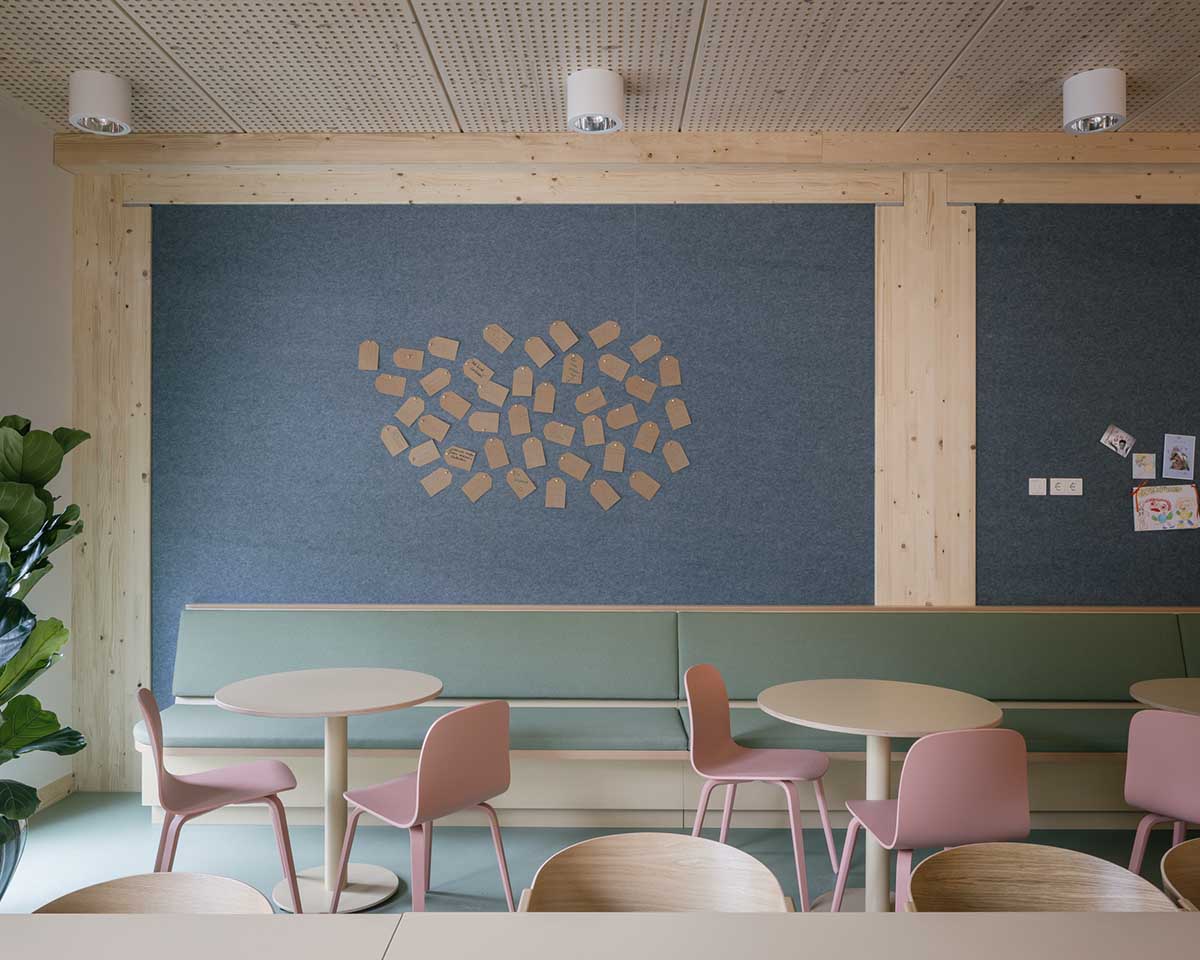
Children with sensory sensitivity are also carefully taken into account in the design. A serene and cozy atmosphere is guaranteed by the use of natural materials, soft colors, and soothing acoustics produced by timber walls and ceilings.
"We wanted to create a place where clarity, tranquillity and a sense of security are central," explained Oscar Vos, architect and partner at KRFT.
"A building that gives children something to hold onto and inspires professionals to collaborate from one shared vision."
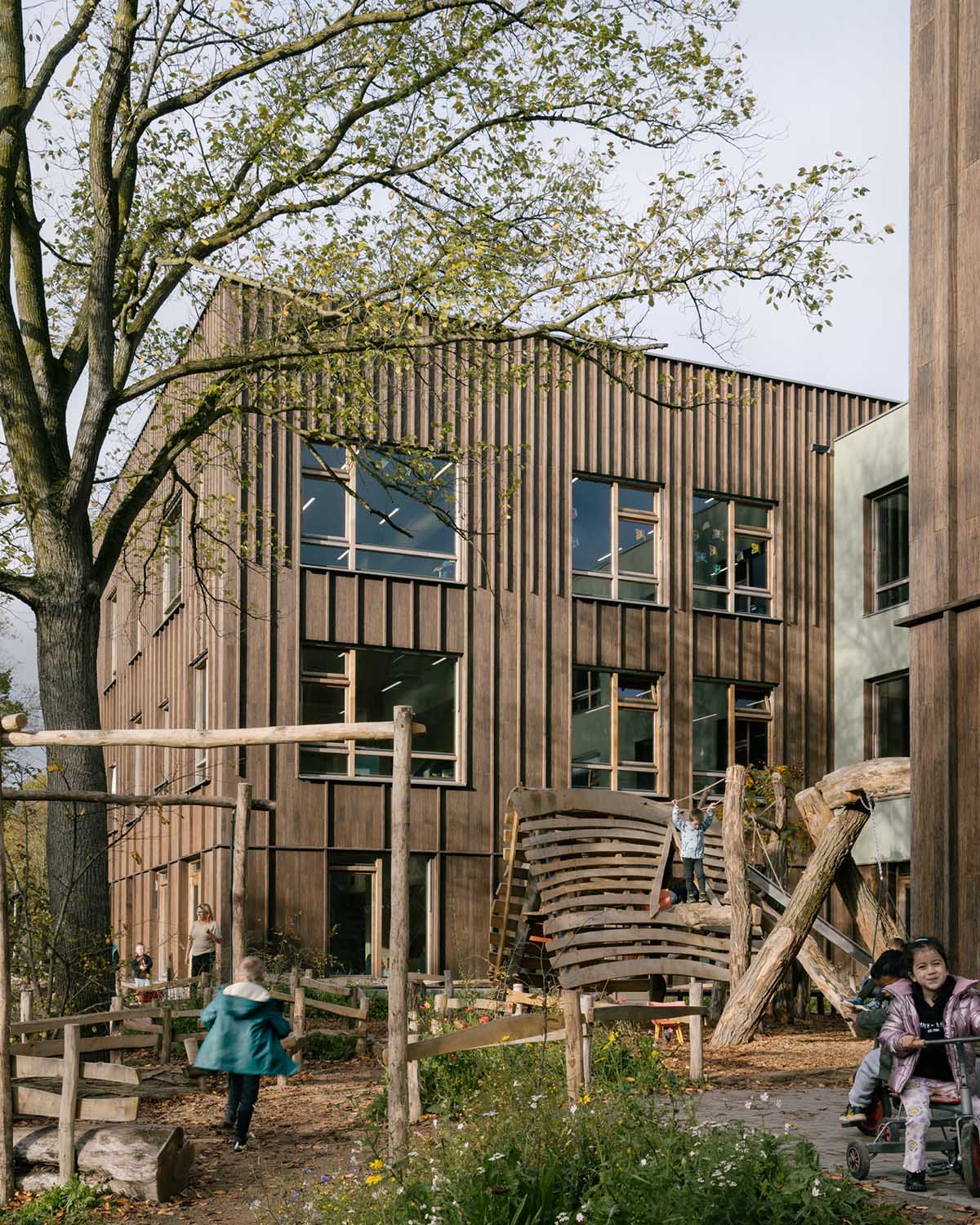
Radical material choices for a Paris Proof school
One of the largest timber primary schools in the Netherlands, the center has a floor space of around 7,000 square meters and satisfies Paris Proof requirements. A lightweight, demountable, and adaptable open timber skeleton structure serves as the foundation for the building.
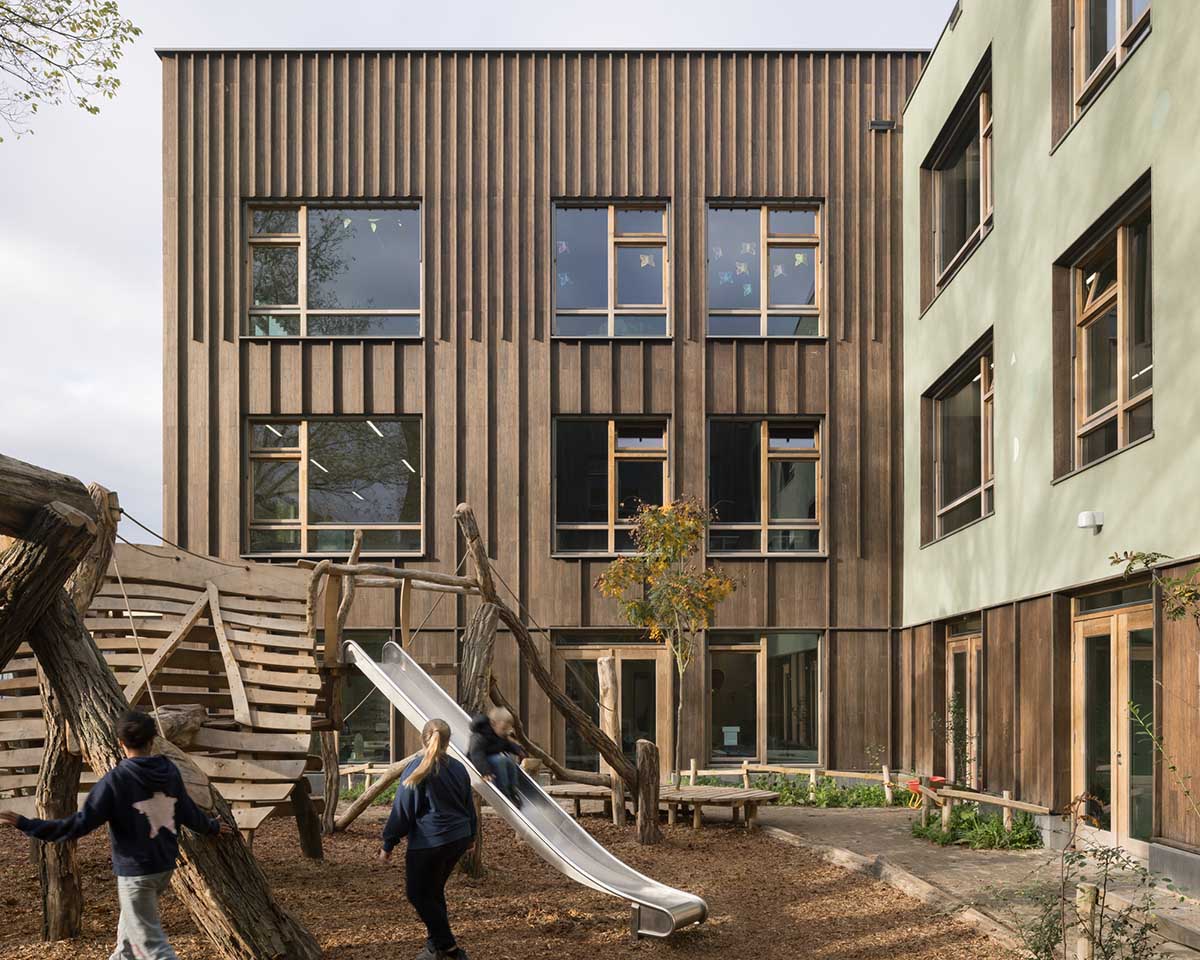
Vapour-open, bio-based façades with natural insulation and timber floor systems help create a healthy internal environment and a much smaller carbon footprint.
The pressed-bamboo façade, which is still hardly used on this size in the Netherlands, combines lifespan, fire safety, and durability. Emissions during construction were further decreased via prefabrication, dry construction techniques, and material reuse.
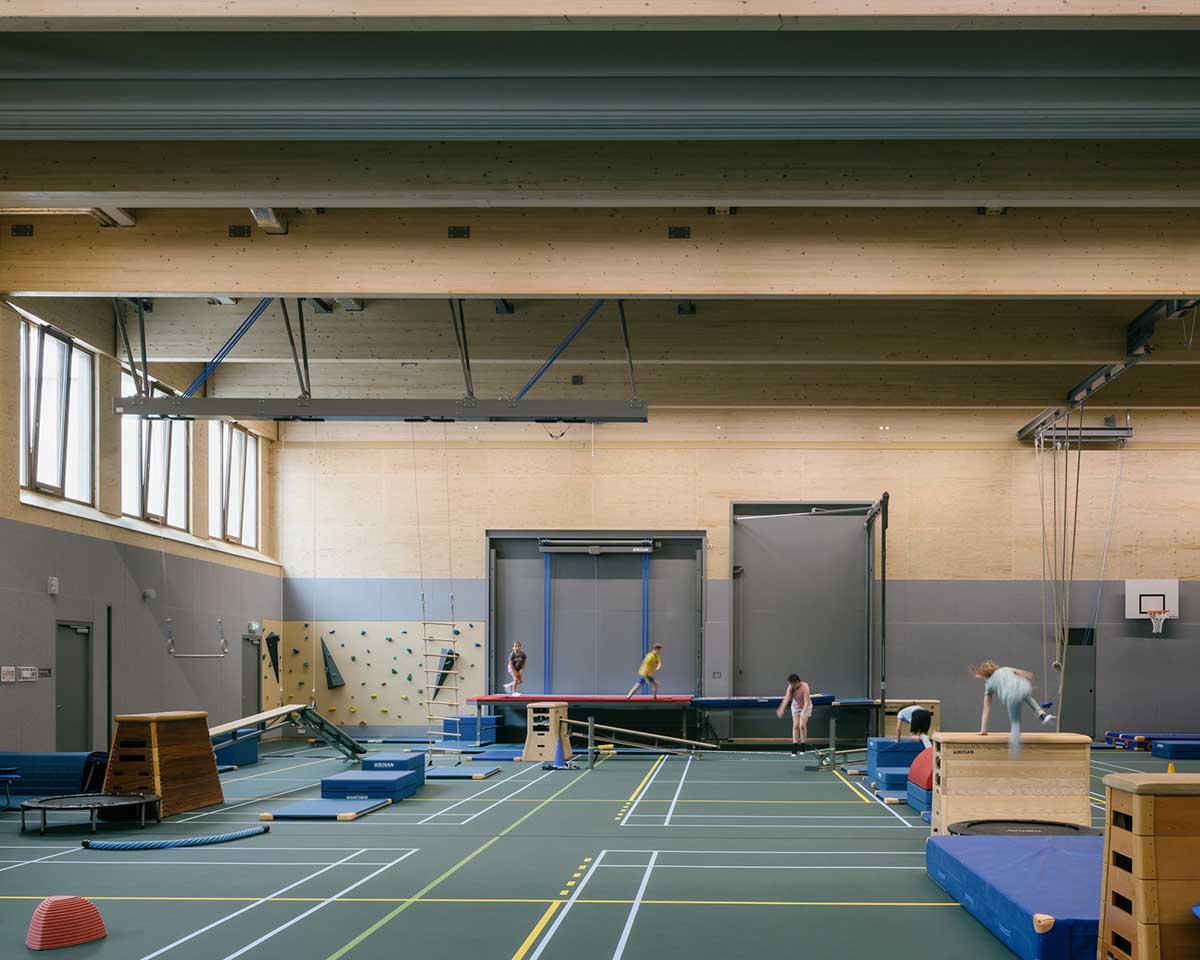
"Making a school Paris Proof is no simple task; you must be radical in every material choice. Thanks to natural materials in the structure, façades and finishes, 2 million kg of CO₂ (285 kg CO₂ per m²) is stored in the building for the long term. At the same time, this limits the embodied carbon to 315 kg CO₂-eq per m². In doing so, we align with the Paris climate targets," Vos explained.
"The biggest step was an open structure in solid timber. This cuts both ways: it has a low environmental impact, is demountable and therefore circular, and is adaptable in use. But it doesn’t stop there: a bio-based façade, wooden window frames, wood-fibre insulation, and even the final interior finishes—every decision had to be assessed for its climate impact."
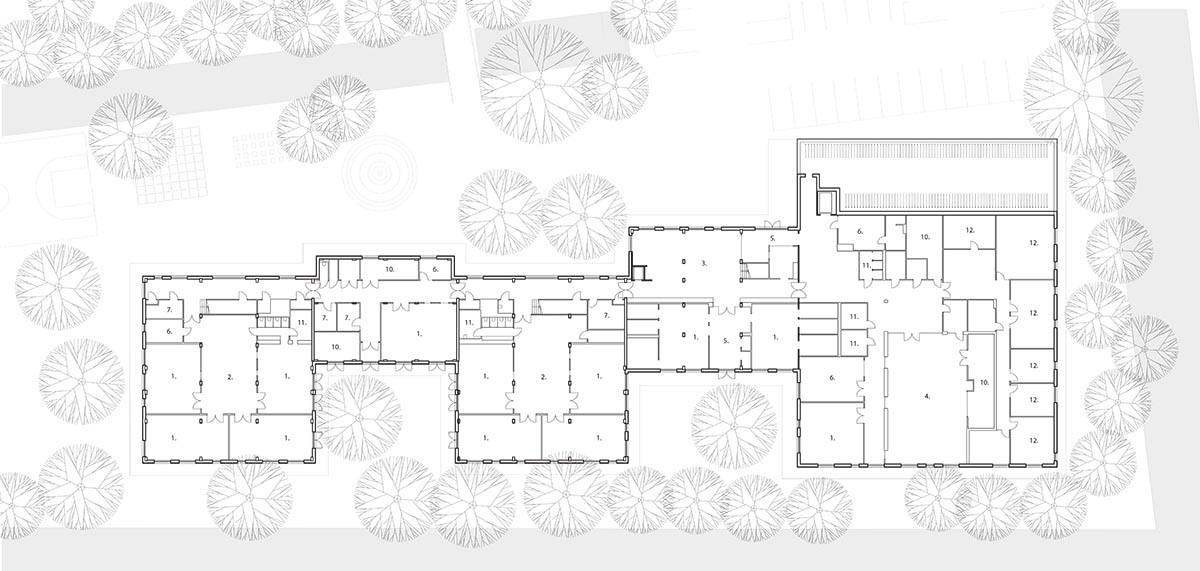
Ground floor plan
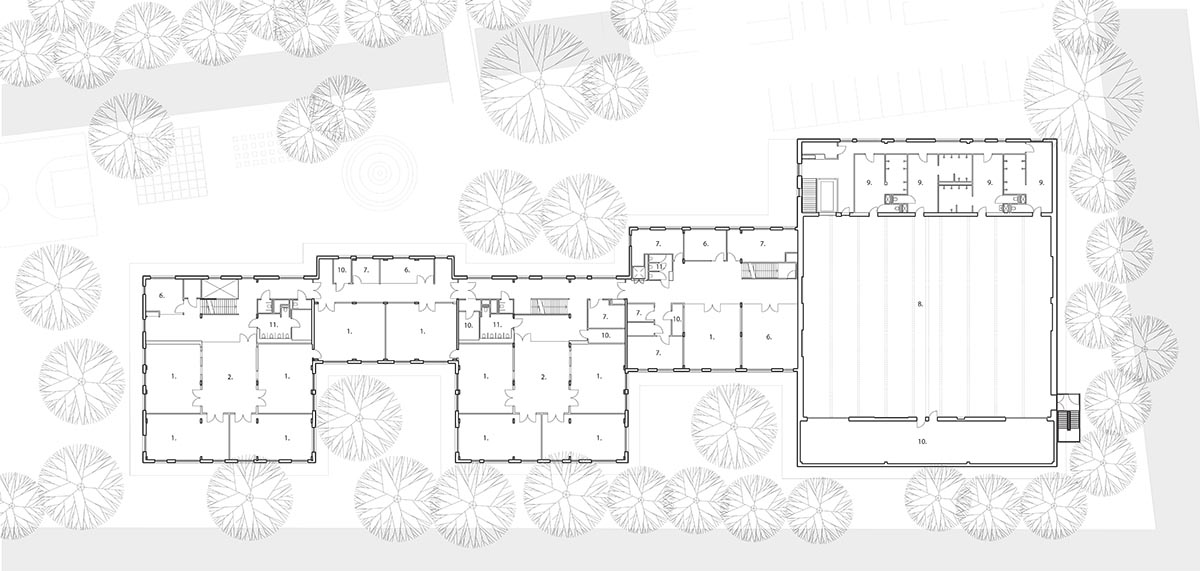
First floor plan
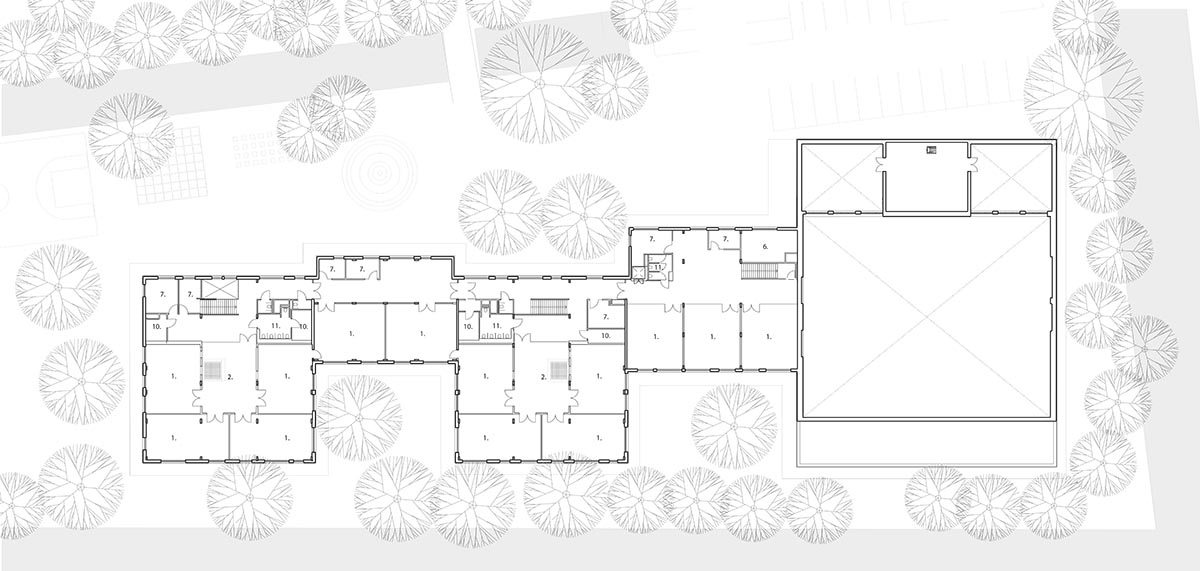
Second floor plan
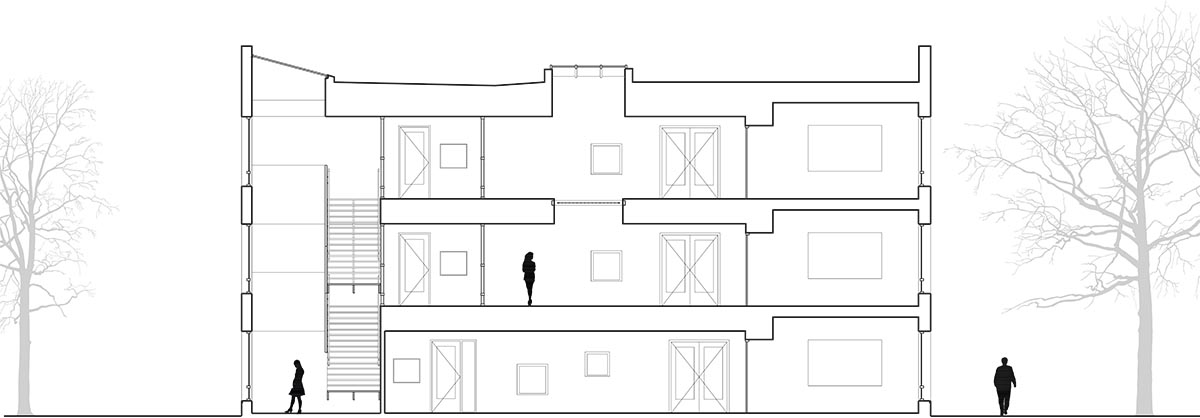
Section

Elevation
KRFT is an international architecture studio led by partners Thomas Dieben and Oscar Vos. With projects in the Netherlands, Belgium and the UK, the practice focuses on transformative architecture that responds to social needs in the public domain. Each project is rooted in its environment, drawing on existing contexts while aiming for robust, sustainable and future-oriented solutions.
All images © Stijn Bollaert.
All drawings © KRFT.
> via KRFT