Submitted by WA Contents
Diamond Schmitt's Ron and Erma Hawkes Centre for the Arts tops out
Canada Architecture News - Mar 19, 2026 - 04:59 49678 views
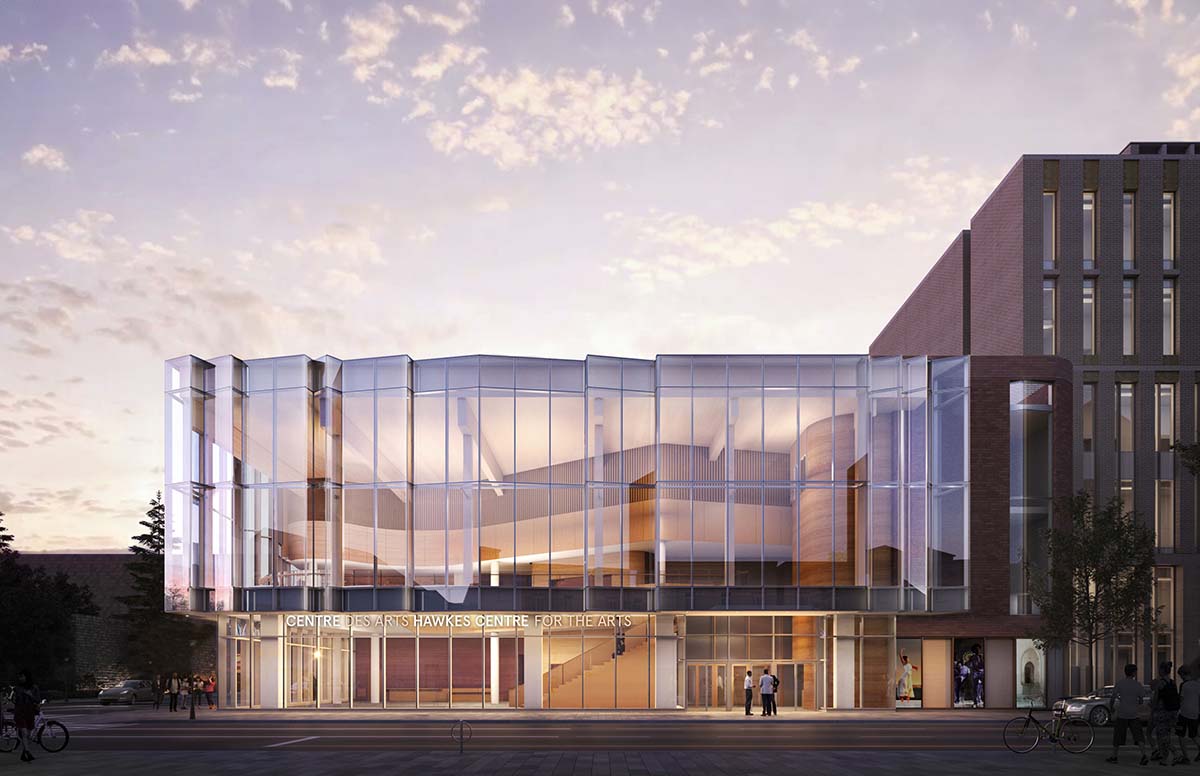
Fredericton, New Brunswick's Ron & Erma Hawkes Centre for the Arts has reached its peak. The new performing arts center, created by Diamond Schmitt in collaboration with EXP, will replace the existing Fredericton Playhouse and increase the city's creative and cultural options while assisting present and future audiences and artists.
In order to establish a new, historic cultural venue for the Province's Capital Region, the design embraces its environment and incorporates elements of both built and natural surroundings.
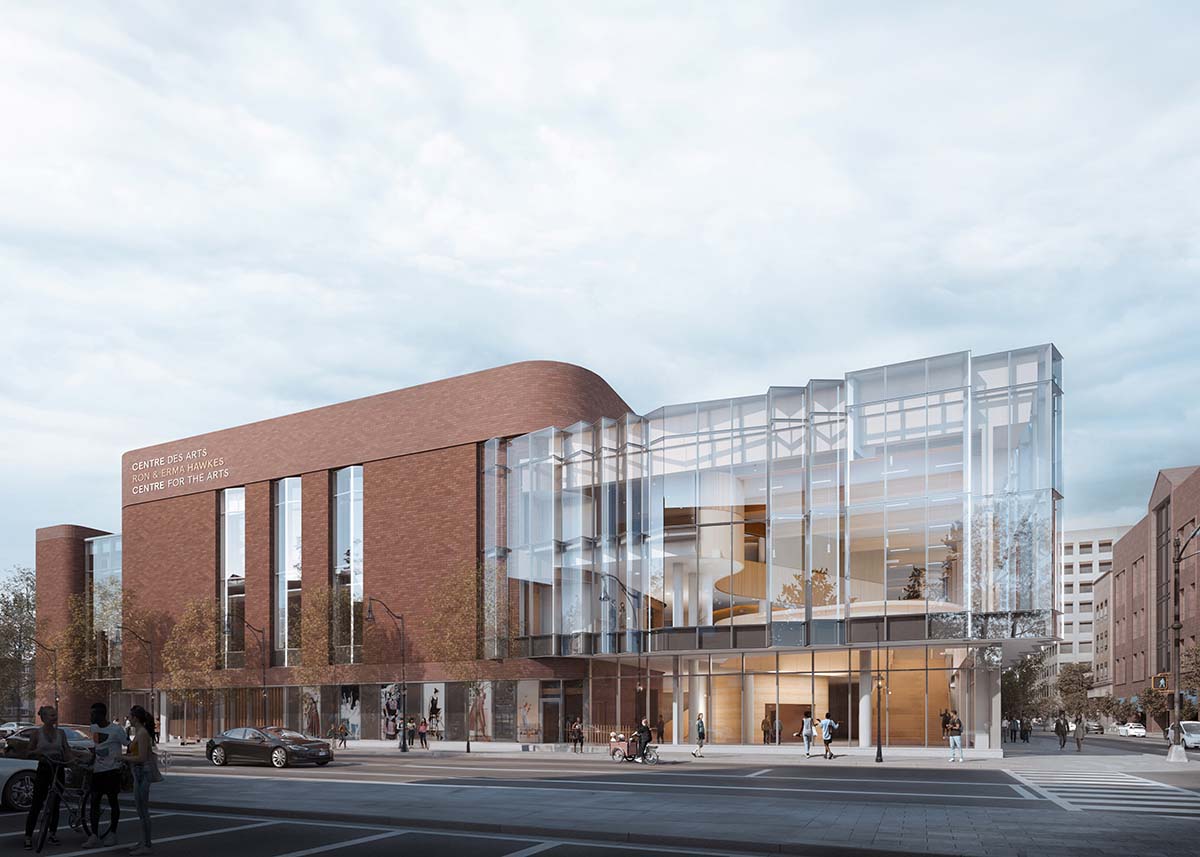
Ron and Erma Hawkes Centre for the Arts Regent Street. Image courtesy of Diamond Schmitt Architects
"Our design is informed by the local geography, arts and culture community, Indigenous culture, and industry of Fredericton," said Gary McCluskie, Principal at Diamond Schmitt.
"This venue will enhance the cultural and performing arts programs of Fredericton. It will be as much of an artistic hub as it will be a hub for the community, energizing the Capital Region’s sense of cultural pride for generations to come," McCluskie added.
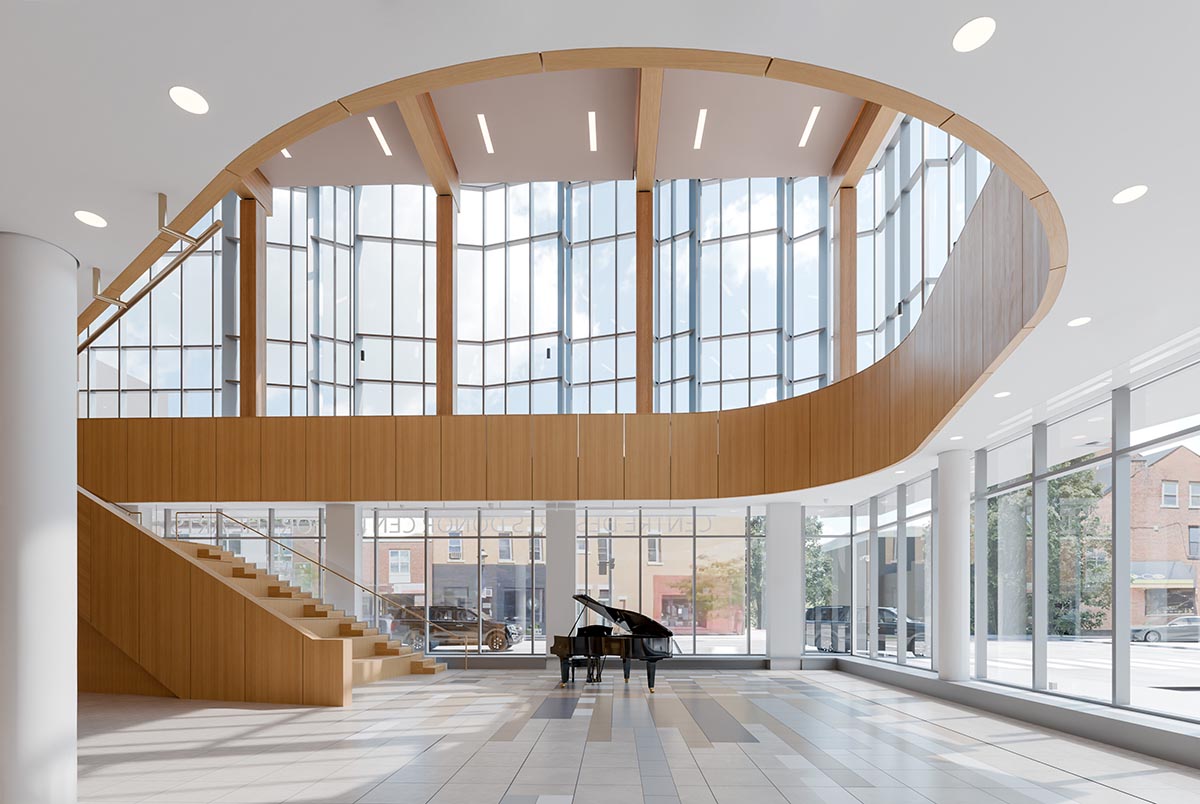
Ron and Erma Hawkes Centre for the Arts Lower Lobby. Image courtesy of Diamond Schmitt Architects
The Ron & Erma Hawkes Centre for the Arts is part of Fredericton's epicentre of entertainment, culture, and heritage, situated in the downtown area close to the city's historic Garrison District.
The Center for the Arts responds to its corner location at King and Regent Streets by emphasizing transparency and openness, building relationships between artists and audiences as well as with the larger community and cityscape.
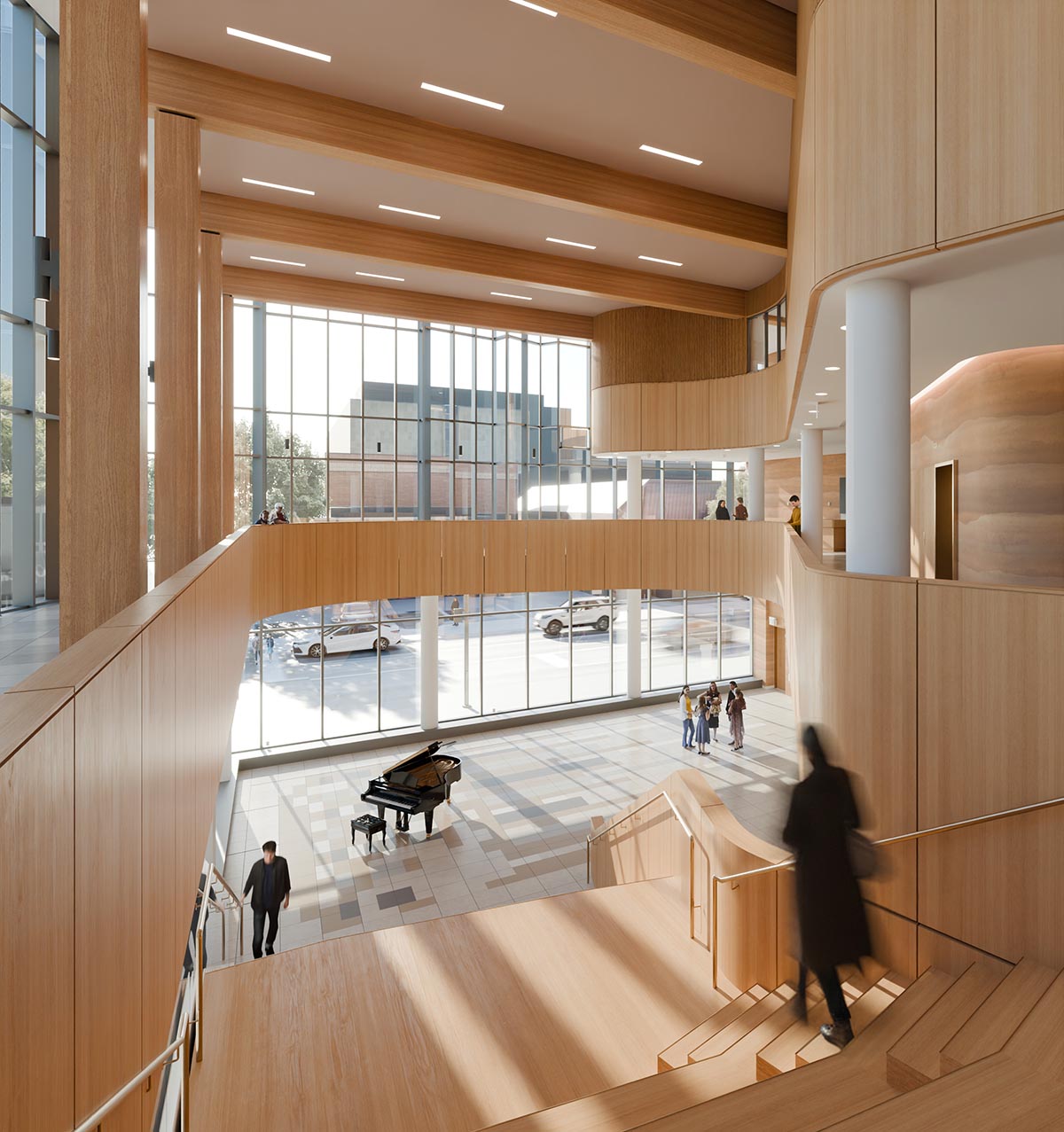
Ron and Erma Hawkes Centre for the Arts Lobby Stairs. Image courtesy of Diamond Schmitt Architects
The building's horizontal banding, which articulates the façade into a top, middle, and base—a clear architectural division typical of older buildings in the area—is in keeping with Fredericton's three-story massing. Water is used as a shaping element in the design, which was inspired by the Saint John River's (Wolastoq) flow through the city.
The skyscraper creates a powerful visual impact in the downtown area with its undulating faceted glazing that resembles the waterway's ripples. The building is placed back at ground level to provide a wider sidewalk beneath a continuous canopy, lowering the façade's scale to pedestrian level.
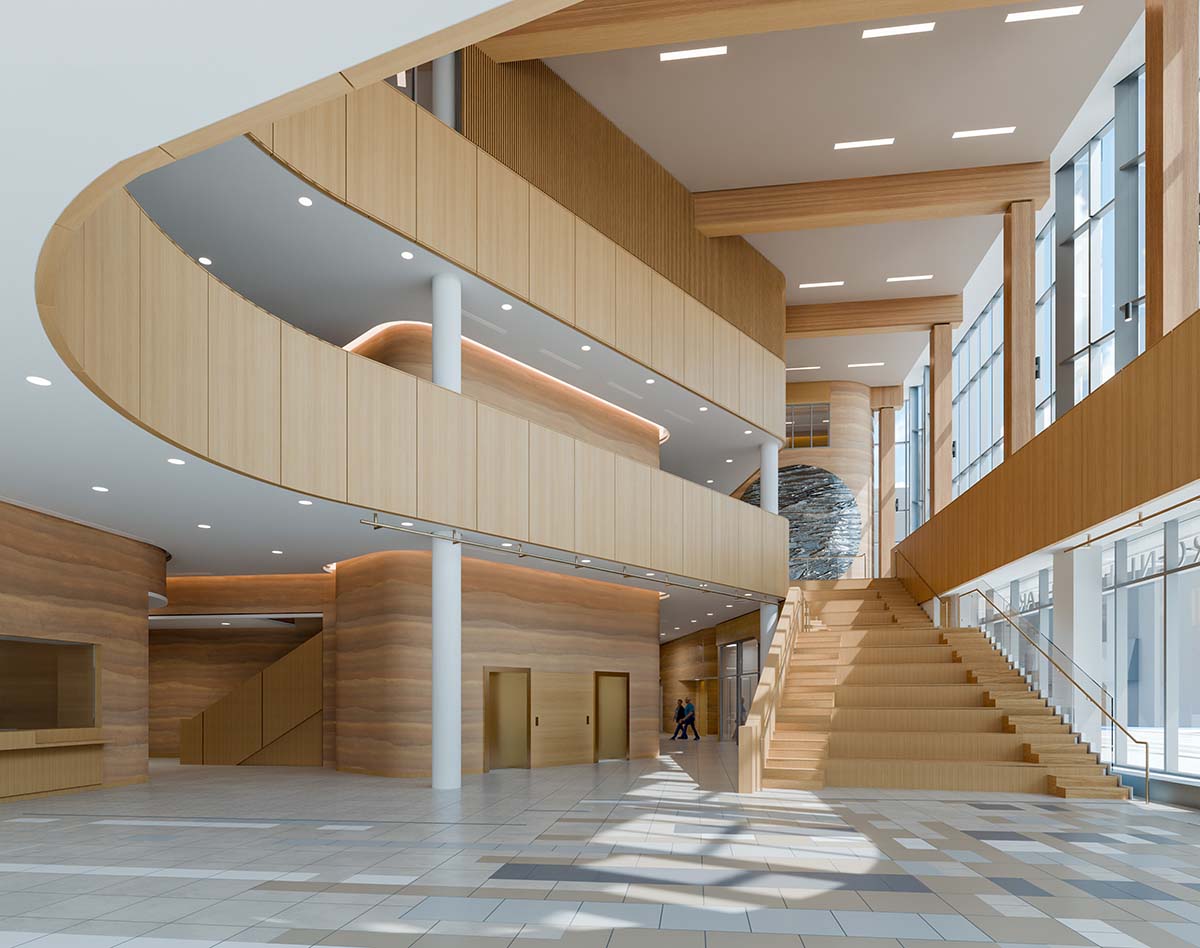
Ron and Erma Hawkes Centre for the Arts Lobby Stairs. Image courtesy of Diamond Schmitt Architects
The multi-level foyer that greets visitors to the performing arts center is intended to create a sense of visual openness and connectedness both inside and outside. During intermissions, this central, connecting area comes to life.
As an extension of the Center's two official performance spaces, the Main Hall and the Wilma Clark Theatre, it can serve as a gallery and is supported by a theater stairway for hosting both formal and informal events and performances, offering additional chances for artistic expression.
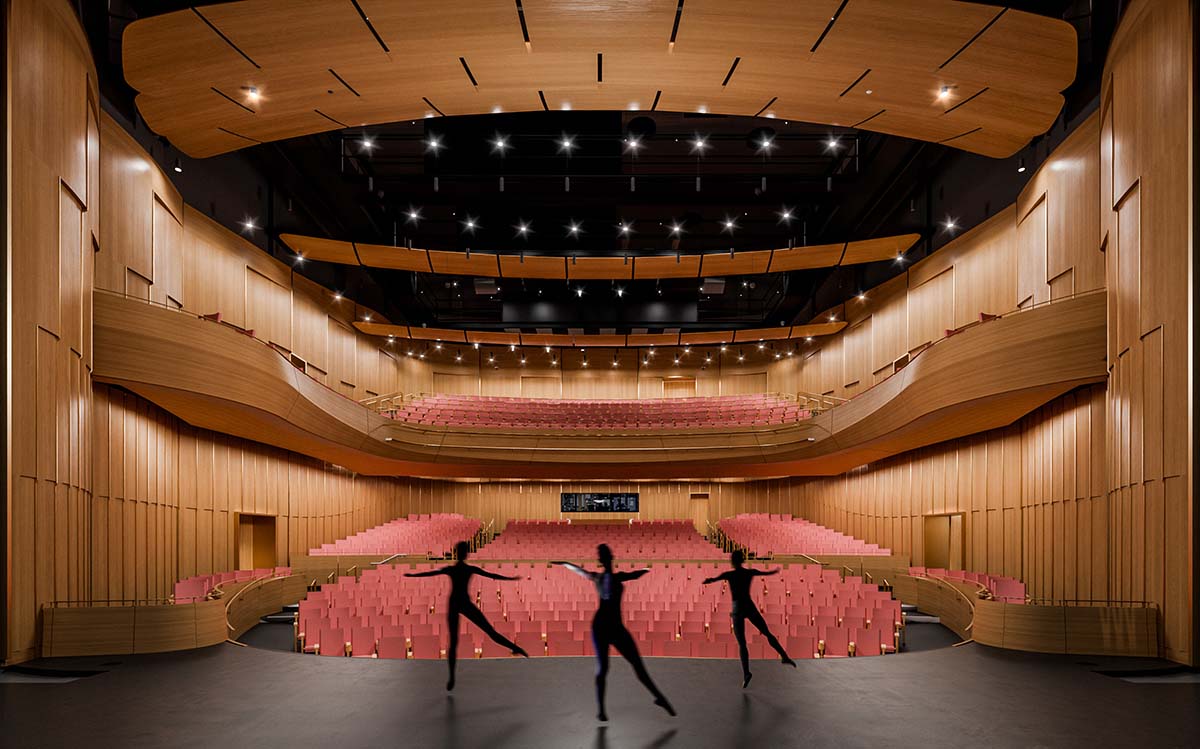
Ron and Erma Hawkes Centre for the Arts Main Hall. Image courtesy of Diamond Schmitt Architects
The Main Hall, the first of the Center's main venues, is a flexible proscenium auditorium. The hall, which primarily focuses on amplified events, can accommodate a wide variety of performances, such as Broadway, opera, dance, comedy, theater, film, circus, and music of all genres. The 850-seat venue's sightlines are optimized, and its acoustics are specifically engineered to create a great setting for both amplified and unamplified music.
With accessible seating available at all levels, a convertible orchestra pit has manual platforms that can raise the stage level or expand seating at the lowest tier of the orchestra level, depending on the show and audience.
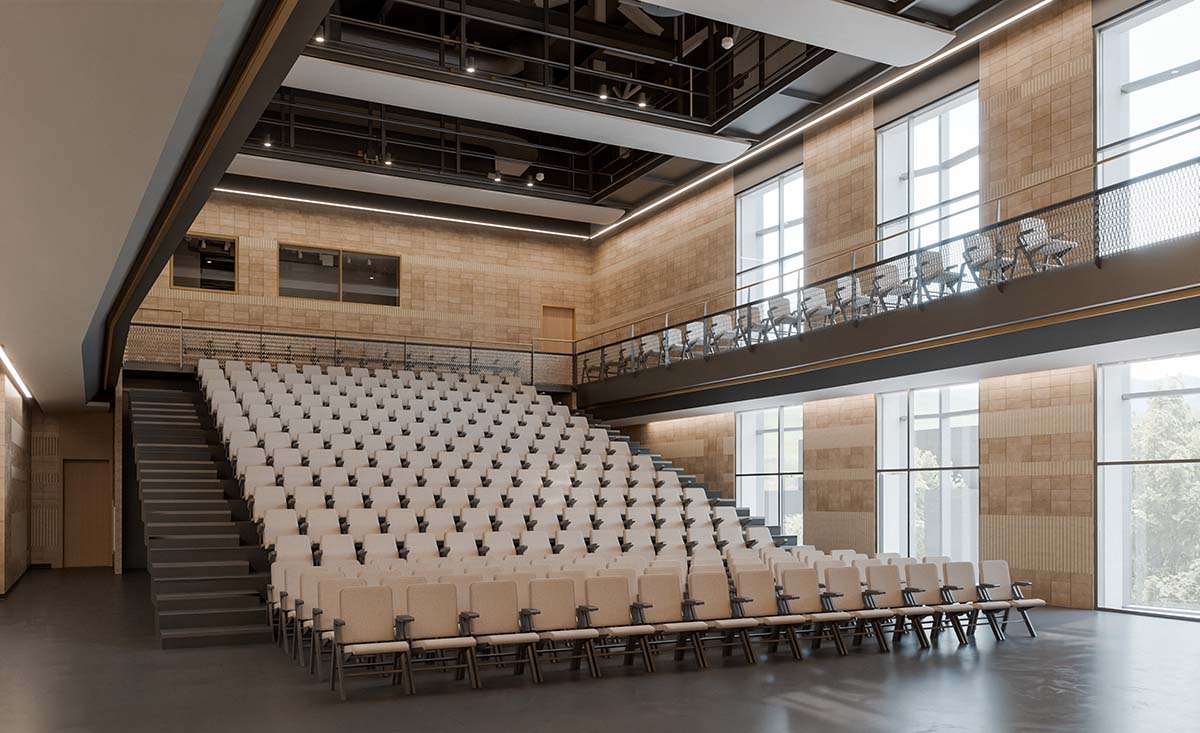
Ron and Erma Hawkes Centre for the Arts Wilma Clark Theatre. Image courtesy of Diamond Schmitt Architects
The chamber, which is shaped by Indigenous cultural theater performance and gathering customs and the concept of the circle, fosters closeness and a sensation of envelopment between the artist and the audience.
The smaller of the two performance venues, the Wilma Clark Theatre, is a double-height, flexible black box-style venue with 285 retractable seats.
With its second-floor location and natural light, this space fosters connections with the outside world. It will be utilized for social events, corporate rentals, spoken word, chamber music, dance, theater, recitals, seminars, and small-scale concerts.
The majority of the building's programming, including public front-of-house services, are located on the first level in addition to the Main Hall. Rehearsals, smaller shows, workshops, and other artistic endeavors, as well as back of house support, will be accommodated in a Multipurpose Room (Studio) situated between the front and back of house.
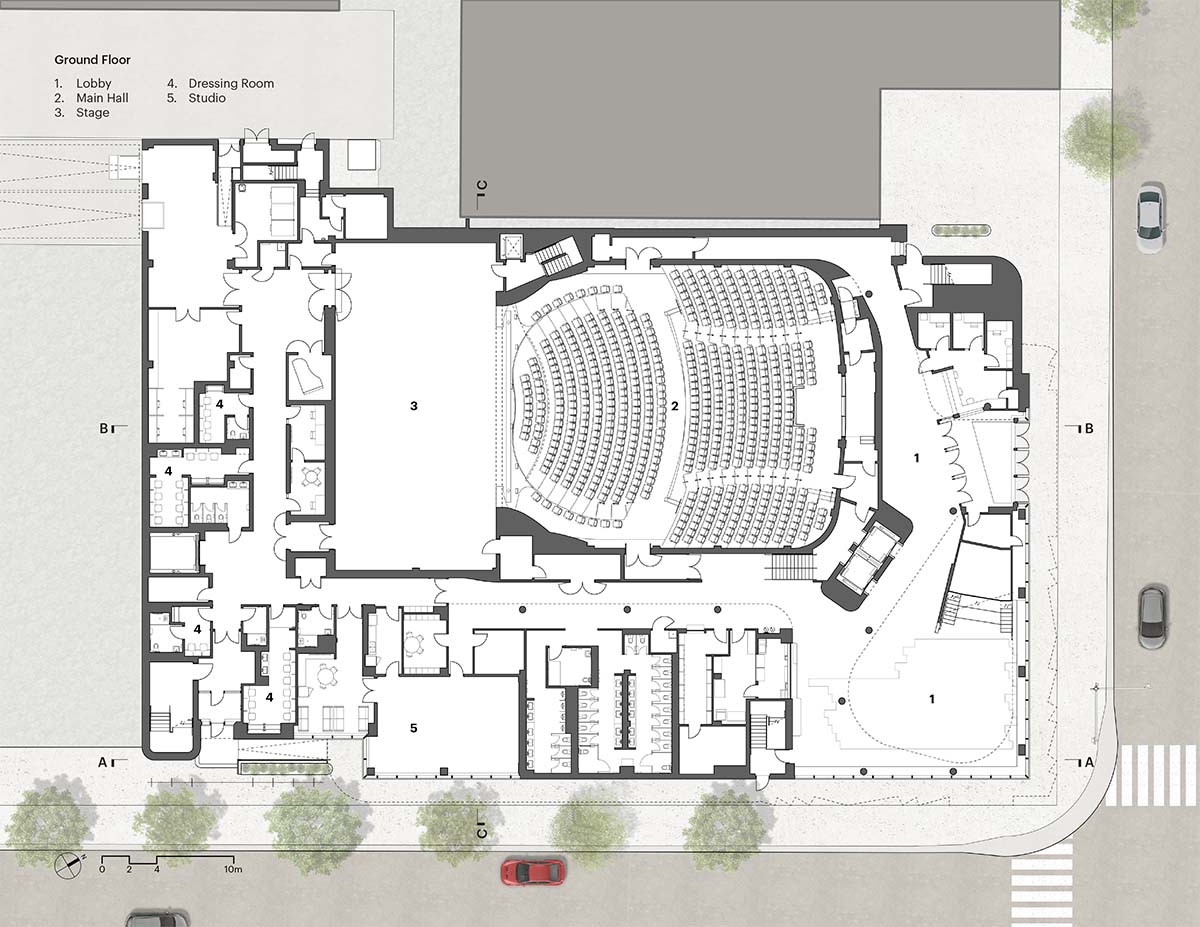
Ron and Erma Hawkes Centre for the Arts Drawings. Image courtesy of Diamond Schmitt Architects
The Ron & Erma Hawkes Centre for the Arts was designed with an emphasis on local Indigenous culture and construction materials. Particularly noticeable are the customs of the Wolastoqiyik, the River Valley's Indigenous Peoples, and their rich heritage of basketry and elaborate fabrics. The acoustic wall paneling design in the main performance spaces and along the lobby ceiling expresses woven wood patterns, which explore the use of colors and scales to bring a sense of this local culture into the structure.
A large-scale tiled artwork on the lobby floor also embodies the basket weaving heritage. A symbolic design that links New Brunswick's cultural heritage to a forward-thinking vision of creation, healing, and harmony, POSONUT (translated as BASKET) was created by local Wolastoqey multidisciplinary artist Samaqani Cocahq (Natalie Sappier).
Spread out on the floor beneath the feet of community members in the central lobby, it is hoped that visitors will perceive themselves as a part of the community's intricate web of connections.
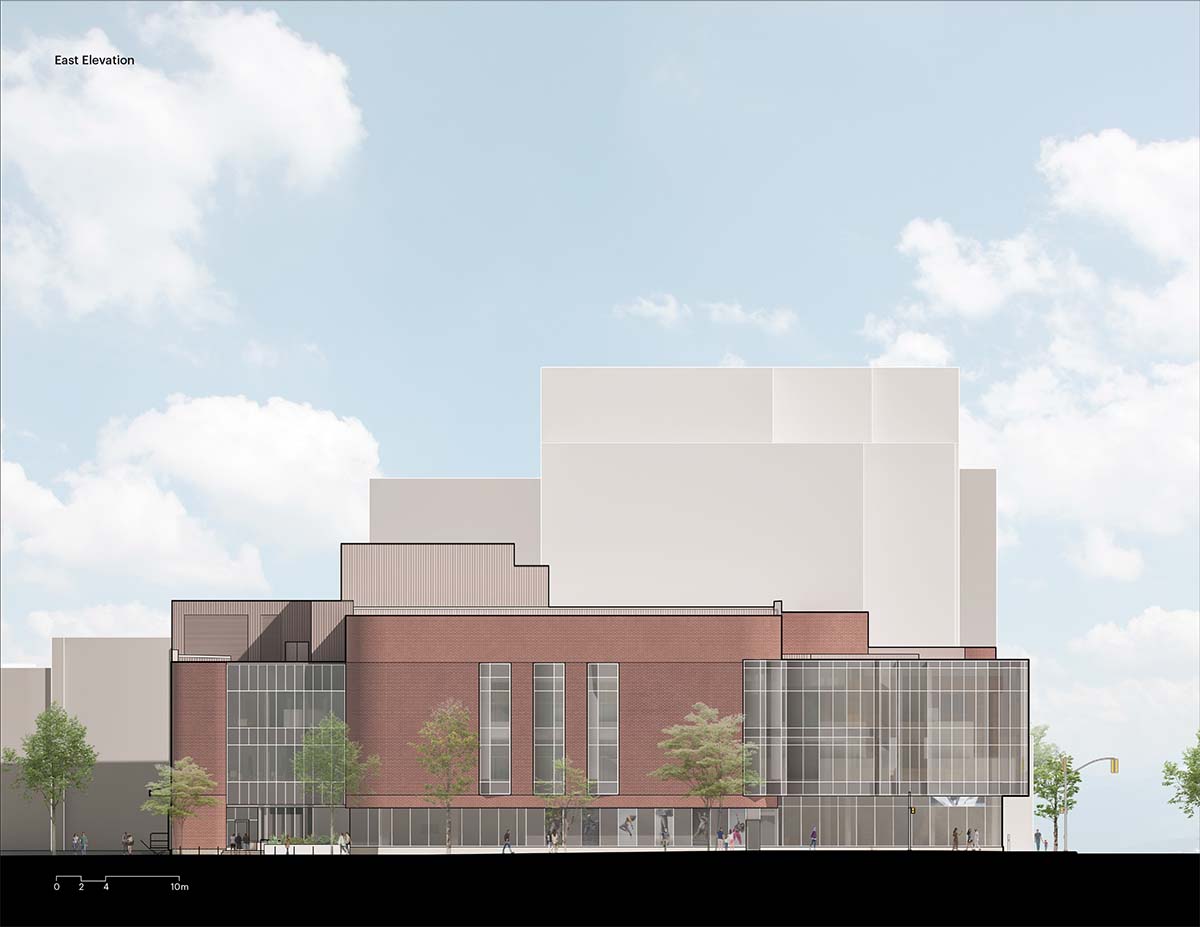
Ron and Erma Hawkes Centre for the Arts Drawings. Image courtesy of Diamond Schmitt Architects
A brand-new, publicly commissioned piece of art by Ann Manuel and Peter von Tiesenhausen will be located at the top of the feature staircase and extend to the third floor of the Center.
It will be made up of 168 uniquely designed aluminum plates, each of which will be etched and marked by hand to produce a composite image, and will have a 16-foot diameter circle. The artwork will depict the water's surface in the Wolastoq/Saint John River when viewed from the lobby.
The architectural materials chosen honor the widespread usage of brick in the city's architecture and are influenced by New Brunswick's top sustainable lumber industry. In order to ensure that the Center for the Arts' modern character maintains visual harmony with the existing urban fabric, the design balances the robust heritage brick with the sculptural and sustainable expression of wood.
The new facility will use electrically driven air-sourced heat pumps for primary heating and cooling in an effort to lower greenhouse gas (GHG) emissions. This technology is expected to cut carbon emissions by 18% by lowering GHG intensity and overall energy usage.
Additionally, among other sustainability methods, the design team has achieved a window to wall ratio of 32%, which will help reduce energy consumption and increase sustainability in comparison to more conventional designs that have a significantly larger proportion of glazing. Net Zero Carbon Building Design is being pursued by the Ron & Erma Hawkes Centre for the Arts.
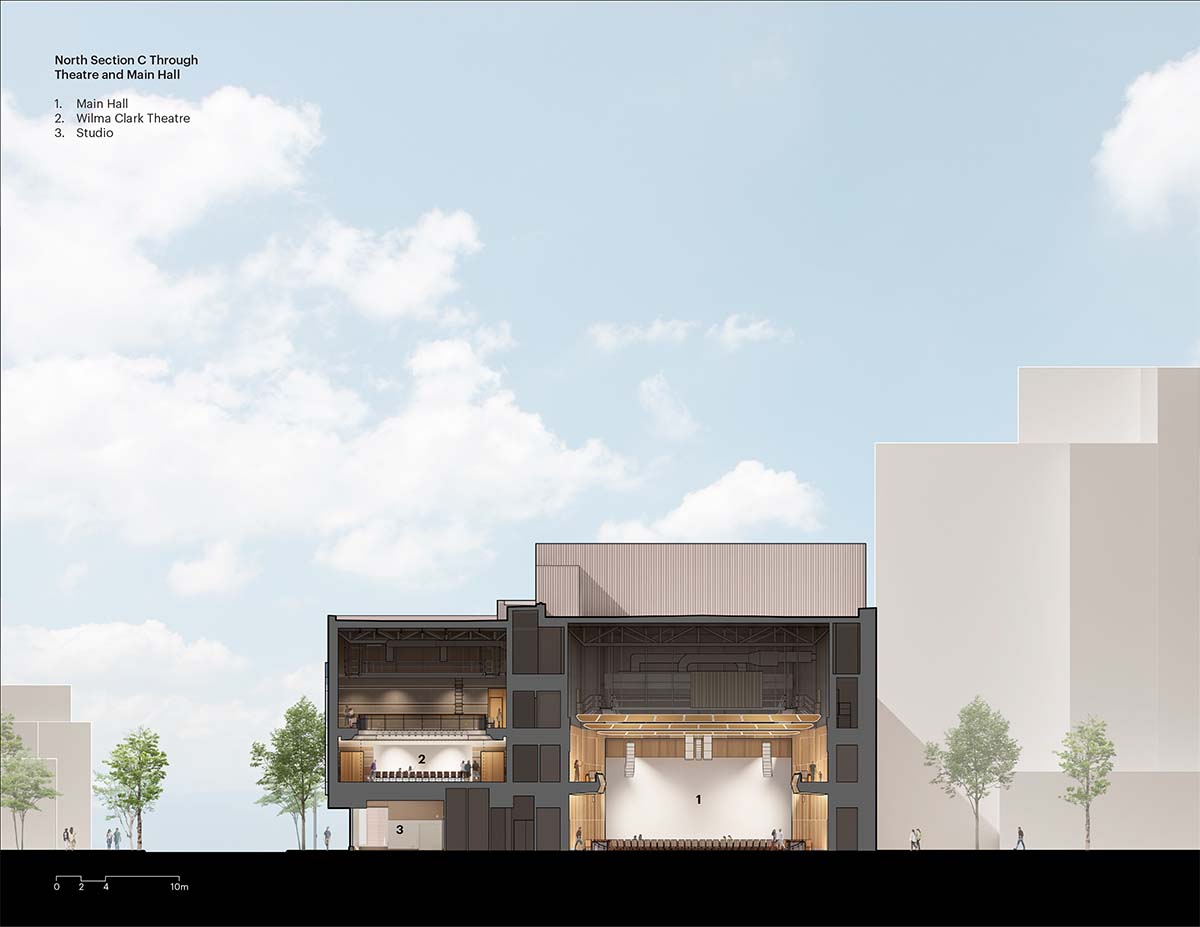
Ron and Erma Hawkes Centre for the Arts Drawings. Image courtesy of Diamond Schmitt Architects
"Perhaps the most impressive aspect of the design is the process that was undertaken. The design team carried a genuine curiosity and willingness to listen to the local community – responding with a design that speaks not only to where we live, but also to who we are—and to what we aspire to be," said Tim Yerxa, Executive Director of Fredericton Playhouse Inc. – the owner of the Centre for the Arts.
Diamond Schmitt is a global architecture firm that designs transformative, purpose-driven, and highly sustainable buildings. Delivering innovative architecture that empowers people, communities, and organizations to harness change for the greater public good, Diamond Schmitt employs a collaborative process to create architecture that is known for exceptional performance and meticulous craftsmanship.
Top image in the article: Ron and Erma Hawkes Centre for the Arts King Street. Image courtesy of Diamond Schmitt Architects.
> via Diamond Schmitt