One of the major challenges in contemporary urban design is the interference—and sometimes conflict—between authentic Iranian cultural identity and imported architectural influences, primarily from Arab and Western cultures. This issue has contributed to visual disorder and fragmentation in many urban environments, extending even to the facades of buildings. As a result, the establishment and enforcement of comprehensive design regulations and urban guidelines have become increasingly important to preserve local identity and maintain visual coherence.
In many historic cities around the world, these principles are rigorously respected. The quality and consistency of the urban fabric have become defining characteristics of these cities, attracting visitors and significantly contributing to the growth of the tourism industry. Such considerations extend beyond building facades and encompass all elements of the public realm, including street layouts, sidewalk dimensions, urban infrastructure, paving patterns, landscape design, planting schemes, and even the selection and arrangement of street trees. In essence, every visual component within the urban environment plays a role in shaping the city's identity and character.
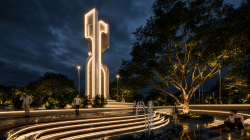
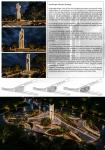
The city of Lahijan, located in northern Iran, is widely recognized as the “City of Tea.” Inspired by this unique cultural and geographical identity, the landscape design of the project draws from the flowing contours of Lahijan’s tea plantations. The masterplan is organized through a series of layered, curvilinear forms that reinterpret the geometry of terraced tea fields. These organic lines define pedestrian pathways, gathering spaces, water features, and seating areas, creating a cohesive and immersive public environment. Through this approach, the project seeks to celebrate the local heritage of Lahijan while establishing a contemporary urban landmark that resonates with both residents and visitors.
A monument is more than a physical structure; it is a symbol that embodies a story, a concept, and a collective memory. As an integral element of the urban landscape, a monument often combines artistic, architectural, and decorative qualities while serving as a recognizable urban landmark. Wherever it is placed, it contributes a distinct identity and character to its surroundings, enriching the cultural and visual fabric of the city.
The significance of a monument extends beyond its aesthetic value. It has the ability to attract people, create memorable experiences, and become a symbolic representation of a place. Over time, a successful monument becomes closely associated with the identity of a district, city, or even an entire nation. The mere mention of a location can evoke the image of its iconic landmark, helping to establish recognition and prestige while contributing to tourism and cultural engagement.
Monuments can also serve as powerful tools for communication and interpretation. They may reflect the historical, geographical, cultural, political, or ecological characteristics of a region, commemorate a significant event, or represent a local narrative. Ultimately, the effectiveness of a monument depends on its ability to establish a meaningful connection between the artwork and its audience through thoughtful design and symbolism.
Another important aspect of monument design is its contribution to the creation of vibrant public spaces. Well-designed monuments transform ordinary urban environments into engaging cultural destinations, breaking the monotony of repetitive cityscapes and encouraging public interaction. Since the appreciation of beauty and art is deeply rooted in human nature, people are naturally drawn to inspiring and visually compelling spaces.
It is important to recognize that monuments are among the most influential elements of urban beautification. Through a unique design language that reflects the identity, traditions, and lifestyle of local communities, a monument can become a catalyst for introducing the diverse cultural, historical, and social potentials of a region. In this way, it not only enhances the visual quality of the urban environment but also strengthens the connection between people and place.
2022
Urban Square Design Principles
Extensive research has been conducted on the fundamental principles of urban square design, resulting in a range of guidelines that contribute to the creation of successful public spaces. Among these, several key principles play a crucial role in shaping vibrant and meaningful urban squares.
Identity and Image
Historically, public squares have served as the social and cultural heart of cities, playing a significant role in establishing urban identity. Throughout history, iconic elements such as fountains, monuments, and public artworks have been used to create strong and memorable images of civic spaces. In contemporary urban design, one of the greatest challenges is to create a square that becomes a recognizable landmark and contributes to the identity of the entire community. Therefore, a successful square should not merely function as an open space but should embody the character, history, and aspirations of its people.
Public Amenities and Comfort
The quality of a public square is greatly influenced by the level of comfort it provides for its users. Simple amenities such as seating areas, waste bins, adequate lighting, and accessible pathways significantly enhance the user experience and encourage longer stays within the space. Lighting not only improves safety and accessibility but can also reinforce the visual identity of the square, especially during evening hours. Furthermore, the integration of landscape elements, green spaces, and carefully designed water features increases the attractiveness of the environment and creates a more pleasant and engaging public realm.
Flexibility and Adaptability
The functions and demands placed upon urban squares may evolve over time. For this reason, flexibility should be considered a fundamental design principle. Elements within the square should be adaptable and capable of accommodating different activities, events, and future changes in use. A flexible design approach ensures the long-term relevance and sustainability of the public space while minimizing potential challenges associated with future modifications.
Emphasis on the Focal Point
A successful urban square typically incorporates a clear focal element that organizes the spatial composition and strengthens visual coherence. Whether it is a monument, sculpture, fountain, or other landmark feature, this element should be strategically positioned at the focal point of the square. Proper placement enhances visual balance, reinforces spatial hierarchy, and increases the overall aesthetic quality of the environment. Conversely, locating major elements outside the visual center can weaken the composition and diminish the spatial experience.
Landscape Design Strategy
Landscape design is one of the most fundamental aspects of successful urban square design. It encompasses not only the selection of materials and paving patterns but also the visual harmony between the square and its surrounding built environment. The choice of materials, colors, textures, and landscape elements should contribute to a coherent and unified urban identity. For example, the paving materials and color palette should be carefully coordinated with the overall character of the site and its architectural context.
In the design of Tea Square (Meydan-e Chay), the following strategies have been adopted to establish a strong connection between the project and the cultural landscape of Lahijan:
1. Terraced Landscape Inspired by Tea Plantations
The landscape is organized through a series of layered and stepped garden terraces inspired by the distinctive topography and vertical arrangement of Lahijan’s tea fields. This approach creates visual depth, enhances spatial hierarchy, and establishes a unique identity rooted in the region’s agricultural heritage.
2. Symbolic Color Composition
The planting design incorporates a combination of green and red tones to symbolize the lifecycle of tea cultivation—from the growth of tea leaves to the harvesting and processing stages. This color strategy reinforces the project's narrative while creating seasonal visual interest throughout the site.
3. Fluid Circulation and Organic Forms
Soft, curvilinear pathways are integrated with flowing landscape forms to express movement, continuity, and dynamism within the square. Inspired by the natural contours of tea plantations, these organic lines guide pedestrian circulation, encourage exploration, and create a more engaging spatial experience for visitors.
Together, these design strategies transform the square into a contemporary public space that celebrates the cultural identity of Lahijan while providing an inviting and memorable environment for residents and visitors alike.
Monument Design Objectives
The design of the monument was guided by a series of architectural, cultural, and symbolic objectives intended to create a distinctive urban landmark that reflects the identity of Lahijan while establishing a strong visual presence within the city.
1. Reinterpretation of Traditional Persian Arches
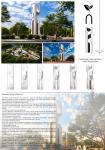
The monument draws inspiration from the architectural language of traditional Persian arches and semi-arches, reinterpreting these historic forms within a contemporary design framework. This approach creates a meaningful connection between the project and Iran’s rich architectural heritage.
2. Local Identity and Contextual Relevance
A primary objective of the design was to ensure a strong sense of place by responding to the cultural, historical, and environmental characteristics of Lahijan. The monument is conceived as an expression of local identity rather than a generic architectural object.
3. Distinctiveness and Recognition
The monument is designed to be visually unique and instantly recognizable, enabling it to function as a memorable landmark and a defining symbol of the city.
4. Conceptual Architectural Form
Rather than relying solely on decorative expression, the monument is based on a conceptual architectural approach in which form, symbolism, and spatial experience are integrated into a coherent design narrative.
5. Inspiration from the Tea Leaf
The geometry of the monument incorporates formal transformations inspired by the shape and curvature of tea leaves. These influences are reflected in the monument’s fractured surfaces, flowing lines, and sculptural composition, reinforcing its connection to Lahijan’s tea-growing heritage.
6. Dynamic Form in Four Directions
The monument undergoes continuous formal variation in all four cardinal directions, creating a dynamic and evolving visual experience. This multidirectional transformation allows the structure to present different perspectives when viewed from various points within the city.
7. Organic Integration with the Landscape
The monument emerges seamlessly from the surrounding landscape through soft transitions between architecture and site. This design gesture symbolizes growth and emergence, strengthening the conceptual relationship between the monument and the tea-inspired landscape.
8. Islamic Geometric Screens
Intricate perforated panels inspired by traditional Islamic geometric patterns and Persian knotwork (Girih) are positioned between the semi-arch elements. These screens enrich the monument with layers of cultural meaning while creating visual depth, transparency, and patterns of light and shadow.
9. Integrated Linear Lighting Strategy
A comprehensive linear lighting system is incorporated throughout both the monument and the landscape design. The lighting enhances the visual identity of the project after sunset, emphasizing architectural forms, improving spatial legibility, and creating a memorable nighttime experience.
10. Creation of a New Urban Landmark
The monument is envisioned as a contemporary urban icon for Lahijan. Its scale, form, and lighting are designed to ensure visibility from major approach roads and the surrounding ring road, allowing it to function as a prominent gateway element and a recognizable symbol of the city from long distances.
Materials and Construction Strategy
The selection of materials and construction techniques was guided by considerations of durability, visual quality, local craftsmanship, and long-term maintenance. The material palette was carefully chosen to create a cohesive relationship between the monument and the surrounding landscape while enhancing the overall user experience.
1. Pavement Materials
The site's hardscape is composed of exposed aggregate concrete paving and patterned mosaic tiles. These materials provide durability, slip resistance, and visual richness while contributing to the overall character of the public space. Variations in texture and pattern help define circulation routes, gathering areas, and key landscape features.
2. Monument Structure and Finishing
The monument is constructed using a steel framework and expanded metal lath (Rabitz) formwork system as the primary substructure. The final architectural form is achieved through reinforced concrete and cement-based finishing layers, allowing the realization of the monument’s complex curvilinear geometry while ensuring structural stability and longevity.
3. Traditional Wooden Geometric Screens
The perforated sections of the monument incorporate handcrafted wooden geometric latticework inspired by traditional Persian Girih patterns. These elements introduce cultural depth and craftsmanship into the design while creating dynamic visual effects through light, shadow, and transparency.
4. Integrated Linear Lighting System
A continuous linear LED lighting system is integrated throughout both the monument and the landscape design. Concealed flexible LED strips emphasize the architectural geometry, highlight circulation paths, and enhance the visual identity of the project during nighttime hours. The lighting strategy transforms the square into an attractive and vibrant public destination after sunset while strengthening its role as a recognizable urban landmark.
Mehdi Nasiri , Pariya Hendi
pariya hendi