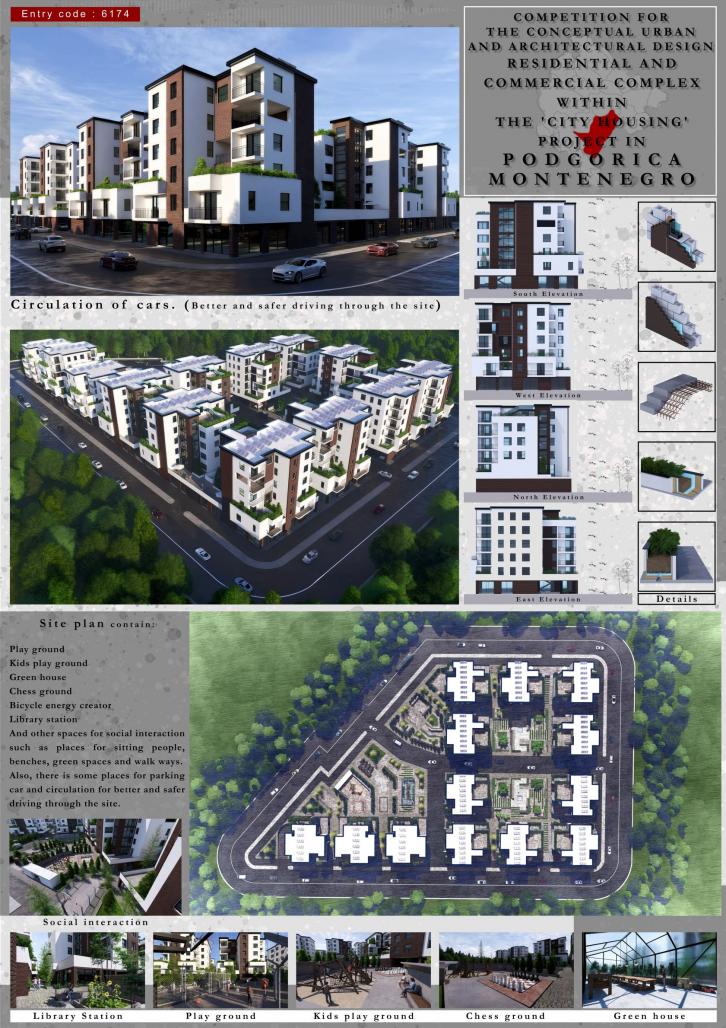
Residential and Commercial Complex within the “City Housing” Project in Podgorica
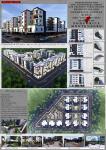
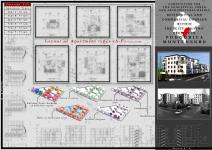
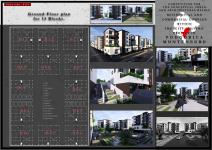
The proposal envisions a socially interactive, environmentally responsible, and human-centered residential complex where architecture and landscape are integrated into a coherent and vibrant living environment. The design aims to cultivate an inclusive urban fabric in which a rich variety of public and semi-public spaces encourages continuous interaction among residents. The mid-rise buildings are arranged not as isolated volumes but as complementary components that define a sequence of interconnected open spaces, each offering distinct atmospheres and programmatic opportunities.
At the heart of the project, a central public plaza acts as the primary social anchor of the community. With its water feature, shaded seating terraces, and pedestrian connections, this plaza invites daily gatherings and informal encounters. Surrounding it, a series of thematic courtyards hosts diverse communal activities: dedicated playgrounds for children, outdoor fitness spaces for adults, quiet gardens for relaxation, and an interactive shared greenhouse that promotes collaboration, gardening, and community-based learning. This diversity ensures meaningful engagement for residents of all ages, strengthening social cohesion and multi-generational participation.
Along the perimeter of the site, ground-floor commercial and service spaces create an active urban edge that supports everyday life. These shops, cafés, and small service units maintain a clear and productive relationship with the residential environment, offering essential amenities within walking distance while enhancing the liveliness and safety of the surrounding public realm. Their strategic placement ensures that the commercial frontage contributes to the vitality of pedestrian routes without compromising the privacy of the inner courtyards.
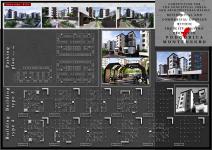
The architectural language enhances this socially interactive structure through carefully articulated volumes, generous openings, and transparent façade elements that encourage visual connectivity between indoor living spaces and shared outdoor environments. Green terraces, planted balconies, and extensive vegetated roofs reinforce the ecological identity of the project while improving microclimate, biodiversity, and stormwater management.
Sustainability principles guide the overall development. Building orientations maximize natural lighting and seasonal shading. Green roofs and permeable surfaces mitigate heat-island effects and support water infiltration. Cross-ventilated residential units reduce energy consumption, while the separation of pedestrian and vehicular circulation ensures a safe, low-emission ground level.
Together, the housing typologies, commercial edges, and layered public spaces form a dynamic, resilient, and socially vibrant model for contemporary urban living in Podgorica.
The material selection aims to balance durability, sustainability, aesthetic clarity, and cost-efficiency. The façade is defined by two complementary materials: warm brown brick and matte white fiber-cement panels. Brick is chosen for its exceptional longevity, thermal stability, and timeless human-scale texture. It performs well in Podgorica’s climate, offering high resistance to moisture and temperature variation while requiring minimal long-term maintenance. Its natural color warmth adds depth and identity to the architectural composition and enhances the tactile character of the ground-related spaces.
The matte white fiber-cement panels provide a clean, contemporary contrast to the brick. They are highly durable, UV-stable, and dimensionally accurate, allowing for crisp façade detailing and long service life. As a ventilated cladding system, fiber-cement improves thermal performance, reduces energy consumption, and minimizes the risk of cracking compared to plaster systems. Despite their high performance, they remain economically efficient due to low maintenance requirements and ease of installation.
Complementary elements—including powder-coated metal railings, aluminum frames, and extensive green roofs—reinforce the project’s ecological goals by improving microclimate control and supporting biodiversity.
Overall, the selected materials create a resilient, sustainable, visually coherent, and cost-effective architectural identity that aligns with the project’s social and environmental ambitions.
2025
The proposal applies energy-efficiency and sustainability principles through a holistic integration of architecture, landscape, and microclimate-responsive strategies. The residential blocks are arranged around open green courtyards, ensuring optimal solar orientation and natural shading. Recessed balconies, cantilevered terraces, and extensive greenery help reduce heat gain during summer while allowing winter sunlight to penetrate interior spaces. Large window openings maximize daylight and reduce dependence on artificial lighting throughout most of the day.
Every residential unit is designed for effective cross-ventilation, supported by appropriate spacing between blocks that promotes natural airflow. A ventilated façade system—combining fiber-cement panels and brick—enhances thermal insulation, prevents overheating, and stabilizes indoor temperatures. High-performance glazing with low-emissivity coatings further improves comfort while maintaining visual openness.
Landscape design plays a key role in sustainability. Green roofs, planted terraces, and layered vegetation throughout the courtyards improve thermal regulation, increase biodiversity, and help manage stormwater. The central plaza’s water feature provides mild evaporative cooling, strengthening outdoor comfort during warmer months.
Permeable pavements allow natural water infiltration, while rainwater collected from roofs is reused for irrigating landscaped areas and the community greenhouse. Native and drought-resistant vegetation reduces water consumption and minimizes maintenance needs.
Parking is positioned in semi-sunken levels, reducing heat accumulation and preserving the visual and environmental quality of the ground plane. Importantly, all vehicular routes and parking access points are fully separated from pedestrian pathways and interactive communal spaces, ensuring safety, minimizing conflicts, and maintaining the calm, human-centered character of the courtyards and plazas. This separation also encourages walkability and supports a low-carbon lifestyle.
Durable materials—brick, fiber-cement cladding, and metal elements—ensure longevity, reduced maintenance, and strong environmental performance throughout the building lifecycle.
Overall, the project delivers a resilient, climate-responsive, and socially supportive model of contemporary housing for Podgorica.
Pariya Hendi, Mehdi Nasiri
Mehdi Nasiri