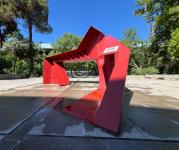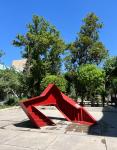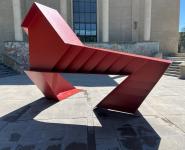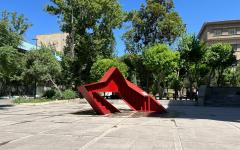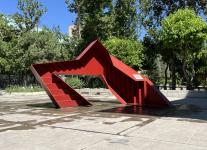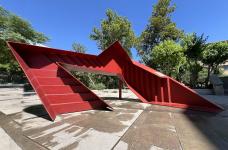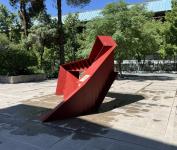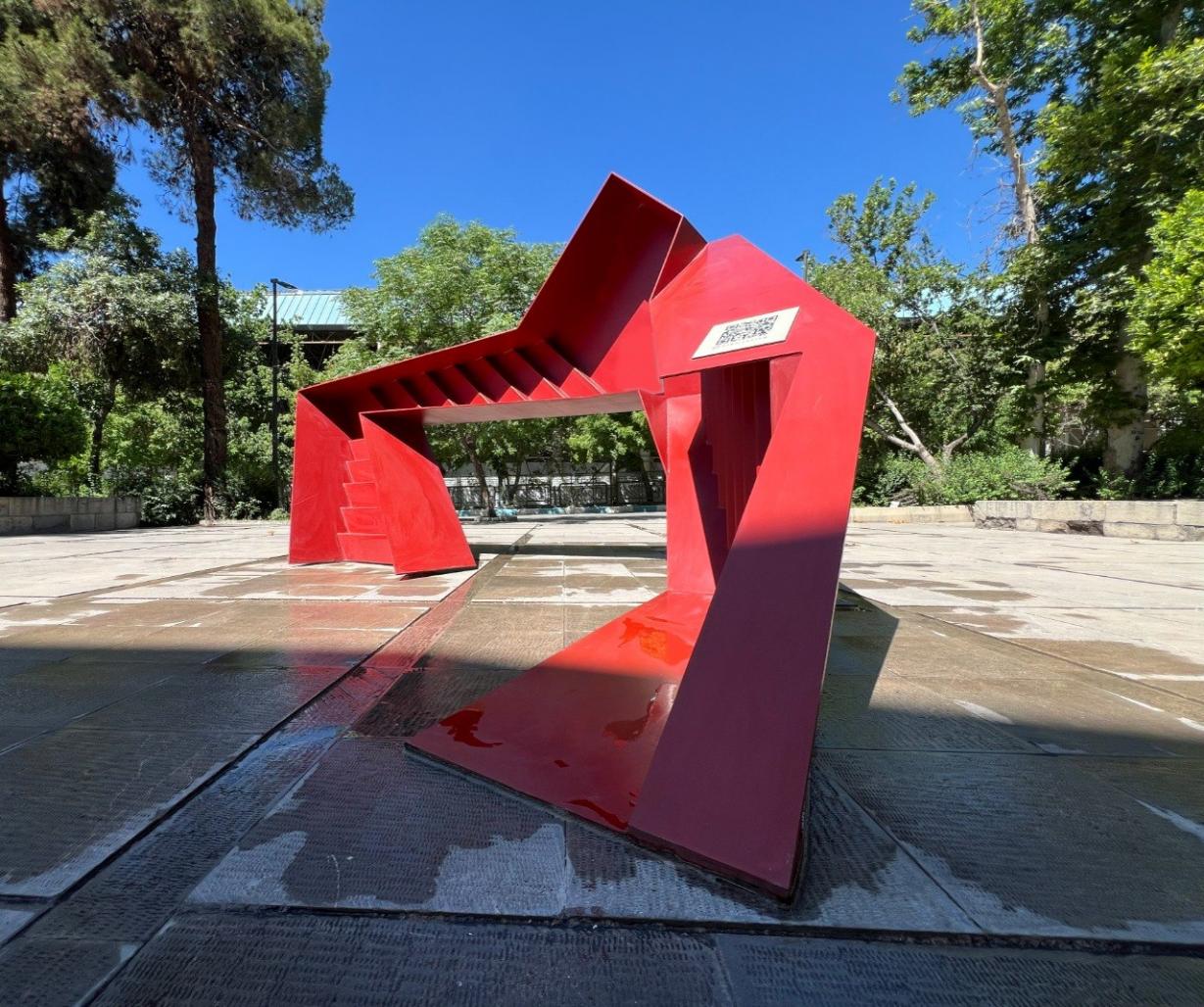
Anti-Stair is an exploration into the deconstruction of the stair—one of architecture’s most familiar, functional, and universally recognizable typologies. By stripping away its conventional role as a tool of circulation, the project reimagines the stair as an autonomous spatial artifact that exists between architecture, sculpture, and abstraction. Detached from its expected purpose, the stair is no longer a device that connects levels or guides movement; instead, it becomes an object of contemplation, inviting new readings of form, space, and perception.
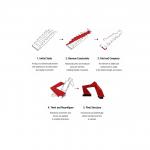
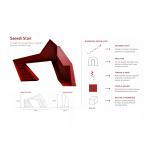
The project begins with the dismantling of the stair’s fundamental logic. Its recognizable geometry is fragmented, folded, displaced, and reassembled into a composition that resists use and denies directional clarity. The resulting form retains traces of the original typology while simultaneously rejecting its functional identity. Familiar visual cues remain present, yet they no longer provide guidance or accessibility, creating a tension between recognition and ambiguity. Through this deliberate disruption, the project challenges established assumptions about orientation, utility, and architectural meaning.
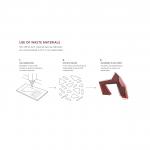
Materially, Anti-Stair is constructed from discarded steel sheets generated during the fabrication of industrial staircases. These remnants, originally part of a system designed for movement and efficiency, are repurposed into a new spatial language. Although removed from their practical context, the materials continue to carry embedded narratives of labor, production, circulation, and use. Their transformation reveals the latent expressive potential of industrial waste while extending the lifecycle of materials often overlooked or discarded.
Positioned at the intersection of architecture and art, Anti-Stair investigates how meaning can persist beyond function. It questions whether architectural elements derive their identity solely from utility or whether they can acquire new significance through formal and conceptual transformation. By converting a familiar instrument of movement into an abstract spatial composition, the project encourages viewers to reconsider their relationship with everyday architectural forms and to engage with the stair not as a means of passage, but as a subject of reflection, interpretation, and critical inquiry.
2025
2025
Positioned at the intersection of architecture and art, Anti-Stair investigates how meaning can persist beyond function. It questions whether architectural elements derive their identity solely from utility or whether they can acquire new significance through formal and conceptual transformation. By converting a familiar instrument of movement into an abstract spatial composition, the project encourages viewers to reconsider their relationship with everyday architectural forms and to engage with the stair not as a means of passage, but as a subject of reflection, interpretation, and critical inquiry.
Design Team
Ali Rivandy, Marjan Najafian, Yasaman Ziaei, Saeide Yadegar
• Constructor & Project Partner: Eleman Step (Ehsan Asadi)
• Storytelling: Vahid Sadraeifar
• Project Manager: Elham Namdari
• Presentation & Graphics: Pegah Khosravi
Noron Office