Dystopian/Utopia: [Re]imagining Dholaikhal as Futuristic Automobile Hub
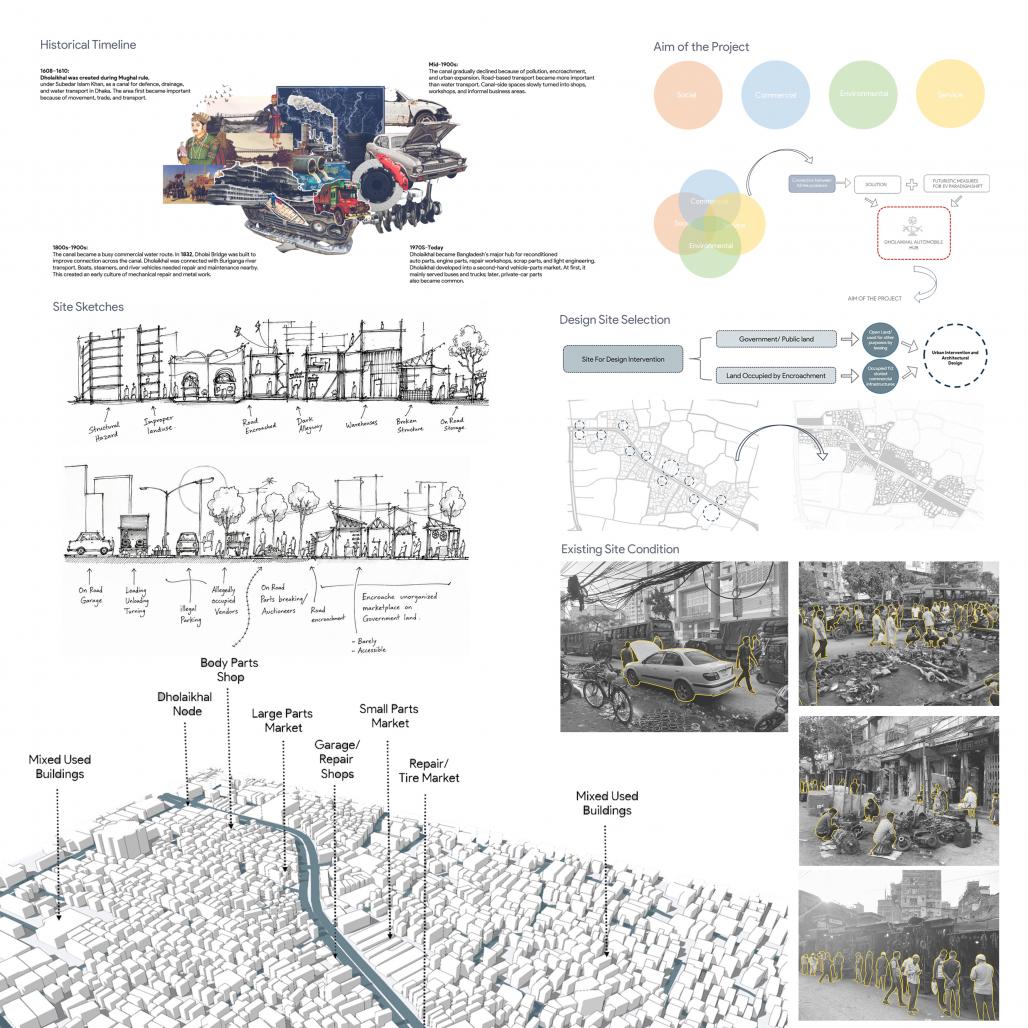
Dholaikhal, once part of the historic canal network of Mughal Dhaka, has gradually changed into one of Bangladesh’s most important automobile parts, salvage, repair, and reconditioned goods markets. Over the years, the canal disappeared, while businesses, workshops, residences, and roads grew around it through informal urban development and changing economic needs. Today, Dholaikhal is a dense and highly active urban hub that supports thousands of traders, mechanics, workers, vehicle owners, and small businesses. However, its growth has also created serious problems such as traffic congestion, limited space, poor infrastructure, unsafe working conditions, fire and structural risks, waste pollution, and a lack of proper public and worker facilities.
Yet Dholaikhal cannot simply be understood as a place of disorder. Behind its crowded streets and informal structures is a strong and resilient system that has developed over generations. The market works through repair, reuse, recycling, affordability, and technical improvisation. Old and damaged parts are collected, repaired, modified, reused, and sold again, creating a practical cycle that reduces waste and makes automobile maintenance affordable for a large part of the city. The workers of Dholaikhal also possess valuable knowledge and skills that have developed through years of hands-on experience. In many ways, the market already contains the basic qualities of a circular and adaptive economy; what it lacks is the infrastructure and spatial support needed to grow safely and efficiently.
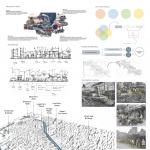
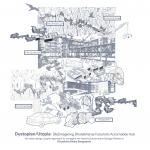
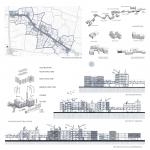
This thesis, “Dystopia/Utopia: Reimagining Dholaikhal as a Futuristic Automobile Hub,” explores how architecture can strengthen this existing system rather than replace it. The project looks at Dholaikhal through two conditions: the dystopian reality of its present problems and the utopian possibility of its future. Instead of clearing the existing market and creating a completely new development, the proposal focuses on working with what is already there. The aim is to formalize the necessary support facilities without disrupting the informal businesses, social relationships, and everyday activities that give Dholaikhal its identity. Architecture becomes a tool for improving the existing ecosystem rather than erasing it.
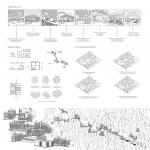
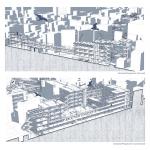
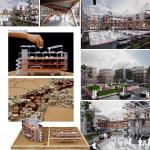
The intervention therefore focuses on practical improvements such as better circulation, organized servicing and repair zones, shared infrastructure, safer working environments, worker support and training facilities, flexible commercial spaces, and stronger connections between different automobile-related activities. At the same time, the project prepares Dholaikhal for the changing future of mobility by introducing spaces for EV parts, electric vehicle diagnostics, modern servicing, fabrication, and emerging technologies such as 3D-printed components. The design is modular and site-oriented so that new facilities can grow around the existing urban fabric instead of forcing the entire market to start again from zero. This creates a future where traditional mechanics, salvage businesses, and new automobile technologies can exist together.
The project also recognizes that Dholaikhal is more than an automobile market; it is a place shaped by history, memory, and transformation. The lost canal remains an important historical and ecological layer of the site, reminding us that the area was once connected to a different urban landscape. By bringing together this memory with the existing informal market culture, circular economy, and future mobility, the thesis proposes a different way of looking at urban redevelopment. Dholaikhal is not an urban problem that needs to be removed. It is a powerful but neglected part of the city that needs to be supported, reorganized, and given a better future. The ultimate vision is to transform its existing chaos into an efficient and resilient automobile ecosystem while preserving the people, knowledge, economy, and character that make Dholaikhal unique.
2026
2026
Academically Designed
Fardin Hasan
Fardin Hasan