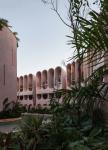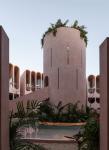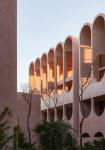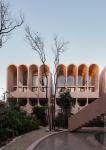
Babel proposes an architectural ethic for environmentally fragile territories: density without dispossession, inhabitation without extraction. Reframing the myth of the tower, the project treats verticality as an instrument to restore ground, amplify microclimate, and stabilize community life. Architecture is positioned as a regenerative framework—one that concentrates occupation, reintegrates vegetation, and choreographs light, shadow, and time into an immersive daily experience.
Located in Tulum, Babel confronts a territory under accelerating pressure: deforestation driven by tourism growth, fragile hydrological dynamics dependent on infiltration and groundwater recharge, and increasing strain on infrastructure and services. In this context, conventional low-rise expansion compounds ecological loss by spreading footprint across the landscape. Babel responds with an alternative development logic that prioritizes long-term livability and ecological continuity alongside economic feasibility.
The project’s guiding idea is coexistence through calibrated vertical density. Inspired by the mythical tower, Babel transforms the archetype into an experiential and climatic device: an architecture that intensifies occupation while giving land back to the ecosystem. The building operates as a system of relationships—mass and void, compression and release, opacity and porosity—where movement and light become the primary narrative materials. Verticality is therefore conceptual and performative: it concentrates program, organizes circulation, and constructs a temporal reading of space through changing shadow and illumination.
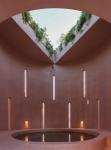
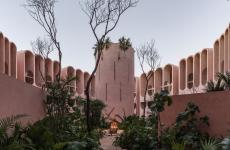
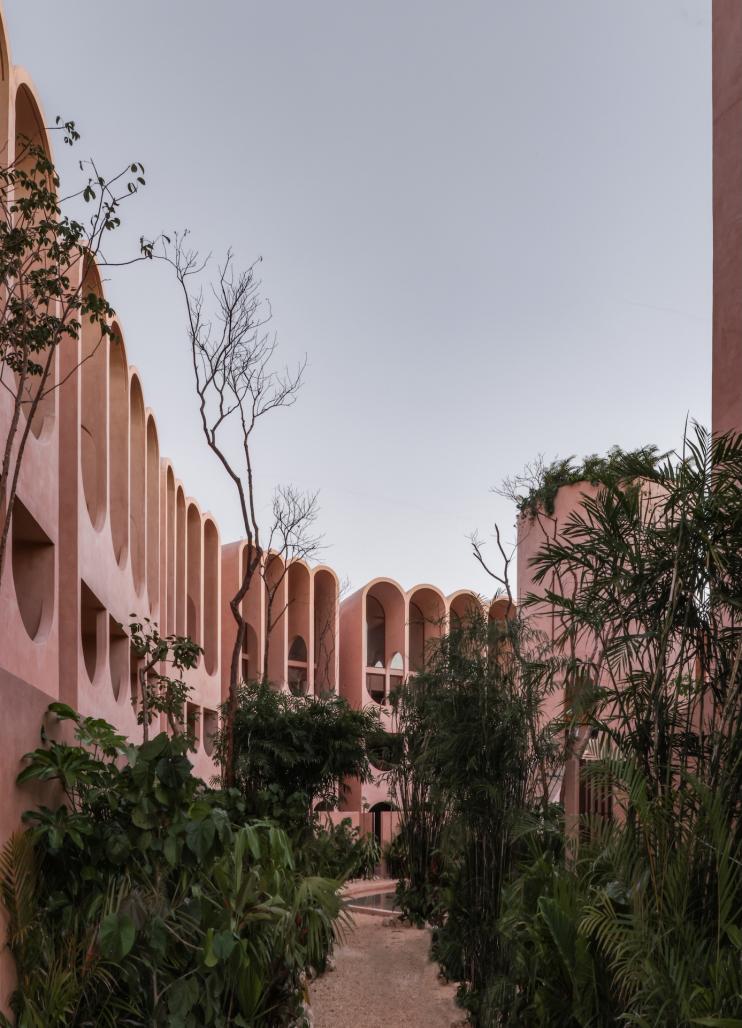
Babel minimizes ground occupation through an eye-shaped plan and compact vertical cores, reducing horizontal circulation and preserving permeability at grade. This deliberate contraction of footprint enables reforestation and expands the surface available for infiltration—an essential strategy in Tulum’s delicate hydrological context. The central courtyard functions as the project’s primary environmental mediator: a spatial void that cools, ventilates, and visually unifies the ensemble while anchoring orientation and collective life. Rather than treating landscape as a backdrop, the project’s insertion is defined by what it does not consume: land, shade, and porosity are preserved as core architectural resources.
Babel introduces a hybrid residential and hospitality model that combines long-term residences with short-term rentals to reduce the seasonality and economic volatility typical of tourism-driven developments. This coexistence supports year-round occupation and encourages continuity, stewardship, and a more stable community presence. Each unit is conceived as a self-sufficient living environment—kitchen, living/dining, private bath, bedroom, and a garden with integrated jacuzzi—while subtly adapting to its position within the curved geometry. This variation within consistency allows the architecture to respond to orientation, views, and proximity to shared spaces without diluting the program’s clarity.
Complementing the private realm, the project integrates communal and wellness-oriented spaces that frame Babel as a holistic retreat: coworking embedded in landscape, a spa and wellness center, a vegetarian restaurant and bar grounded in local sourcing, and additional environments for mindful living such as a zen garden, yoga studio, and an ASMR room with sleep concierge. Collectively, these spaces shift hospitality from consumption to participation—an inhabitable rhythm rather than a transient stay.
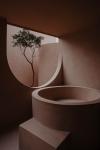
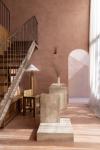
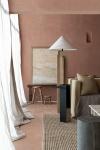
Material choices are positioned as both environmental infrastructure and cultural continuity. The primary exterior finish is chukum, a traditional limestone-based stucco from the Yucatán Peninsula valued for humidity resistance, thermal moderation, durability, and low maintenance. Applied in handcrafted layers and tinted with mineral pigments, its soft pink tonality absorbs and reflects the changing light of the site, allowing the architecture to register time while blending with the surrounding vegetation. Interiors employ locally sourced tropical woods, handcrafted clay elements, woven textiles, and regional furniture. These materials are not decorative; they intensify tactility, warmth, and acoustic comfort while embedding local labor and artisanal knowledge into the project’s supply chain—aligning sensory performance with social and economic sustainability.
Babel’s environmental performance is driven first by passive intelligence. The courtyard-centered organization promotes cross ventilation and passive cooling, reducing reliance on mechanical systems. Arched openings and vaulted volumes diffuse daylight while limiting direct heat gain, producing interiors that feel luminous without overheating. Permeable paving and landscaped filtration zones prioritize infiltration, reduce runoff, and support aquifer recharge. A circular reflecting pool surrounding the tower contributes to microclimatic moderation, lowering perceived temperatures and amplifying spatial perception through reflected light. Structural and operational sustainability are integrated through reinforced concrete for durability and resilience, while services are consolidated within vertical cores to streamline construction, clarify maintenance access, and preserve spatial legibility. Sustainability is further reinforced through locally sourced materials procurement that strengthen the project’s environmental and economic accountability.
Babel challenges the extractive defaults of tourism architecture by aligning density, ecology, and experience as a single project logic. Through a restrained footprint, a climatically active void, and a tower that calibrates light as a measure of time, the project proposes a development model that is simultaneously efficient and generous. More than a building, Babel is an inhabitable system—an evolving landscape where permanence and transformation coexist, and where architecture operates not as an imposition on nature, but as a catalyst for its recovery.
2023
2024
Architects: Daniel Villanueva and Miguel Valverde
Year: 2024
Construction: Bramah Desarrollos
Interior Design: Carlos y Pablo
Photography: Alber Studio, Conie Suárez, Lazarillo and Danie Villanueva
Project Team: Sergio Chávez, Karina Ortega, Paloma Villaseñor, and Sofía Carillo
Alber Studio