Vietnam is enduring one of its most devastating storm seasons in decades. In 2025 alone, the country has been struck by seven typhoons originating from the East Vietnam Sea, causing immense loss of life and destruction across multiple regions.
In September 2024, Typhoon Yagi became the most catastrophic storm in Vietnam’s recorded history, claiming 345 lives, leaving 26 missing, and injuring nearly 2,000 people. The storm destroyed over 300,000 homes and public facilities, with economic losses exceeding 81,000 billion VND (3.48 billion USD). Despite ongoing recovery efforts, many communities are still struggling to rebuild.
Now, less than a year later, Typhoon Bualoi and Matmo has made landfall and continues to batter Vietnam. As of October 2025, the storm has affected 17 out of 36 provinces, with 80 deaths, 14 missing persons, 172 injuries, and 76 dike incidents reported. Nearly 180,000 homes have been destroyed, and economic damages already surpass 16,000 billion VND (603 million USD). The deepest floodwaters, ranging from 1 to 1.2 meters, were recorded in some localities such as Ha Tinh, Quang Tri, and Nghe An. Figures that are still rising is expected to exceed that of Typhoon Yagi as heavy rains, floods, and landslides persist.
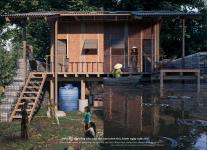
With Bualoi and Matmo’s impact ongoing, the humanitarian situation is rapidly worsening. Many displaced families are facing severe shortages of shelter, clean water, and essential supplies, while rural areas remain isolated by floodwaters. The back-to-back disasters of Yagi and Buloi highlight an urgent need for resilient emergency housing solutions. The structures that can be quickly deployed, storm-resistant, and safe for vulnerable communities in disaster-prone regions.
Although the government makes continuous efforts to evacuate and provide timely aid, the destructive power and speed of typhoons often exceed human capacity. Many regions become isolated by floods and landslides, making rescue and relief operations extremely difficult. Therefore, Vietnam needs a nationally coordinated solution for emergency housing, shelters that are resilient, quickly adaptable, and easy for local communities to build.
After a storm, secondary disasters such as flooding, waterlogging, landslides, and tidal surges frequently occur, posing further risks to people’s safety. Floodwaters often contaminate water sources with debris and waste, increasing the risk of disease outbreaks such as dengue fever, diarrhea, whitmore, tetanus and conjunctivitis. Ensuring clean water and proper sanitation is therefore essential for protecting community health.
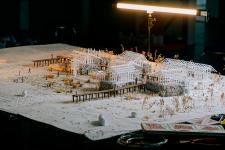
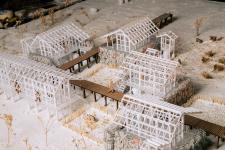
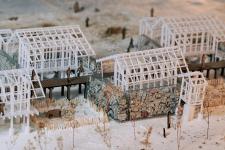
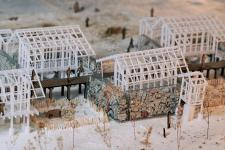
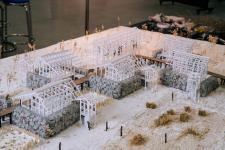
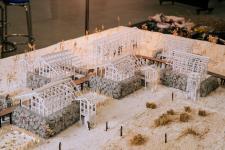
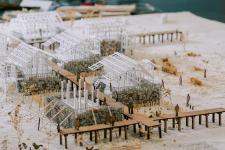
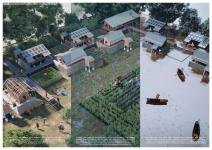
The aim is to develop a post-storm housing model that makes full use of locally available and salvaged materials, such as rubble, timber, and other debris to create adaptable structures capable of withstanding future hazards. By reusing what the storm leaves behind, communities can rebuild immediately, reduce material waste, and enhance resilience through self-sufficient recovery. These shelters would not only provide temporary safety, but also contribute to a more sustainable and climate-resilient future for vulnerable communities.
2026
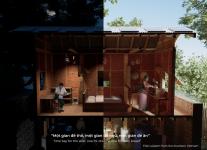
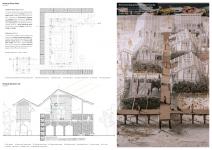
Traditional room layout (19.2 m2)
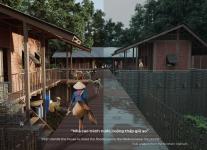
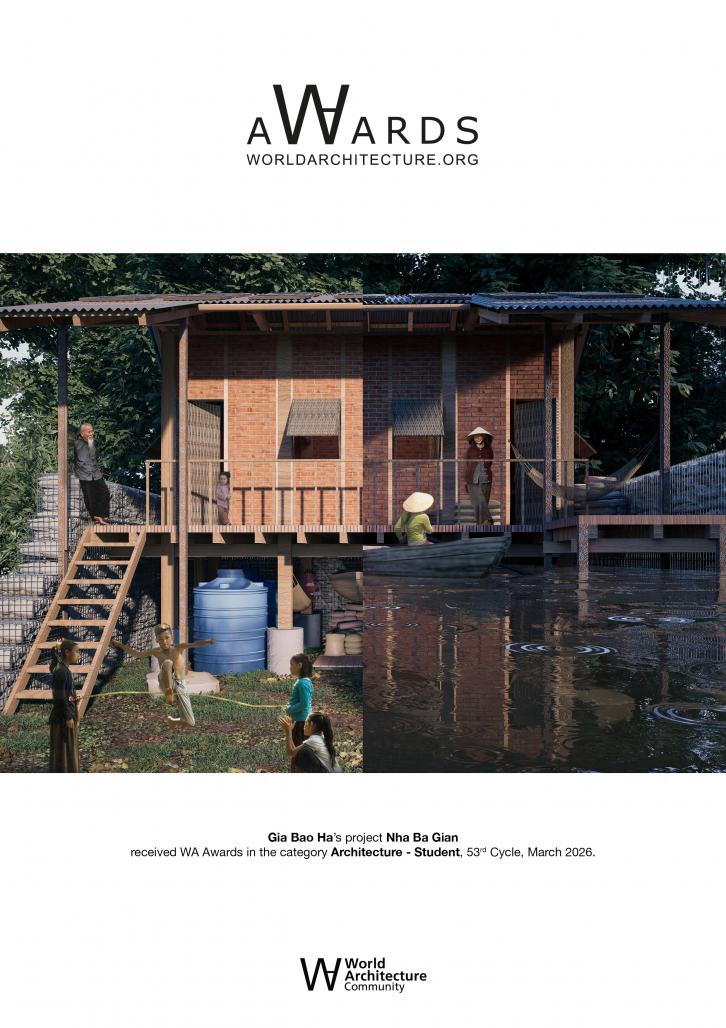
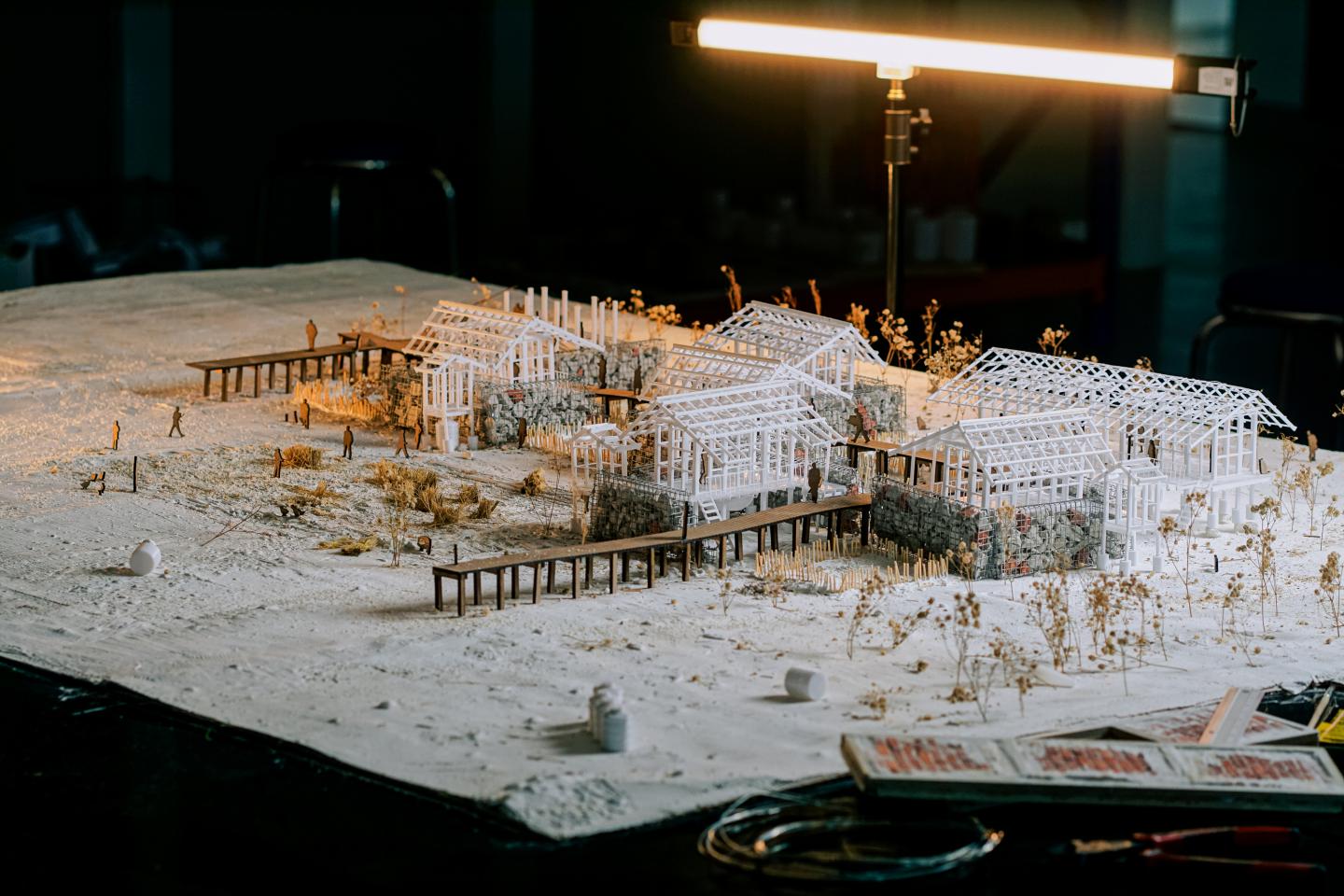
The house features three main compartments and four surrounding verandas that act as buffer zones, shielding the interior from sunlight. The spaces for worship/work, sleeping, and cooking follow the layout of traditional Vietnamese houses, allowing daily life to continue unchanged even during floods. The outer veranda serves as a family gathering space and links the modules together, evoking the image of a village.
Sanitary area (3.61 m2)
In post-storm conditions, when materials and resources are limited, maintaining hygiene becomes a major challenge. Drawing from the traditional housing layout of the Central Highlands people, the toilet is placed separately from the main living area to ensure sanitation, prevent disease, and make cleaning more manageable under difficult circumstances.
Students: Ha Gia Bao, Tran Cao Gia Bao, Nguyen Vuong Bao Khoa, Nguyen Pham Ngan Ha
Instructor: Dr. Ha Thuc Vien
Nha Ba Gian by Gia Bao Ha in Vietnam won the WA Award Cycle 53. Please find below the WA Award poster for this project.
Downloaded 0 times.
Gia Bao Hà