How?
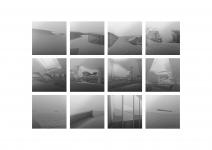
How can a shopping center stand out in a master-planned district filled with towers of offices and commercial blocks?
How do we create a breathing space in a place so tight, so crowded at its very core?
How, among all the glass facades and the wild designs screaming for attention, can we carve out a place where people can simply… breathe?
How can a modern shopping center become a keeper of those fading memories of late-afternoon markets?
How do we escape the sameness of mall designs that all look and feel identical?
How do we…?
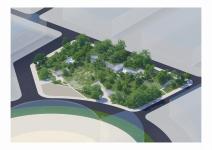
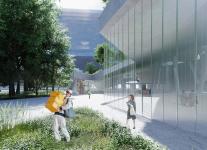
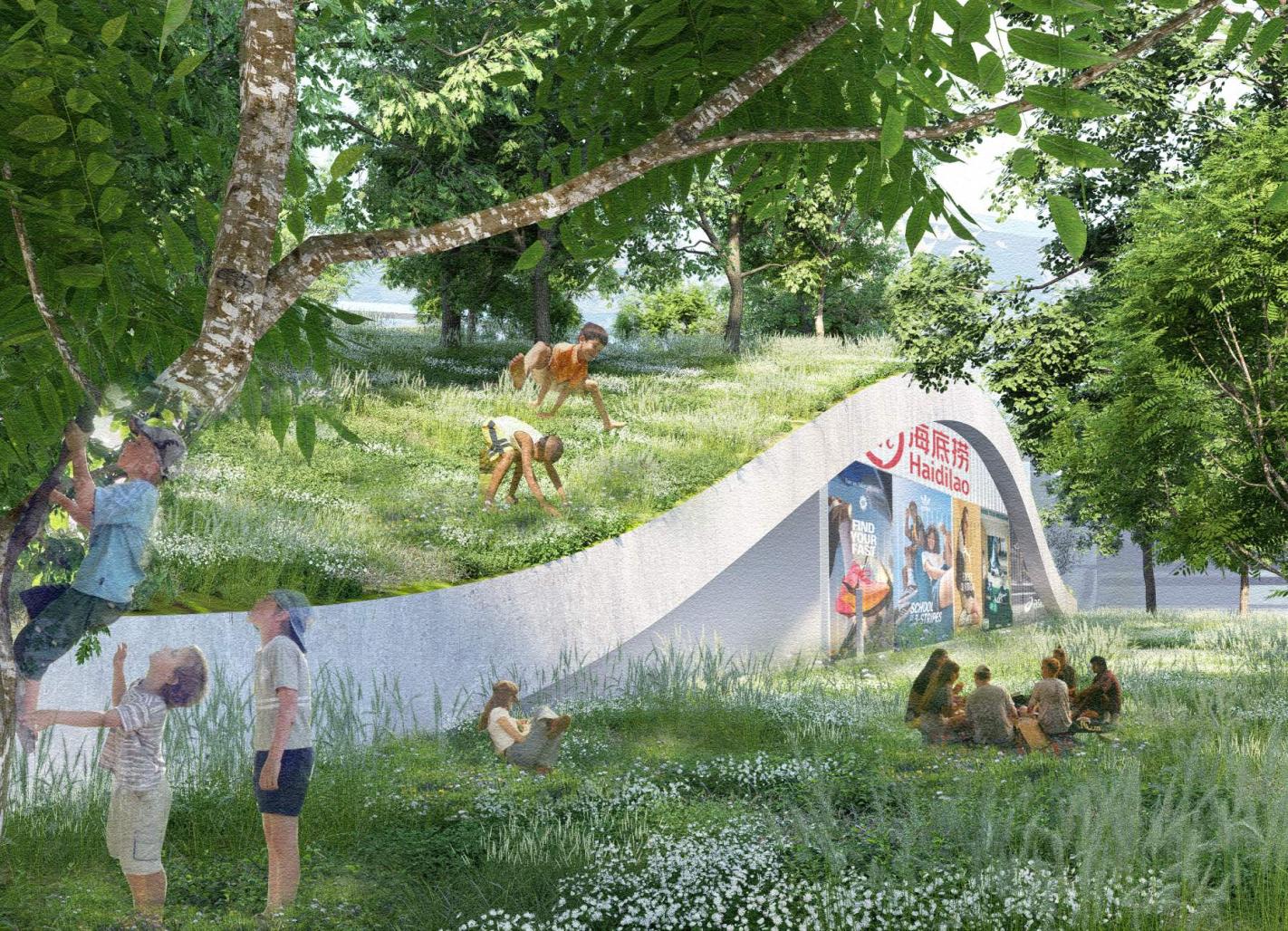
In a city compressed by density, speed, and glass façades competing for attention, this project proposes a different presence. One that recedes instead of rises, one that breathes instead of performs. Rather than another enclosed, object-like mall, the design rethinks the shopping center as a landscape where commerce dissolves into everyday life.
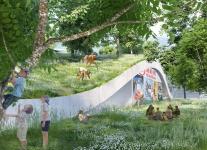
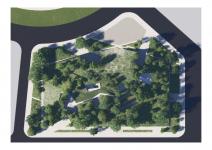
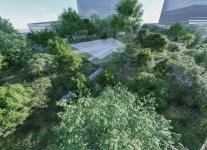
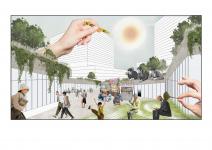
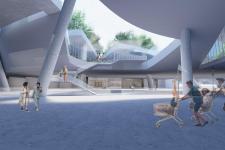
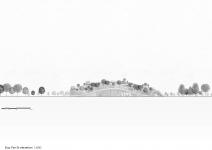
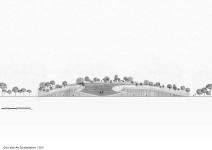
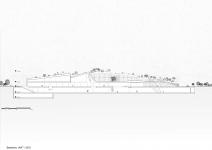
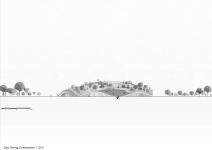
The shopping mall is conceived as a hill, an artificial topography lifted gently from the ground. A park is not placed beside the mall. The park becomes the mall. Trees, meadows, and winding paths blanket the building, allowing nature to reclaim a dense urban core. From the street, the architecture almost disappears beneath vegetation, offering a visual and emotional pause amid the surrounding towers.
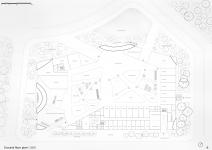
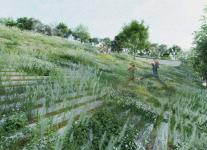
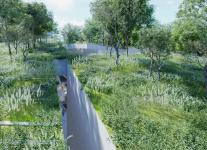
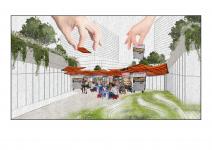
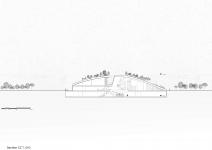
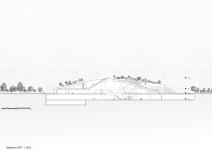
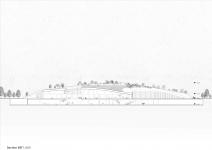
The project draws inspiration from the memory of late afternoon markets. Informal, shaded, social spaces where commerce and community coexist. Circulation follows the logic of walking through a landscape rather than navigating corridors. Slow ramps, stairs carved into the terrain, open courtyards, and shaded clearings replace the rigid grid of conventional malls. Retail spaces unfold organically beneath the hill, opening toward courtyards and green pockets, blurring the boundary between interior and exterior.
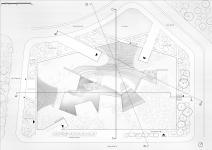
Light penetrates the building through cut outs, skylights, and sunken gardens, bringing air, shadow, and seasonal change into the heart of the commercial spaces. The roof becomes a public park, a place to rest, play, wander, and gather. It is accessible not only to shoppers but to the entire neighborhood. The mall is no longer a destination that demands consumption, but a daily landscape that invites pause.
By rejecting the standardized language of shopping malls and embracing topography, vegetation, and human scale movement, the project offers an alternative model. A shopping center not as a box, but as a breathing ground. A place where the city slows down, where memory, nature, and commerce quietly coexist.
2025
Project type
Mixed use shopping center with public park
Urban context
Dense master planned urban district surrounded by office towers and commercial developments
Main concept
Shopping mall as artificial landscape
Integration of public green space into commercial architecture
Site strategy
Low rise building embedded into terrain
Green roof functioning as a public park
Permeable edges connecting surrounding streets
Multiple pedestrian access points
Program components
Retail spaces including shops, cafés, and restaurants
Semi outdoor market areas
Public courtyards and sunken plazas
Circulation spaces integrated into the landscape such as ramps, stairs, and terraces
Public park and recreational areas on the roof
Circulation
Pedestrian oriented circulation system
Continuous ramps and stepped paths
Vertical connections through open stairs and atriums
Clear separation between public circulation and service areas
Student: Hà Gia Bảo
Instructor: Msc,.Arch. Phan Thanh Tu Tuan
Gia Bao Hà