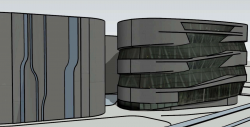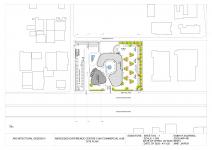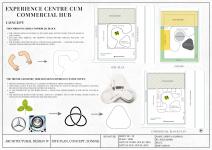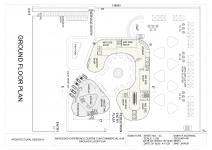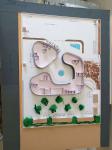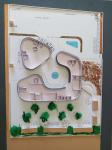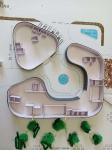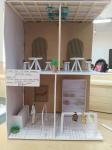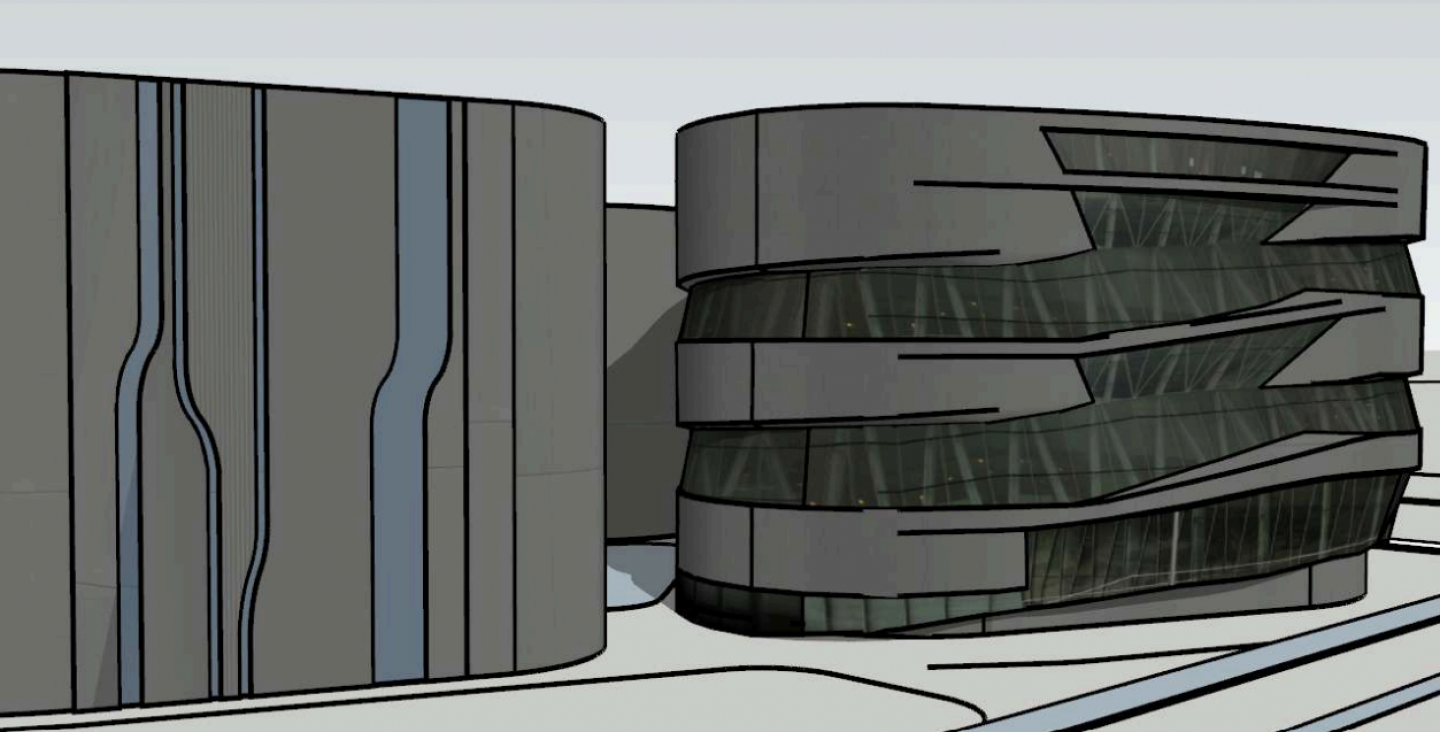
To conceive architecture as a journey rather than an object, where movement, sequencing, and spatial transitions narrate the Mercedes-Benz legacy of innovation, performance, and precision.
To translate the idea of SILVERLINE into built form by establishing a continuous experiential spine that connects history, present-day brand identity, and future mobility through fluid circulation and layered spatial experiences.
To create a strong public interface by dissolving the boundary between private brand spaces and the city, allowing the experience centre and commercial hub to function as an active urban destination.
To organize the project around a central atrium that acts as the visual, spatial, and experiential heart of the building, enabling orientation, interaction, and continuity across multiple levels.
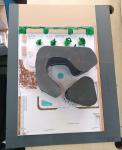
To derive architectural form from functional logic and movement patterns, using trefoil geometry to represent interconnectedness, efficiency, and dynamic flow—core values of automotive design.
To integrate commercial functions in a manner that supports economic sustainability without overpowering the experiential narrative of the brand.
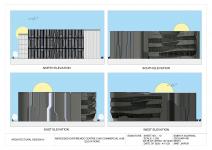
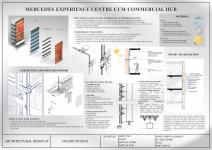
To respond to Jaipur’s hot-dry climate through shaded façades, controlled transparency, ventilated cladding, and self-shading massing, ensuring thermal comfort and reduced energy demand.
To employ a material palette that balances global automotive precision with local context, combining high-performance glazing, aluminum systems, and regional sandstone.
To design flexible and adaptable interior spaces capable of hosting exhibitions, product launches, events, and evolving brand narratives over time.
To establish SILVERLINE as a contemporary landmark, where architecture reinforces identity, encourages public engagement, and contributes meaningfully to the urban fabric.
2025
Project Type
Mixed-use development comprising an automotive experience centre, commercial retail spaces, food and beverage outlets, office and administrative areas, and public open spaces.
Site Details
Location: Jagatpura, Jaipur, Rajasthan, India
Site Area: ~13,600 sq.m
Plot Type: Corner plot with access from three sides
Land Use: Commercial / Mixed-use (as per JDA Master Plan)
Planning Controls (As per JDA Regulations)
Ground Coverage: ~35%
Maximum FAR: 2.25
Achieved Built-up Area: ~30,000 sq.m (approx.)
Setbacks:
Front: 6.0 m
Sides: 3.0 m
Rear: 3.0 m
Maximum Permissible Height: As per 1.5 × abutting road width
Functional Zoning
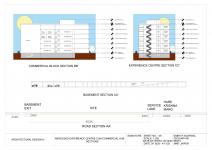
Basement Levels:
Vehicular parking (two- and four-wheelers)
Service areas, electrical rooms, HVAC plant, STP and water services
Ground Floor:
Public plaza, anchor retail, primary exhibition areas, brand display zones
First–Third Floors:
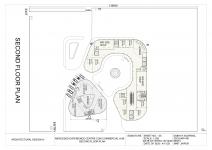
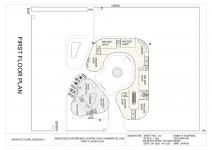
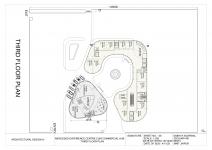
Experience galleries, themed exhibitions, AR/VR zones, retail bazaar units
Fourth Floor:
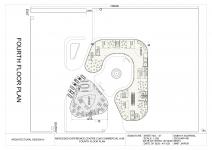
Food and beverage outlets, cafés, conference rooms, administration
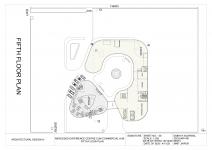
Fifth Floor:
Logistics, meeting areas, fitness and wellness spaces, open terraces
Parking Provision
Basement Parking:
Four-wheelers: ~120 ECS
Two-wheelers: ~100 spaces
Surface Parking: Visitor and valet parking
EV Charging Stations: Provided within parking zones
Parking Design: As per JDA and NBC norms
Structural System
Type: Reinforced Cement Concrete (RCC) framed structure
Column Grid: Modular grid system for flexible planning
Slab System: Flat slab / conventional RCC slab (as per span requirement)
Foundation: Isolated / combined footing (based on soil investigation)
Circulation & Accessibility
Separate pedestrian, vehicular, and service entries
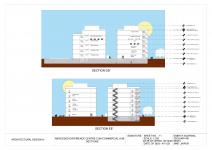
Central atrium facilitating vertical and visual connectivity
Multiple staircases, passenger lifts, and service lifts
Barrier-free access with ramps, lifts, and accessible toilets as per NBC
Fire & Life Safety
Designed as per NBC 2016 – Part 4
Fire staircases, refuge areas, fire lifts
Automatic sprinkler system, fire hydrants, hose reels
Smoke extraction and pressurization systems
Clearly defined fire escape routes and assembly areas
Building Services
HVAC: Centralized air-conditioning with AHUs
Electrical: 3-phase power supply with DG backup
Water Supply: Municipal supply with underground and overhead tanks
Waste Management: Segregated waste collection and disposal
STP: On-site sewage treatment plant
Rainwater Harvesting: Provided as per local norms
Materials & Finishes (Indicative)
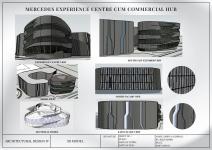
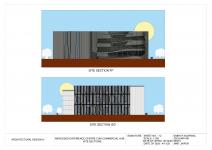
Exterior: Local sandstone cladding, aluminum panels, high-performance glazing
Interior Floors: Stone flooring, vitrified tiles, polished concrete
Façade Treatment: Shaded façades with integrated lighting elements
Landscape: Hardscape plazas, water features, soft landscaping
Sustainability Measures
Orientation-based massing to reduce heat gain
Shaded public plazas and semi-open spaces
Natural ventilation in transitional spaces
Energy-efficient lighting and water fixtures
Provision for future renewable energy integration
Sabhya Agarwal
Sabhya Agarwal