Terrains of Healing is a regenerative retreat masterplan set in the Himalayan village of Saur, where architecture and landscape are choreographed as an extension of the human body. Conceived as a living organism, the project transforms the abandoned mountain terrain into a sensorial and therapeutic environment by mapping spatial experience to the anatomy of a human being. The intention is not merely to design a wellness center, but to create a built ecosystem that heals through form, flow, materiality, and connection to nature.
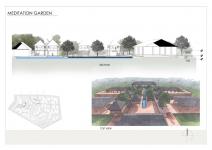
At the center of the masterplan lies the water kund, envisioned as the heart of the project both symbolically and functionally. This stepped reservoir collects water from natural springs and redistributes it through a network of channels that weave across the contours like veins. These veins do more than move water they carry sound, temperature, moisture, and emotion across the site, making circulation experiential. Visitors encounter water repeatedly and gently: as stillness at the heart, as murmurs along pathways, and as broader reflective surfaces in the pool and therapy courts. The hydrological flow becomes the project’s life force, grounding the narrative of healing.
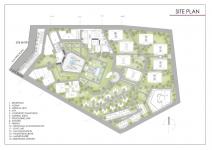
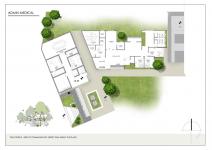
From this central heart, spaces radiate outward as anatomical counterparts. Each cluster represents a part of the body and is designed to evoke its corresponding sense of function lungs as open, breathing volumes; limbs as movement-centric spaces; the spine as a strong linear circulation route; and the mind as a calm reflective pavilion at the highest point of the site. This anatomical mapping gives the project cohesion and clarity while enabling a layered spatial experience, where each built form reinforces the retreat’s core theme of restoring harmony between body and terrain.
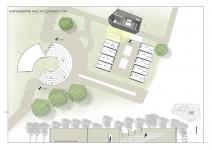
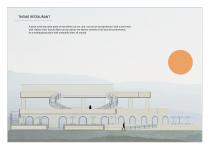
The Theme Restaurant Pavilion, positioned at the highest elevation, becomes the “mind” of the site a place of perspective, reflection, and quiet observation. The pavilion embraces both sunrise and sunset, with panoramic glazing, open decks, and a multi-use gathering area that hosts local performances and community interactions. Its presence at the crest of the landscape gives visitors a sense of culmination, completing the spiritual journey from heart to mind.
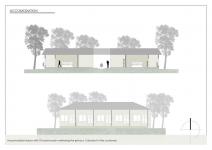
The accommodation units, dispersed along terraces like organs arranged within a body cavity, offer privacy, stillness, and direct interaction with nature. Each unit is oriented to capture early morning light, valley views, and cross-winds. Their material palette raw stone, timber, lime plaster, slate roofs ties the architecture deeply to Himalayan vernacular traditions yet is refined with minimal, contemporary detailing. This balance between old and new extends the idea that healing is found when tradition and modernity coexist gracefully.
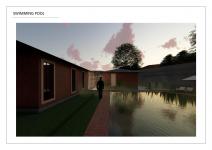
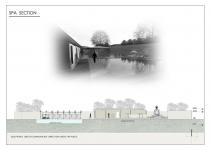
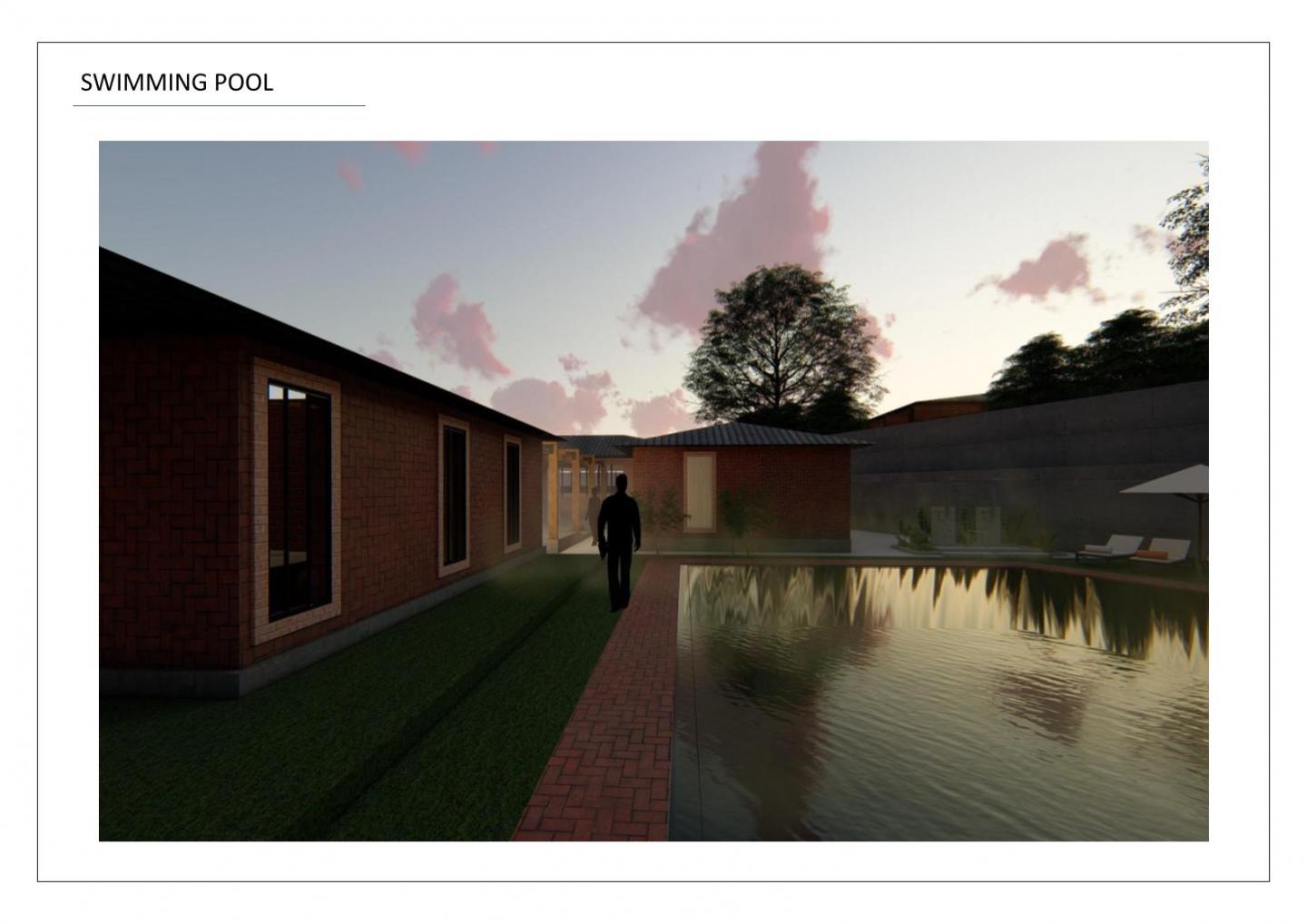
The wellness blocks, representing the lungs, nerves, and internal systems of the body, are connected to nature through soft thresholds: shaded verandahs, courtyards, colonnades, and semi-open platforms. Each zone is intentionally designed with varied proportions, acoustic qualities, and light patterns to influence mood and sensory response. The yoga hall opens to long east-facing views, creating a slow, expansive breath at dawn. Therapy rooms are more intimate, dim, and tactile, allowing the body to shift inward. The swimming pool, set slightly above ground level, reflects the sky and hills, becoming a space for both physical and emotional buoyancy.
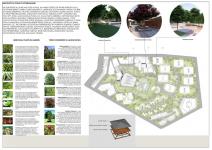
Movement throughout the project is deliberately slow and meditative. Pathways follow existing contours, allowing the terrain to guide circulation like a natural spine. The gentle rhythm of stepping up, descending, pausing, and turning mirrors the body’s internal cycles. Along these routes, visitors encounter curated landscape moments native herbs, shaded seating nooks, quiet water edges, and stone walls that hold warmth through the day. These elements together create a multisensory journey woven through light, breeze, and topography.
Landscape integration is fundamental to the project’s identity. The terraced site is preserved and enhanced rather than reshaped, respecting both ecological systems and cultural memories of the village. Native species stabilize soil, attract birds, and maintain biodiversity. Water is celebrated as the primary healing medium: collected, slowed, filtered, and returned to the land. The retreat becomes an ecological metabolism, where built and natural systems collaborate to support wellbeing.
Ultimately, Terrains of Healing is a spatial metaphor for the human body an architecture that listens, breathes, circulates, and heals. It is a place where visitors are reconnected with elemental experiences: walking with the sound of water, resting under filtered light, bathing in cool air, viewing shifting horizons, and engaging with material honesty. Through its anatomical concept, careful spatial choreography, and deep relationship with the landscape, the project transforms an abandoned Himalayan village into a living organism of wellness quiet, resilient, and profoundly restorative.
2021
Site Area: ~ 15–16 acres (mountain slope settlement)
Site Elevation: Approx. 1,800–2,000 m above sea level
Topography: Steep terraced hillside with natural water flow channels
Climate: Humid subtropical / temperate mountain climate
Orientation: Masterplan aligned to maximize morning sun valley views
Zoning:
Central Healing Core (Water Kund Gathering Court)
Residential Terraces (Accommodation Units)
Wellness & Therapy Blocks
Community Interaction Spaces
Sunrise/Sunset Restaurant Pavilion
Landscape Trails & Water Channels
Siddhali Phule