

CONTEXT.
The Central Highlands - vast, sunlit, and wind-swept - stands as a motherland nurturing diverse ethnic communities, each preserving values that enrich Vietnam’s cultural mosaic. Amid this expanse, Jrai festival traditions rise like a radiant forest bloom. Yet this sacred heritage has long lingered behind a delicate veil - "seen" and "heard", but seldom "lived" and "felt".
PROPOSAL.
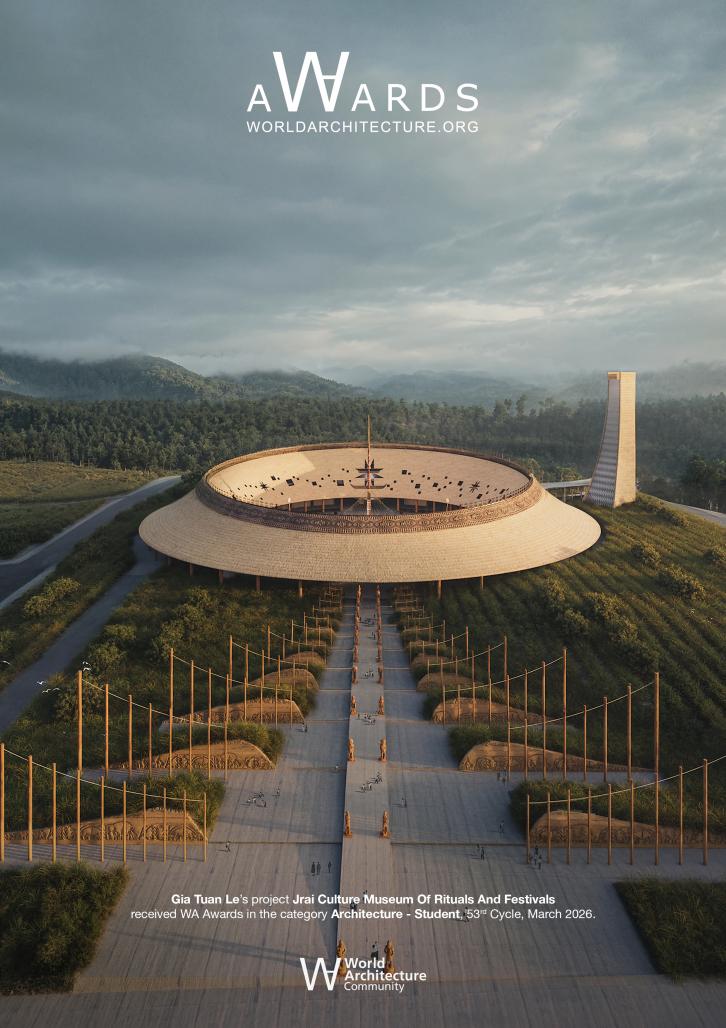
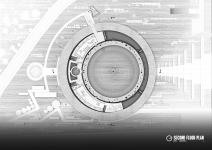
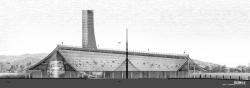
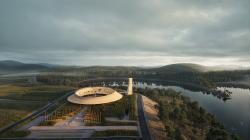
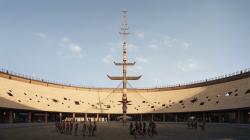
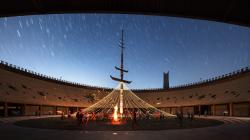
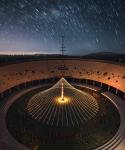
From afar, the museum emerges as part of the landscape - woven into pine forests, molded by the land’s natural contours. Its form reinterprets the iconic Rong house, distilled into a circular geometry enclosing a central courtyard. This void is not absence but essence - a space of "Convergence", echoing the communal heart where rituals unfold. Here, architecture becomes both stage and storyteller.
DESIGN PRINCIPLES.
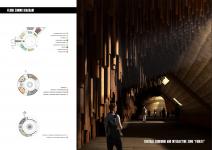
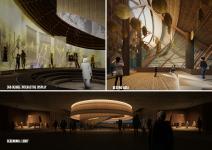
Guided by the ethos: “A festival is a journey - so is the act of preserving it,” the museum choreographs a sequential narrative. From threshold to culmination, the path moves through emotional gradients: "Release" – "Awakening" – "Recognition" – "Resonance". This is not passive viewing but embodied experience - crafted through light and shadow, sound and texture, where every sense becomes a vessel of memory.
CONCEPT.
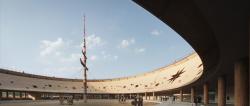
The architecture embraces Centripetal Orientation - drawing energy inward, around the ceremonial core, much like the circular Xoang dance encircling the Ceremonial Neu Pole. These spatial metaphors root the design in cultural archetypes while translating them into contemporary expression.
SIGNIFICANCE.
The Jrai Ethnic Festival Cultural Museum stands as an emblem of gratitude to the motherland, a monumental archive safeguarding intangible heritage while amplifying the poetic pulse of the Central Highlands. It is not merely a container of artifacts but an immersion - a space where tradition breathes, and the visitor becomes part of its rhythm. Here, "Convergence" is more than geometry; it is spirit - of people, of culture, of time eternal.
2025
LOCATION.
Bien Ho Lake, Bien Ho Commune, Pleiku City, Gia Lai Province, Vietnam.
GROSS FLOOR AREA.
16,510 m² (Comprising 2 principal exhibition floors and 1 semi-basement public floor).
DESIGN BASIS.
Material and Spiritual Essence define every gesture:
- The "North–South axis", revered in Jrai belief, anchors the master plan—aligning cultural symbolism with environmental logic.
- "Roof proportions are accentuated", reflecting Jrai cosmology in which the soaring roof shelters the divine—a signature architectural expression reimagined in the museum’s design.
- Raw, tactile materials—timber, stone, earth—root the structure in its land, honoring the Jrai conviction that the communal house shelters both humanity and divinity.
- Layered terraces reenact the climb of the highlands—the ancient paths of toil and ritual.
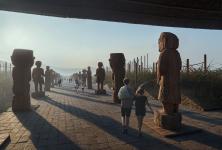
- Silent "funerary guardians" now stand sentinel at the entrance, invoking awe and memory.
- "Interactive spaces resonate with the visitor", evoking the cadence of gongs, the vastness of the forests, and stimulating hearing, touch, and sight in a unified sensory dialogue.
- The "Ceremonial Neu Pole", once the axis of festival life, now anchors the architectural form—a symbolic core of "Centripetal Orientation" and cultural convergence.
Other cultural imprints unfold through curated imagery and sculpted space.
Author: Gia Tuan Le
Academic Supervisor: Dr.Arch.Phu Cuong Pham
Jrai Culture Museum Of Rituals And Festivals by Gia Tuan Le in Vietnam won the WA Award Cycle 53. Please find below the WA Award poster for this project.
Downloaded 0 times.
Gia Tuan Le








Favorited 1 times