
Integrated Water Resources Management Center: A Model for River Restoration
Jordan is among the most water-scarce countries in the world, with only 61 m³ of renewable freshwater per capita annually—far below the internationally recognized absolute scarcity threshold. This critical shortage is intensified by inefficient water management, pollution, overextraction of limited resources, climate change, hydro-political pressures, poor governance, & limited financial capacity, threatening both environmental sustainability and socioeconomic stability. The Zarqa River- Jordan’s third-largest and a vital non-transboundary freshwater source
for surrounding communities- has undergone decades of degradation due to industrial discharges, untreated sewage, and agricultural runoff. Once a key waterway, it is now one of the most polluted rivers in the region, unfit for human use and destructive to ecosystems, exacerbating the country’s water challenges. This situation underscores the urgent need for ecological restoration alongside sustainable, Integrated Water Resources Management (IWRM). (IWRM is a process that coordinates the management of water, land, and related resources to maximize economic and social welfare equitably, while ensuring the sustainability of ecosystems. It replaces a fragmented sectoral approach to water management by recognizing the interdependence of water uses and promoting a holistic approach that balances human needs with environmental protection).
While centralized management efforts exist in Jordan, they often lack interdisciplinary integration, meaningful community engagement, and long-term resilience strategies. Addressing these gaps, this project proposes a decentralized IWRM-based model through the creation of a center dedicated to restoring a 4km section of the Zarqa River and enhancing the sustainability and resilience of the Russeifa community. By serving as a replicable prototype that integrates sustainable water management strategies with architectural solutions the project aims to provide a scalable adaptable framework for similar water stressed regions. Russeifa was chosen for its high concentration of pollution sources and its key target users—a farming community and a dense
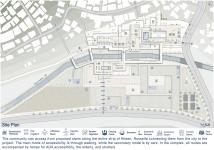
residential population—whose resilience is essential to the project’s success. The site, spanning both riverbanks includes a scrapyard to be removed as part of the restoration strategy.
The restoration is only of a section of the river since it is impossible for one architectural project to restore a large 70km river. Full restoration would also require policy changes. Therefore, the project is imagined as a part of a national effort and not as a standalone project. It will act as a starting point for a national IWRM system.
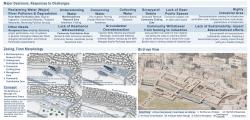
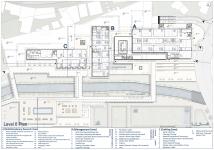
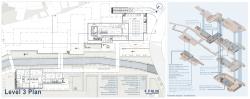
The project is structured around five themes—Reclaiming Water (major theme for river restoration), Conserving Water, Understanding Water, Collecting Water, and Community Contribution Zones—which are translated into both architectural & nature-based interventions. Architecturally, the center comprises: an Underground
Purification Zone to treat river water for agricultural reuse as well as re-injection of purified water to the river through groundwater injection wells; a Multidisciplinary Research Zone for holistic studies on water scarcity and river degradation; a Crafting Zone to transform collected debris along the river into useful products; a Management Zone for project performance, river & systems monitoring, emergency response, stakeholder coordination, and administration; and a Community Contribution Zone offering training and workshops for community members (primarily farmers) on water management& river restoration practices.
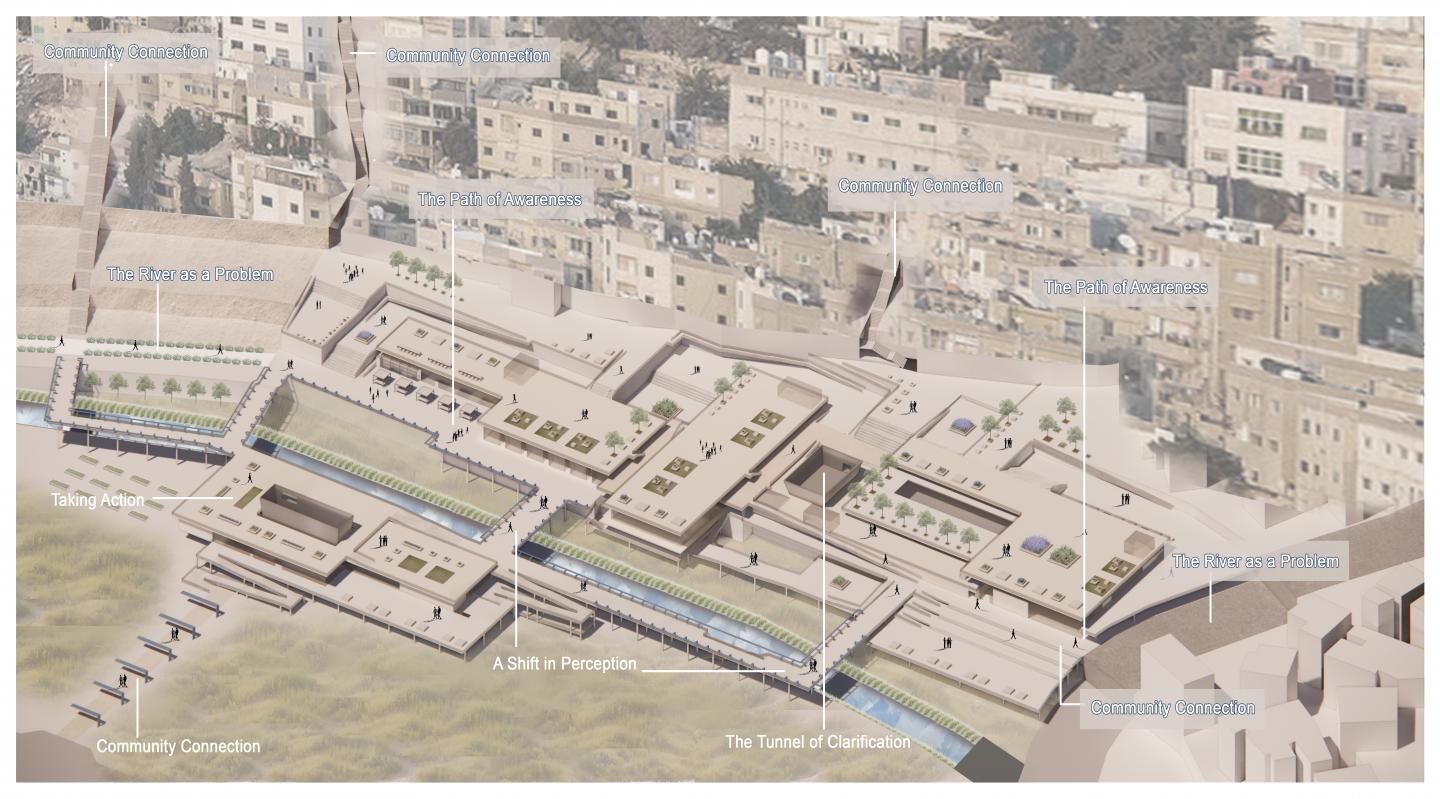
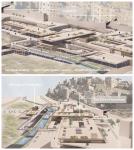
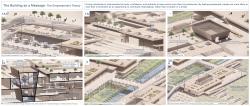
Architectural Experience: The center is conceived as an open, deindustrialized public realm within a city dominated by factories and scrapyards. Infrastructural elements are placed underground, minimizing visual impact and preserving the landscape as a communal space. Above ground, the site appears as an open public space threaded by educational paths, wetlands, and gathering areas. Visitors witness the transformation of contaminated water into a resource, reinforcing the message that restoration is both possible and collective. The design balances environmental performance with architectural clarity, an open landscape above, technical systems below, and a spatial journey that shifts perception from crisis to action.
Community Empowerment: Farmers, residents, students, and visitors are not passive beneficiaries but active contributors. Training sessions on water management and river restoration ensure knowledge transfer. Community crafting workshops transform debris from the river into useful products, generating both awareness and economic value. Through this participatory model, the project fosters environmental stewardship, livelihoods, and resilience- linking social sustainability to ecological restoration.
2025
Project Site Location: Hiteen Area, Russeifa City, Zarqa Governorate, Jordan
Project coordinates on Google Maps: (32.0082011, 35.9995328) (32.0088151, 35.9984677)
The Zarqa River runs through 4 governorates, one of them being the Zarqa Governorate, which hosts over 50% of Jordan’s industries, making it Jordan's most industrialized and consequently one of its most polluted river basins.
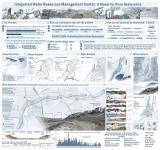
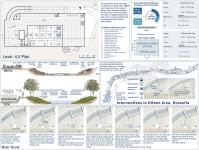
River Restoration Strategies: 1. River water purification initially through constructed wetlands and primarily through the underground purification system, 2. Reinjection of a part of the purified water through groundwater injection wells, 3. Enhancing River water quality and stabilizing soil through planting riparian vegetation, and floodplain restoration, 4. Training farmers on preventing agricultural runoff and other river restoration strategies, 5. Flood mitigation through bypass channels, floodplains, riparian planting, infiltration basins, and constructed wetlands. 6. Scrap, litter and solid waste removal, 7. Community contribution efforts towards river restoration practices, 8. Creating impact and a statement through community involvement aiming at driving policy changes regarding industrial leakage and call for national action towards restoring the Zarqa River’s source (Ain Ghazal Spring), 9. Public awareness on behavior towards the river.
Purification Process: 1. Inlet Flow& Regulation Screens, 2. Flow Equalization Tank, 3. Coagulation and Flocculation, 4. Sedimentation Tanks, 5. MBBR (Moving Bed Bioreactors), {sludge handling and drying, chemical storage and dosing) 6. Media Filtration Unit, 7. Activated Carbon Unit, 8. UV Disinfection Unit, 9. Water Storage Tanks. The primary purification step, the biological treatment MBBR (moving bed bioreactors) was chosen due to its compactness, scalability, economic and environmental sustainability, low energy consumption, high treatment capacity, and low sludge production. This purification process is necessary to ensure the full removal of the high levels of COD, BOD, Nitrogen, Phosphorus, PH, and heavy metals.
Sustainable water withdrawal percentages from the Zarqa River: Winter: 15-20%, Summer: 5-10%. Flow Retention: 80-95%.
Purification system capacity: 1600 cubic meters per day. Purification system total area: 1200sqm area. Purification system depth: 6m
To ensure sustainability, the system capacity will be less than the maximum acceptable withdrawal percentage. 1600 cubic meters per day are just enough for agricultural reuse along the farming strip in our area Hiteen, Russeifa. The farming method will be drip irrigation to serve as a model for conserving water and since water is scarce in the region. Excess water in winter will be stored for summer need.
Sustainability Measures: Creating bypass channels from the river to farming ponds for two reasons. First, they will act as a static receiver and giver of water. Making sure that the pond’s inlet is closed is essential to prevent the purified water from mixing with the river’s polluted water. The second reason is that river flow shouldn’t be disrupted, it is not sustainable to take water from a river in the direction opposite to its flow, so a bypass channel allowing water to flow with the direction of the river water to a static place where water can be taken without harming the river is vital. Especially that the purification zone is at one point on site. Bypass channels are also good for flood prevention and are better for restoring rivers.
Each farming pond will be sized accordingly with the farming lands it serves.
The constructed wetlands are "subsurface flow" constructed wetland beds suitable for the dry climate of Russeifa.
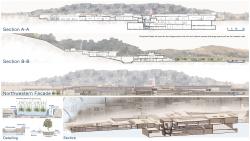
Blending in with Russeifa’s context, the project uses beige& ivory coated concrete. All facades will be lit by 1.5m high clerestories of glass. Except for the northwestern facade, it will be almost fully glass for visual connectivity and awareness purposes. The glass will be double glazed with vacuum insulation. The entire complex is one floor; any other floor is underground. As you are walking you can only see the 1.5m glass clerestory of the buildings, except when you are viewing the northwestern façade. This is all a part of the deindustrialization strategy. 1m Roof Overhangs are used for controlling sunlight on all the buildings, and composite slabs are used for bridges above the river and interior spaces with large spans such as the research labs.
Student: Sara Tamimi
Supervisor: Arch. Roaa Zidan
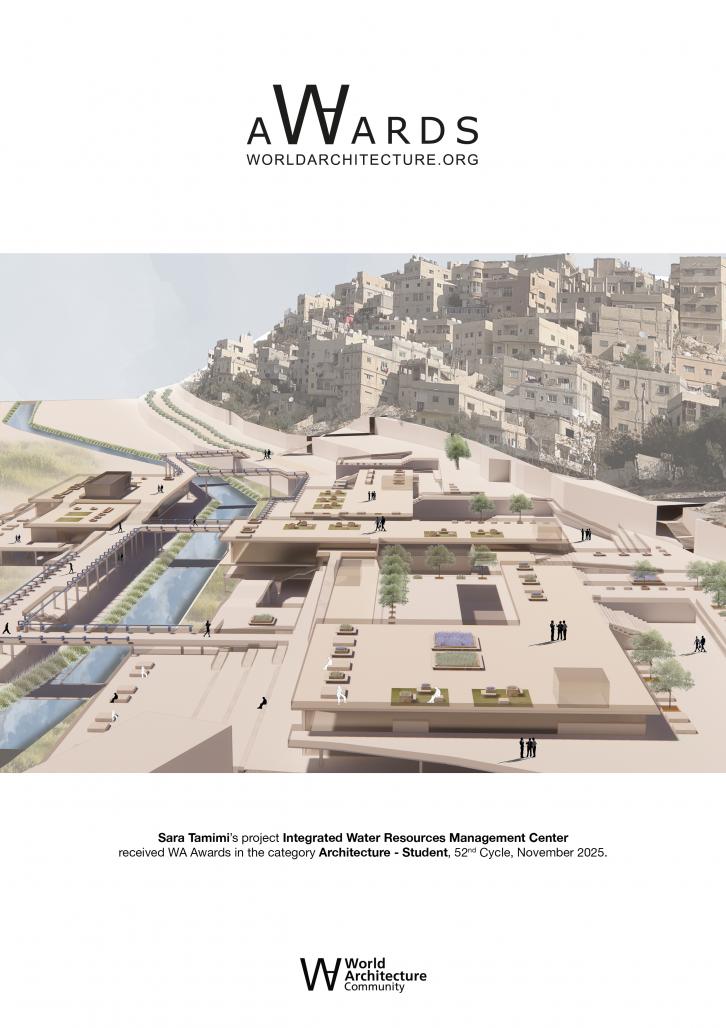
Integrated Water Resources Management Center: A Model for River Restoration by Sara Tamimi in Jordan won the WA Award Cycle 52. Please find below the WA Award poster for this project.
Downloaded 0 times.
Sara Tamimi 2
Favorited 2 times