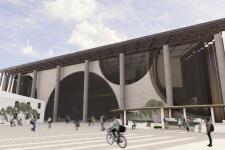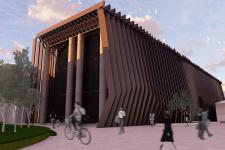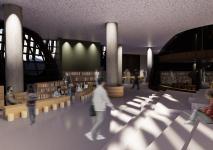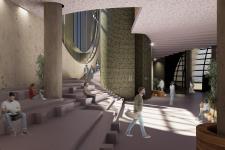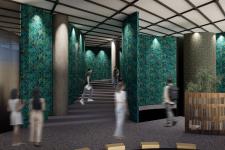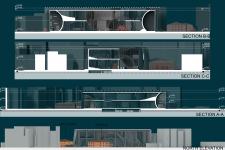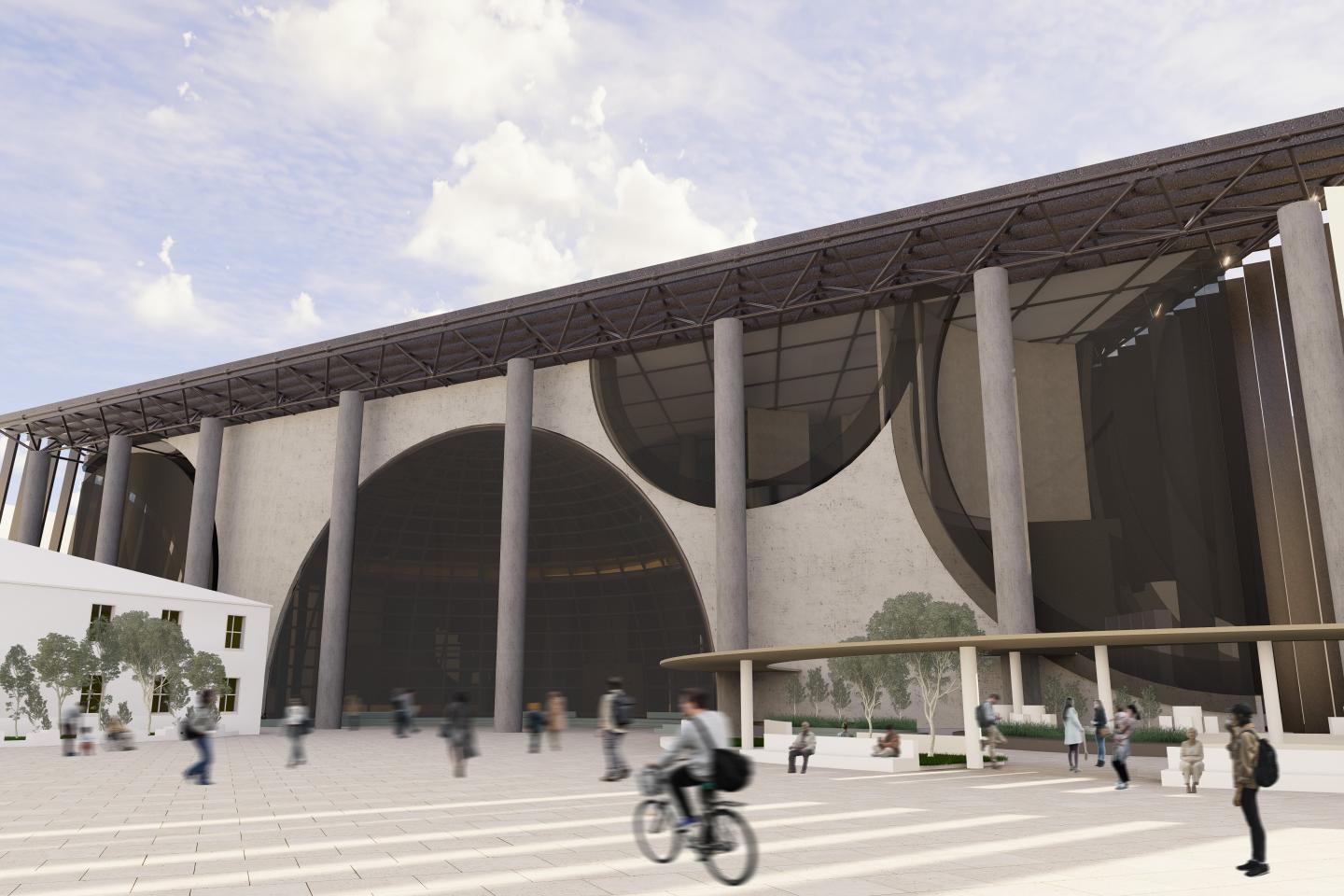
HelioHub: İzmir Central Library was envisioned as a cultural hub and architectural landmark that merges innovation, sustainability, and collective experience. The design seeks to reinterpret the library not merely as a repository of books, but as a dynamic social platform fostering interaction, learning, and reflection within the urban context of İzmir. The project aims to act as a mediator between nature, technology, and human behavior — transforming the library into a living organism that resonates with the rhythms of the city.
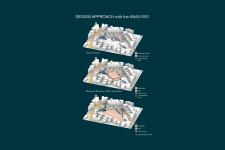
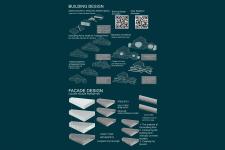
Through computational design thinking, the process explored how digital tools could merge environmental logic with architectural expression. Using Grasshopper, parametric modeling enabled the team to analyze and optimize daylight performance, solar radiation, and façade permeability. These studies directly informed the building’s form and skin, generating a geometry that continuously adapts to environmental data. The resulting façade behaves like a responsive membrane—filtering light, enhancing natural ventilation, and minimizing energy demand while producing an ever-changing interior atmosphere.
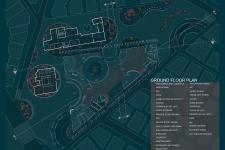
The spatial organization was designed to support both individual contemplation and collective engagement. Reading zones, digital learning areas, and exhibition platforms are arranged to create gradients of privacy and openness, encouraging users to move fluidly through different experiential layers. The integration of environmental simulations, structural logic, and material research demonstrates how digital design workflows can foster a dialogue between form, performance, and emotion.
Ultimately, HelioHub embodies a vision of architecture as an evolving ecosystem—one that learns from its environment, adapts through technology, and enriches the sensory and social experience of its users.
2023
Project Type: Student (Academic Project)
Project Title: HelioHub: İzmir Central Library
Location: İzmir, Turkey
Program: Public / Educational Building
Studio: AR301 Integrated Design Studio – İzmir Institute of Technology (İYTE)
Supervisor: Dr. Öğr. Üyesi Berk Ekici
Design Tools: Rhinoceros 3D, Grasshopper, Ladybug Tools, Climate Studio, Adobe Suite
Focus Areas:
Parametric geometry generation
Solar radiation and daylight optimization
Façade performance and environmental responsiveness
Integration of computational and architectural design workflows
Design Strategy:
Environmental data and parametric analysis were used to guide the design evolution—from initial form-finding to final façade articulation—ensuring both ecological efficiency and experiential richness.
Architectural Design: Sıla Yılmaz & Öyküm Polat
Studio Supervisor: Dr. Öğr. Üyesi Berk Ekici
Institution: İzmir Institute of Technology (İYTE)
Academic Term: AR301 Integrated Design Studio – Fall Semester
Sıla Yılmaz