Every thread has a story — and so does every building. This project began not from a sketch or a line on paper, but from a simple thought: how can a factory, a place of labor and production, breathe, feel, and connect like a living being?
In the heart of Bangladesh’s industrial landscape, factories often rise as cold, imposing structures — efficient, but distant. They hum with machinery yet lack the warmth of human touch. As an architecture student, I often wondered if sustainability could be more than a checklist of green systems — if it could feel human. That thought became the first loop in what I later called “Loops of Life.”
The idea was simple yet profound: just as a sweater is nothing without its loops, a factory is nothing without its people and the planet. I wanted to weave together nature, labor, and architecture — to knit them into one continuous loop where every element supports the other.
The Birth of the Concept – Loops of Life.
The “Loops of Life” concept was inspired by the process of knitting itself. A sweater comes alive through countless loops — each thread interlinked, each connection vital. In the same way, this factory was imagined as a series of interconnected systems: human, environmental, and architectural.
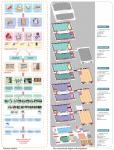
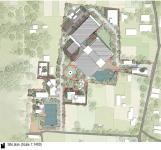
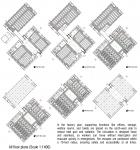
The circular planning mirrors this metaphor. The flow of production — from raw material intake to packaging — follows a seamless loop. No abrupt corners, no broken transitions. Movement happens naturally, minimizing energy loss and confusion. Every department connects logically, yet softly — like stitches held together by care.
Around these production loops, green zones spiral and interlace — courtyards, planters, and terraces designed to breathe life into the spaces where workers spend most of their day. Nature isn’t just decoration here; it’s a co-worker, a silent companion.
The Human Connection
Factories are often designed for machines — not for the people who keep them running. That realization struck me deeply. I wanted every worker to feel that they weren’t trapped inside a box of concrete and steel but were part of a living ecosystem.
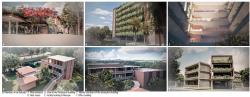
So the design became human-centric. Skylit cafeterias, shaded breakout terraces, and green corridors break the monotony of industrial repetition. Each workstation was planned with visual connectivity to nature, ensuring that workers could see green, breathe fresh air, and feel sunlight filtered through soft foliage.
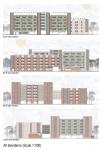
The facade became the project’s emotional canvas. Inspired by Le Corbusier’s “Brise-Soleil,” the façade was designed using the Venturi effect — a principle that accelerates airflow by narrowing its path. The windward side of the jali remains wide, while the inner side narrows, creating a cooling breeze inside the workspaces.
At the base, angled planters guide the wind, optimizing natural ventilation. The outer vegetation acts as a natural dust filter, reducing air pollutants from the industrial surroundings. Extended 7-foot slabs shield the interiors from direct sunlight, maintaining comfort without artificial cooling. It’s a façade that breathes, shades, and protects — a living skin of the building.
Inspiration from Nature
My truest inspiration came from nature itself. I wanted to bring back the essence of connection — between people, ground, and sky. The green facades were designed not just as sustainable features, but as emotional ones.
In this tropical climate, I wanted workers to feel the rhythm of nature — to see leaves fall in autumn, to sense the soft shift of light as the seasons change. The falling leaves, the blooming greens, the shadows dancing across the floor — all remind them they’re not detached from the earth even while working inside a factory.
Architecture, I believe, should heal — not just perform. It should remind people of their place in the grand cycle of life.
Breathing Through Design
The courtyards act as lungs of the factory. They channel cross-ventilation through naturally designed wind tunnels and light wells. These spaces aren’t empty voids — they’re gatherings of life, places where air, light, and laughter coexist.
Every courtyard tells a different story — one holds a small tree where workers often rest in the shade, another opens toward a water body reflecting the changing sky. The rainwater harvesting system completes the cycle — collecting, filtering, and reusing water for landscaping and washrooms.
This closed-loop system mirrors the project’s philosophy — nothing wasted, everything reused, just like the loops of a sweater.
Visual Softness in Industrial Scale
Factories are usually hard-edged and intimidating. I wanted to challenge that language. So I softened the architecture — curving corners, layering greens, and blurring boundaries.
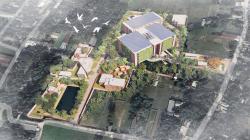
The vegetation on the outer layer acts as both camouflage and comfort. From outside, the massive industrial structure appears gentle, almost hidden behind layers of trees and vines. At eye level, the green buffer erases the factory’s dominance, creating an illusion of a garden rather than a production site.
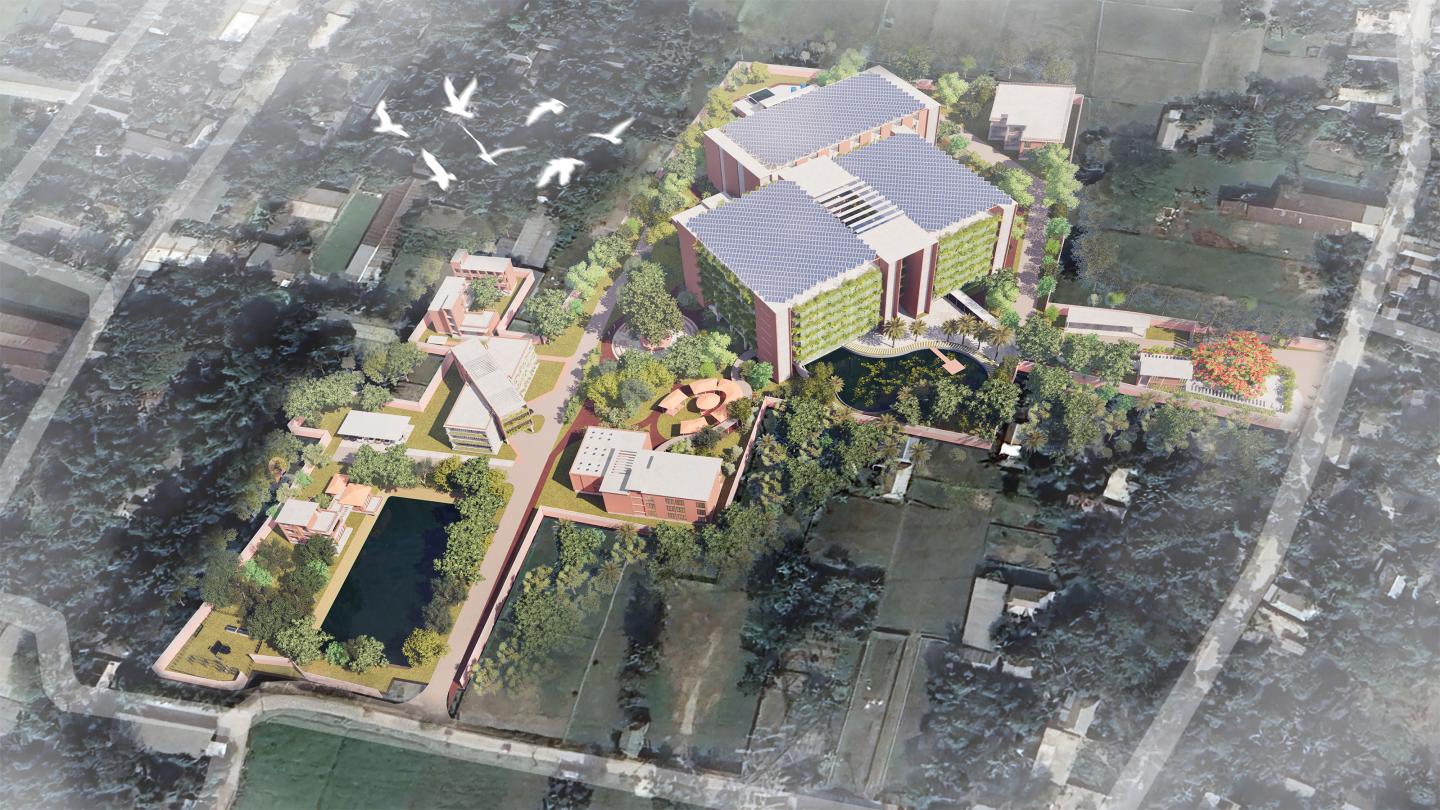
From above, the roof garden acts as a cooling cap, absorbing heat and creating micro-habitats for birds and insects. The entire complex feels like a piece of land that breathes — not one that’s been conquered.
Philosophy – Weaving the Whole Together
Every element in this design is a stitch — from the planter-lined corridors to the rainwater channels, from the worker lounges to the green roof. And just like a sweater, each stitch matters.
The factory is not designed to impress with grandeur, but to express humility — to blend, to nurture, and to breathe.
The architecture doesn’t shout sustainability — it whispers it. Through textures, through air movement, through the feeling of soil beneath one’s feet.
I believe true sustainability lies not just in energy efficiency, but in emotional efficiency — in making people care for their surroundings. When a worker waters a plant, when they rest under a tree they saw growing, when they see sunlight painting the walls differently each season — that’s sustainability taking root.
The Journey
Designing this project was a personal reflection as much as it was an academic challenge. Growing up in Bangladesh, surrounded by factories and yet rarely seeing beauty within them, I wanted to prove that industrial architecture can be compassionate.
I spent days observing how workers moved, how they rested, how they found moments of relief during long shifts. I realized architecture could make those moments better — with shade, with air, with green.
Each decision in this design — the looped plan, the angled planter, the wide slabs — was not made to be radical, but to be kind.
Conclusion – A Stitch Toward the Future
This project stands as a small act of resistance — against harsh industrial realities, against soulless sustainability. It’s a proposal for an architecture that doesn’t separate production from peace, or progress from nature.
Just like knitting, architecture too is a meditative act. Loop by loop, space by space, we build something whole. And maybe, through designs like this, we can remind ourselves — that we are all loops in the same fabric of life.
“Loops of Life” is not just a factory. It’s a metaphor for connection — between man and machine, between nature and structure, between the ground and the soul.
2025
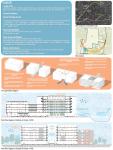
1. Climate Response & Orientation
The factory is located in a tropical climate where heat and humidity dominate most of the year. The building is oriented along the north-south axis, minimizing east–west exposure. This reduces glare and direct solar gain during peak hours.
Supporting functions such as offices, storage, welfare rooms, and toilets are placed on the north-west side to buffer working areas from harsh western radiation.
2. Passive Design Strategies
The project applies passive ventilation and daylighting principles throughout:
Cross ventilation is achieved through courtyards, air shafts, and wind tunnels that pull cool air from shaded sides.
The Venturi (Siphon) Effect is applied on the façade to accelerate wind flow, improving indoor air quality and comfort.
Light wells and skylights ensure evenly diffused daylight, reducing the need for artificial lighting.
3. Facade System & Shading Design
The façade design was inspired by Le Corbusier’s Brise-Soleil and adapted to local climatic needs.
Shading jalis have wide openings on the windward side and narrower inner edges to channel airflow (Venturi effect).
Planters at the base are angled to direct wind movement while reducing dust particles from outside.
Extended 7-foot concrete slabs block direct sunlight and rain while allowing filtered light to enter.
Green façades cool the building surface, absorb noise, and improve indoor air quality.
4. Material & Construction Approach
Locally available brick and concrete were selected for thermal stability and durability.
The roof incorporates solar panels, reducing dependency on grid electricity.
Recycled materials are proposed for internal finishes and landscape elements.
Modular construction ensures flexibility for future expansion and easy maintenance.
5. Energy Efficiency & Sustainability
The factory follows a closed-loop sustainability approach:
Solar energy supplies a portion of the power needs.
Rainwater harvesting collects and filters roof runoff for reuse in landscaping and greywater systems.
Natural lighting and ventilation reduce operational energy costs by up to 35%.
Perimeter greenery act as natural insulation, lowering indoor temperature by 2–3°C.
6. Circulation & Safety
The production circulation follows a linear and uninterrupted flow — from raw material intake to dispatch — minimizing congestion and maximizing efficiency.
Emergency exits and fire escapes are strategically placed at a 70-foot radius for quick evacuation.
Clear visual axes throughout the plan support both orientation and safety.
7. Water & Waste Management
Rainwater harvesting tanks collect and filter water for reuse.
Greywater recycling is applied in toilets and irrigation.
Solid waste segregation zones are integrated near the service block for proper disposal and recycling.
8. Landscape & Microclimate
Green buffer zones surround the building, acting as natural filters for air and noise pollution.
Vegetation is chosen for seasonal variation — allowing workers to experience natural change and reconnect with the environment.
The soft landscape along edges stabilizes soil, absorbs heat, and enhances the visual harmony of the factory with its surroundings.
Designer: RAKIBUL AL FAHIM
Supervisor: Sudipti Biswas.Phd
Rakibul Al Fahim